Lawmakers Move To Consider Measurers To Fund The 2023/2024 Budget As Committee Wraps Up Public Hearing

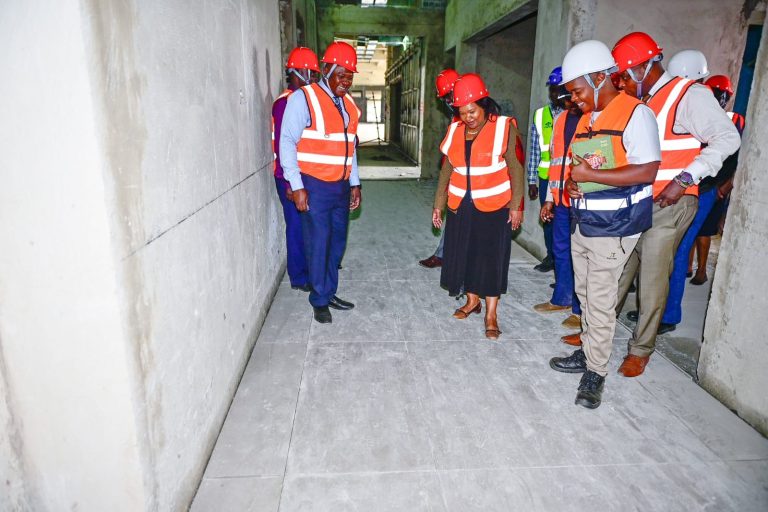
Committee chairman Kimani Kuria (centre)

By Our Reporter
Worth Noting:
- Over the last decade, the historical average annual increase in total expenditure and net lending has been about 12%. Projections show that this year, the National Treasury has maintained the Government’s fiscal consolidation efforts by limiting expenditure growth.
- National Treasury statistics show that Kenya’s tax revenue collection as a share of Gross Domestic Product (GDP) has stagnated at around 15 per cent over the last decade. Consequently, the country has lagged behind other comparable African countries whose tax revenue collection is between 20 per cent and 25 per cent.
- For instance, ordinary revenue as a share of GDP declined from around 16.2 per cent in 2013/14 financial year to around 15 per cent in the last financial year.
The Departmental Committee on Finance and National Planning wound up round one of public hearings on the Finance Bill, 2023, after receiving submissions and memoranda for nine-straight days.
The committee received them from organised groups and individuals on various proposals contained on the Bill.
This Bill comes at a time when the country is facing reduced revenues due to its debt burden, a huge wage bill among other competing national priorities and in the wake of diminishing revenues owing to the country’s debt burden, a huge wage bill among other competing national priorities.
It provides for ways and means of financing the next financial year budget. Section 39 of the Public Finance Management (PFM) Act requires a balance between Budgeting and Revenue raising. This implies that, should there be any reduction in the proposed tax measures, the House will also have to cut the proposed Budget proportionally.
According to the Tabled Budget Estimates, the proposed total expenditure and net lending for the financial year 2023/24 is KSh3.6 billion, representing a 6.4% (Sh215 billion) expenditure increase relative to the current financial year budget.
Over the last decade, the historical average annual increase in total expenditure and net lending has been about 12%. Projections show that this year, the National Treasury has maintained the Government’s fiscal consolidation efforts by limiting expenditure growth.
National Treasury statistics show that Kenya’s tax revenue collection as a share of Gross Domestic Product (GDP) has stagnated at around 15 per cent over the last decade. Consequently, the country has lagged behind other comparable African countries whose tax revenue collection is between 20 per cent and 25 per cent.
For instance, ordinary revenue as a share of GDP declined from around 16.2 per cent in 2013/14 financial year to around 15 per cent in the last financial year.
One of the drivers of the decline in ordinary revenue collection as a share of economic output was the one percentage point decline (from 7.9 percent to 6.9 percent) of income tax collection as a share of GDP.
Notably, the performance of income tax which accounts for around 46 percent of ordinary revenue collection will have a significant impact on future tax revenue prospects.
The committee has not been shy of asserting these facts to the over 180 respondents who appeared before them to file their oral submissions.
Last week, the Committee’s Chairperson Kimani Kuria underscored the fact that the country has to grow revenues to not only seal the deficit gap, but to also help fund the government programs and meet other government obligations.
“We all live in this country and are aware of the dire economic situation the country is in. We all have to agree to provide solutions to our current fiscal challenges ”, the chairman told the stakeholders.
He told the stakeholders that the ripple effect that would emanate from for instance, from the proposed National Housing Development Fund is great, given the jobs that the program is set to create, and the demand for inputs the program would create for the manufacturing sector.
This provision among others that received little focus during the public hearings are however likely to be the game changers in the efforts to support the 2023/2024 budget.
After undertaking public participation on the Bill as required by law, the Departmental Committee on Finance and National Planning is now expected to engage the National Treasury and the Kenya Revenue Authority on some of the fundamental issues raised by respondents before retreating to write its report.
The Report is expected to be tabled when the House resumes from recess early June for consideration.
The Bill has a timeline of approval of 30th June, 2023, which coincides with the enactment of the Appropriation Law, 2023. If approved, the new law will be expected to apply as from 1st July.
Similar Posts by The Mt Kenya Times:
- Diaspora Times Global Oct 17 – Oct 23, 2026
- Is social media a blessing or a curse for university students?
- Light at last: How electricity is reshaping Nandi and Uasin Gishu
- The triple squeeze: how EPRA’s fuel price hike is reshaping the survival equation for the common mwananchi
- Zelenskyy accuses Trump of rewarding Putin as Pope pleads for peace from a hospital bed
About the Author