Modern women are not falling out of love — they are falling into their senses
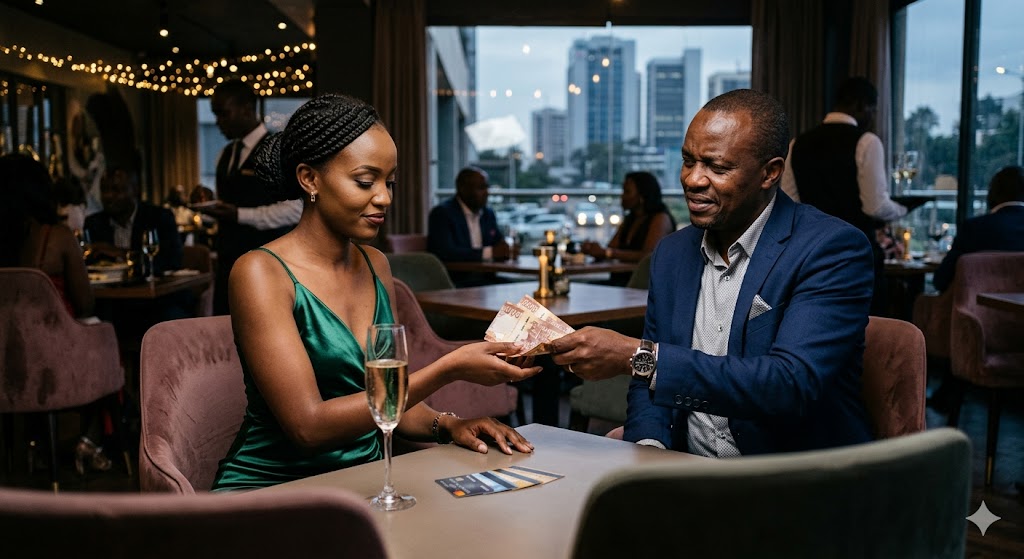
Sugar dating
In an era of rising costs, broken promises, and hard-won independence, more women are asking a question previous generations were told never to ask: what does this relationship do for my life?
By Jane Mwende
A growing number of modern women are prioritising financial stability over romantic chemistry when choosing a partner, reflecting a fundamental shift in how love, security, and self-worth are being negotiated in relationships across the world.
It is not a comfortable conversation. Society has long reserved its harshest judgements for women who factor money into their romantic decisions — labelling them calculating, shallow, or worse. Yet the same society that romanticises love-above-all has also consistently failed to protect women from the financial devastation that follows a bad marriage, a painful divorce, or the invisible labour of building a home for a man who walks away from it. Something has changed. Women are watching, learning, and increasingly refusing to pretend that love in a financially unstable relationship is the same thing as love in a secure one.
A recent Harris Poll survey of more than 2,000 adults found that 74 percent of respondents said financial stability is one of the most attractive traits when dating — a figure that reflects not cynicism but lived experience. Women who came of age watching their mothers struggle financially, who graduated into economies that punished them for career breaks taken during pregnancy, who built savings that evaporated in relationships with men who could not manage money, are not willing to romanticise that kind of poverty. They have done the arithmetic, and the arithmetic is unambiguous.
The economic context within which modern relationships are being formed matters enormously. The average cost of a date has climbed to $189 in 2026, up 12.5 percent from the previous year — far outpacing the broader cost of living increase of 2.8 percent. Americans spent an average of $2,323 on dates over the past year. Dating itself has become an expensive exercise, and the financial pressure it creates is reshaping who women are willing to invest that time and money in. The rising cost of dating has led some women to prioritise relationships that offer immediate financial security, while pushing some men to put the idea of finding a partner on hold altogether.
But to frame this simply as women choosing wealth over love is to misread what is actually happening. What modern women are rejecting is not love — it is the version of love that was sold to their mothers and grandmothers as sufficient compensation for financial dependence, emotional neglect, and the quiet suffocation of ambition. They have watched too many women loved deeply by men who could not pay the rent, adored passionately by men who spent every shilling on themselves, cherished tenderly by men who resented their success. That kind of love, they have decided, is not enough.
Across all women surveyed on the dating platform Hinge, 72 percent said they care more about a partner’s effort to build a relationship than their paycheck. The nuance in that finding is important. Modern women are not simply scanning bank statements and investment portfolios before agreeing to a second date. They are looking for men who are building something — men with direction, discipline, and the capacity to show up consistently for both their relationships and their responsibilities. Financial stability is a proxy for those qualities, not a substitute for them. A man who manages his money well is, the reasoning goes, more likely to manage himself well — to be present, reliable, and genuinely invested in a shared future.
The generational shift driving this change is also rooted in women’s own expanding economic power. Women today are more educated, more professionally established, and more financially independent than at any point in recorded history. When a woman no longer needs a man to pay her bills, her reasons for choosing him become entirely different. She is not selecting a provider. She is selecting a partner. And the standards for partnership — genuine equality, shared ambition, mutual financial transparency — are considerably higher than the standards for provision ever were.
This creates a dynamic that some men find confronting and that social media has amplified into a culture war. On one side, the accusation that women have become mercenary — treating relationships as financial transactions dressed in the language of compatibility. On the other, the counter-argument that men have long selected women for youth and beauty, which are themselves forms of social currency, without being condemned for it. The double standard is not subtle. A man who wants a beautiful woman is called discerning. A woman who wants a financially stable man is called a gold-digger. The vocabulary itself reveals the bias.
What is being described as a crisis of modern romance is, more accurately, a recalibration of power. Women who once had no choice but to accept whatever emotional and financial arrangement was offered to them now have options — and they are using them. The man who expects a woman to overlook his financial chaos because he loves her is encountering, for the first time, a generation of women who have decided that love without security is not a love story. It is a cautionary tale.
A 2024 survey found that 31 percent of respondents would consider dating someone for their wealth, while 28 percent admitted they would go on a date for a free dinner. Those numbers are cited as evidence of moral decline by some and as evidence of rational decision-making by others. The truth is more textured than either reading allows. Women who insist on financial compatibility are not abandoning love — they are expanding their definition of it to include the practical conditions under which love can actually flourish.
A relationship in which one person is perpetually anxious about money while the other is indifferent to that anxiety is not a loving relationship. It is a stressful one wearing love’s clothing. Women who have lived inside those relationships know this. Women who watched their mothers live inside them know this too. The refusal to repeat that pattern is not a betrayal of romance. It is the most self-aware thing a woman can do.
The modern woman in love with financial stability is not a woman who has given up on love. She is a woman who has given up on suffering for it — and that is a distinction worth defending.
Jane Mwende is a writer and commentator on gender, relationships, and contemporary social culture.
Similar Posts by The Mt Kenya Times:
- Mt Kenya Times ePAPER October 16, 2026
- Oburu marks birthday and brother’s death from Nairobi Hospital bed
- Natembeya and Orengo demand answers over security withdrawal
- Linda Mwananchi Movement: The brand that could reshape Ruto’s path to 2027
- ODM and Linda Mwananchi clash at Raila’s Bondo memorial
About the Author