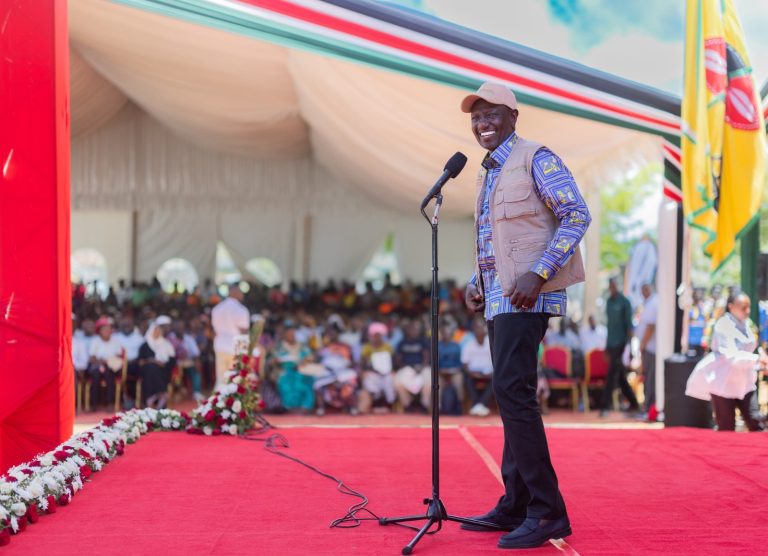
President William Ruto
With 122 votes for and 40 against, the National Assembly approves the tax legislation — but the ghosts of June 25, 2024 hang over every page
By MKT Reporter
The National Assembly yesterday passed the Finance Bill 2026 by 122 votes to 40, sending the legislation to President William Ruto for assent just days before the second anniversary of the protests that brought Kenya to a standstill and left dozens of young people dead.
The bill cleared the House on a Thursday evening electronic vote after lawmakers adopted all amendments proposed by the Finance and National Planning Committee. Not a single member abstained. The House had initially approved the bill by acclamation, but when several legislators demanded a formal division and the required threshold was met, Speaker Moses Wetang’ula directed that an electronic vote be conducted in accordance with parliamentary procedures. The result was unambiguous — but the margin told its own story. The 2024 Finance Bill, the one that triggered mass protests, the storming of Parliament, and the deaths of more than 60 young Kenyans, passed with 195 votes in favour. This one passed with 122. The majority is smaller. So, apparently, is the stomach for confrontation.
The Finance and National Planning Committee had already moved to remove several contentious proposals ahead of the vote, acting on recommendations from stakeholders and public submissions. Among those dropped were a proposed tax on mitumba imports and a measure that would have imposed new levies on mobile phones — two proposals that drew immediate public hostility when the bill was first published in April. The committee’s decision to excise them before the bill reached the floor was a calculated act of political risk management, a lesson apparently learned from 2024, when the government’s refusal to make concessions early enough cost it dearly in the streets.
The bill retains VAT exemptions for selected medical products, electric transport technologies, and agricultural inputs, and extends tax amnesty provisions to encourage compliance. It also proposes to extend the timeline for tax amnesty on interest, penalties and fines, shifting the qualifying period to December 2025 and the payment deadline to December 2026. For businesses that have accumulated arrears during two years of economic turbulence, that extension is not an abstraction — it is a lifeline.
The legislation amends six principal statutes: the Income Tax Act, the Value Added Tax Act, the Excise Duty Act, the Tax Procedures Act, the Miscellaneous Fees and Levies Act, and the Stamp Duty Act. The changes are designed to broaden the tax base, tighten compliance, and raise revenue sufficient to underwrite government spending in the 2026/2027 financial year. Unlike the Finance Bill of 2024, which was ultimately withdrawn after triggering catastrophic public opposition, the 2026 bill contains fewer outright tax-increase proposals — a fact analysts attribute in part to the government’s desire to ease public anxiety ahead of next year’s general elections. Whether that restraint reflects genuine sensitivity to the public mood or mere electoral arithmetic is a question Kenyans are well placed to answer for themselves.
That political calculation was made visible in the chamber itself. Of the 40 members who voted against the bill, the majority represent constituencies where the cost of living is not a policy abstraction but a daily reality, and where memories of the Gen Z protests remain sharp. They included Kiharu MP Ndindi Nyoro, Embakasi East’s Babu Owino, Wundanyi’s Mwashako, Naivasha’s Jayne Kihara, Starehe’s Mwago, and Roysambu’s Mwafrika. Siaya’s Oundo of Funyula and Saboti’s Caleb Hamisi registered their opposition, as did Suba South’s Caroli, Bumula’s Wamboka, Manyatta’s Mukunji, and Nyali’s Moha. In the no lobby, government and opposition members stood side by side — a level of cross-party dissent unusual for a money bill, and worth noting.
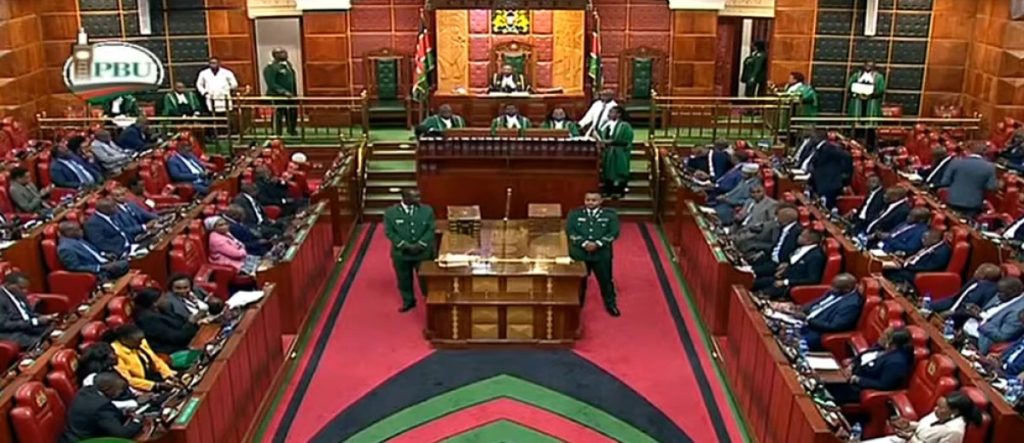
The full list of dissenters maps almost precisely onto Kenya’s most economically pressured communities. From Kitui County alone, seven MPs voted against the bill: Nzengu of Mwingi North, Makali of Kitui Central, Mwalika of Kitui Rural, Kasalu the Kitui Woman Representative, Edith of Kitui West, Mulyungi of Mwingi Central, and Kimilu of Kaiti. Machakos and Makueni returned five more dissenters between them: Mbui of Kathiani, Kamene the Machakos Woman Representative, Makau of Mavoko, Mawathe of Embakasi South, and Kiamba of Makueni. In Nairobi, opposition clustered in the heavily populated eastlands: Mwenje of Embakasi West, Gakuya of Embakasi North, Mejja Donk of Embakasi Central, and Mwago of Starehe voting no alongside Babu of Embakasi East. Gatanga’s Wakili Edward Muriu and Kigumo’s Munyoro added their voices from the Mount Kenya region, as did Kirinyaga Woman Representative Njeri, Tetu’s Wandeto, and Kajiado North’s Ngogoyo. Funyula’s Oundo and Saboti’s Caleb Hamisi completed a no lobby that, taken together, represents a significant geographic and demographic cross-section of Kenyan opinion.
It is worth pausing on what that opposition means. In a legislature where the ruling coalition commands a commanding majority, 40 dissenting votes on a Finance Bill is not a rebellion. But it is a signal — and signals, in Kenyan politics, have a way of hardening into something louder when left unheeded. The government should read the constituency map carefully. The MPs who voted no did not do so out of procedural principle. They did so because their constituents sent them there to push back.
The timing of the bill’s passage is not incidental. June 25 — now six days away — has become the most politically charged date on Kenya’s calendar. Families of those who died during the anti-government protests have formally notified police of plans to hold peaceful commemoration marches across all 47 counties, and political leaders have joined them in calling for a national day of remembrance. Against that backdrop, passing a Finance Bill in the same week is either an act of governmental self-assurance or one of considerable political miscalculation. Both interpretations are being made, with equal conviction, in equal measure.
The bill is expected to take effect from 1 July 2026, with some provisions coming into force from January 2027. President Ruto is expected to sign it into law before the end of the month, completing the annual budgetary cycle and unlocking the revenue measures needed to fund government spending in the new financial year. The process has been, by the standards of recent years, relatively orderly. There were no mass protests outside Parliament, no teargas on Harambee Avenue, no live rounds. Whether that calm reflects public acceptance, fatigue, or simply the restraint of a population watching and waiting, remains to be seen.
Two years ago, Kenya’s young people rewrote the country’s political grammar. They reminded those in power that a Finance Bill is not a technocratic document — it is a statement about who matters and who does not. The 2026 version is more modest in its ambitions and more careful in its drafting. But the underlying question has not changed. When the President picks up his pen, Kenyans will want to know, as they always have, on whose behalf he is signing.
The bill has passed. The nation watches. And June 25 is coming.
Similar Posts by The Mt Kenya Times:
- Mt Kenya Times ePAPER October 1, 2026
- Museveni backs Lamu but keeps Uganda’s money at home
- Sifuna’s party wins its name — and Kenya’s opposition race begins in earnest
- Lamu’s $16B gamble: Africa’s biggest refinery divides the region
- Ruto launches KSh2.2 trillion Lamu refinery in East Africa’s biggest energy bet
About the Author