When Africa chooses to study corruption from within: The promise, the paradox, and the questions surrounding Kenya’s new anti-corruption research Centre
 The Mt Kenya Times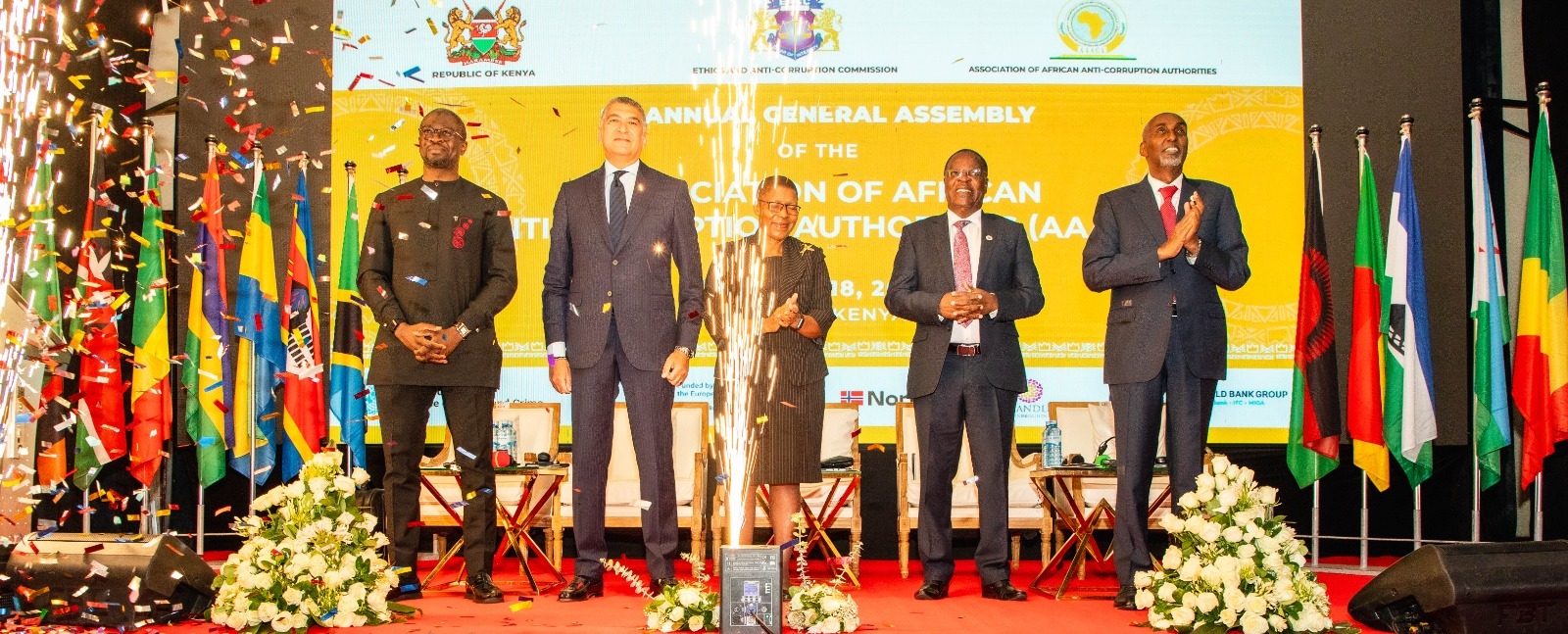
EACC launches Africa anti-corruption research centre
By Mr. Fredrick Kipchumba Chelimo – PWD
Email: fkipchelimo@yahoo.com
The recently established Centre for Anti-Corruption Studies and Research in Africa (CEREAC) here in Nairobi has provoked interpretations, invited hope, suspicion, intellectual enquiry and public debate in equal measures. In Africa, establishment of such institution means far more than opening just an ordinary office, unveiling plaques or signing of agreements. Officially launched to serve as Africa’s central research and capacity building institution on anti-corruption and financial integrity, the Centre arrives with an ambitious mandate; to deepen continental knowledge, strengthen investigative capacities, produce policy solutions, and support anti-corruption agencies facing increasingly complex forms of financial crimes in recent times.
In an age where corruption has migrated beyond envelopes and cash filled briefcases into digital networks, offshore structures, procurement ecosystems, algorithmic manipulation, and transnational financial flows, the argument for a specialized African research institution appears both timely and compelling. Yet almost immediately after its establishment, another conversation emerged – one more less administrative and more philosophical. Why Kenya? Why here? What does it mean that Africa has chosen Nairobi to host the intellectual headquarters for understanding and confronting corruption?
The responses have been revealing. For some the decision is a continental vote of confidence in Kenya’s institutional maturity, administrative infrastructure, diplomatic positioning, and historical role as a regional governance and commercial hub. For others the symbolism cuts differently, the see irony, and perhaps discomfort. After all societies rarely build institutions in response to problems they have already conquered. Hospitals are built where disease burdens exist, agricultural research centres where food systems require transformation and financial think tanks flourish where commerce concentrates.
Could it therefore be argued that locating a continental anti-corruption research centre in Kenya reflects not only confidence, but recognition of proximity to the problem itself? That question may sound provocative, but it deserves intellectual honesty rather defensiveness. Because anti-corruption, at its highest level, is not only the study of crime, it involves the study of power. And power rarely welcomes mirrors.
Kenya occupies unique paradoxical position within Africa’s governance landscape; it is simultaneously celebrated for institutional innovation and questioned for recurring governance controversies. It has become a place where digital public systems coexist with allegations of procurement leakages; where constitutional progress sits beside public frustration; where anti-corruption rhetoric is abundant, yet public trust often remains fragile. That contradiction is not uniquely Kenyan, it mirrors a wider African experience.
Across the continent, governments have invested heavily in anti-corruption architecture. Ethics commissions have been formed, integrity laws enacted, audit institutions strengthened, parliamentary oversight expanded, investigative agencies funded and international conventions ratified. And yet corruption persists, not because Africa lacks institutions, but perhaps because corruption itself has evolved faster than institutional imagination.
For decades public discourse treated corruption primarily as a moral failure-bad individuals making unethical choices. Modern scholarship is increasingly challenges this assumption. Political economists and governance scholars now argue that corruption is often systemic before it becomes personal. It is embedded in incentives, power arrangements, electoral structures, social expectations, economic inequality and institutional design.
This perspective changes everything. If corruption is systemic, the arrest alone cannot solve it, if it is political, prosecution alone cannot dismantle, if reproduces itself through networks of survival and patronage, then legal instruments alone become insufficient. This is where institutions such as CEREAC potentially matters. Research should ask uncomfortable questions that enforcement cannot. Why do leaders accused of corruption continue winning elections? Why do citizens condemn corruption publicly yet privately tolerate it when benefits toward their communities? Why do anti-corruption campaigns intensify around political transitions? Why do technologically advanced systems reduce petty bribery but leave elite massive extractions intact? Why do public institutions designed to restrain power sometimes become instruments for protecting it?
These are not courtroom questions, they are questions of human behaviour, political economy. Question of history and question of institutional psychology. And perhaps this explains why reactions to the centre’s establishment have been so wide, varied and mixed. Among the anti-corruption crusaders, there is cautious optimism. They see an opportunity to finally generate African evidence rather than relying indefinitely on imported governance theories.
Among scholars, the Centre offers a rare opportunity to produce long-term continental datasets and deeper understanding of corruption’s structural drivers. Within the legal fraternity, hopes emerge of stronger jurisprudence and policy reform informed by evidence rather than political urgency. But among sections of the public and political class, skepticism remain alive. Will this become another institution that diagnoses’ endlessly but cures none? Will it produce shelves of reports while roads remain unfinished, public hospitals underfunded, and procurement scandals cyclical? Will citizens experience change – or simply hear more sophisticated language describing old failures? These questions should not be dismissed as cynicism; they reflect accumulated public memory.
Africans have witnessed commissions established, frameworks launched, strategic plans unveiled, and declarations signed. Many ordinary citizens have learned to reserve celebrations until outcomes become visible, And perhaps rightly so, because institutions derive legitimacy not from their architecture but from their consequences. If the centre produces knowledge that remains inside conference halls, its relevance will fade. If research become donor language disconnected from lived realities, public confidence will evaporate. If findings challenge only weak actors while avoiding powerful interests, credibility will collapse.
Institutions can illuminate hidden corruption pathways, strengthen independent inquiry, democratize public accountability, and translates research into measurable governance reforms, it may become one of Africa’s most consequential governance investments. The burden is therefore unusually high. Kenya is not only hosting a building, but hosting a scrutiny, expectation and a continental conversation about whether Africa can finally move anti-corruption beyond symbolism and into structural transformation will be answered.
History is not generous to institutions that promise renewal and deliver bureaucracy, but remembers those that alter the outcomes. Years from now, Africans are unlikely to remember the speeches delivered during the launch of this centre. They will remember simpler things. Whether procurement became cleaner, institutions become clever, public offices became less profitable, public trust returned and most importantly whether the difference was felt. That is the true examination awaiting Africa’s newest anti-corruption institution
Similar Posts by The Mt Kenya Times:
- Mt Kenya Times ePAPER October 1, 2026
- Museveni backs Lamu but keeps Uganda’s money at home
- Sifuna’s party wins its name — and Kenya’s opposition race begins in earnest
- Lamu’s $16B gamble: Africa’s biggest refinery divides the region
- Ruto launches KSh2.2 trillion Lamu refinery in East Africa’s biggest energy bet
About the Author