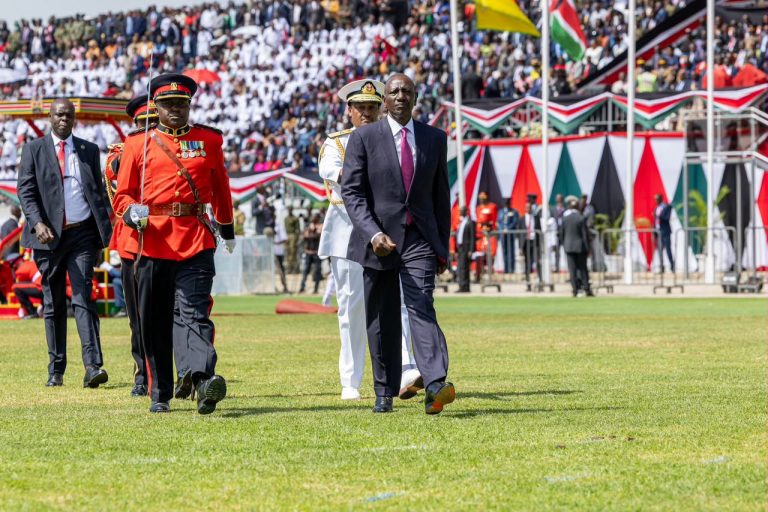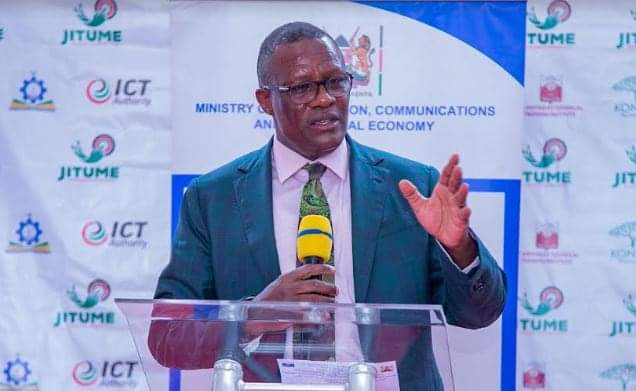

Kenya’s government is collaborating with institutions of higher learning and other stakeholders in the ICT space to train tech-savvy youths to become the next generation of cyber security experts. Information, Communications, and The Digital Economy Cabinet Secretary Eliud Owalo emphasizes the need for a digital army to safeguard digital assets and resources from threats. The government’s Bottom Up Economic Transformation Agenda (BETA) has identified ICT as a key enabler to economic growth, with the digital superhighway agenda aiming to ensure citizens exploit the full potential of ICT, particularly broadband, to interact in the digital space at speeds unprecedented. The government is also enhancing access to broadband services through the deployment of 100,000 kilometres of fibre, 25,000 Wi-Fi hotspots, and 1,450 ICT hubs across the country. Cyber security remains the bedrock of a secure digital economy, and fostering an environment of trust and security is crucial. The operationalization of the National Public Key Infrastructure (NPKI) and licensing of electronic certification providers have set the country on a path to a secure digital space.
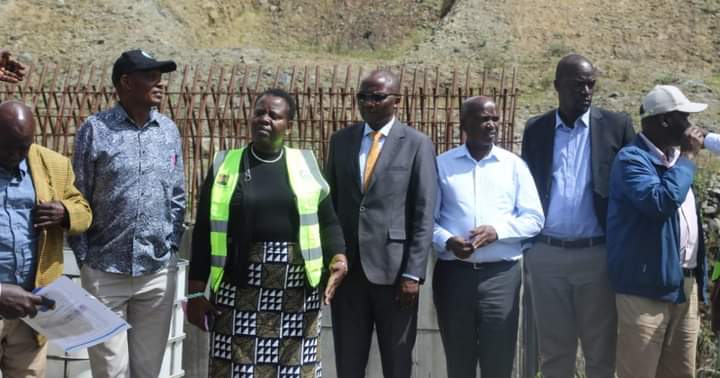 The National Assembly Committee on Water, Blue Economy, Sanitation, and Irrigation has promised to resume construction of the Itare Dam in three to four months to address water issues in Nakuru County. The project, estimated to cost Sh28 billion, will hold 27 million cubic meters of water and produce 100,000 cubic meters per day.
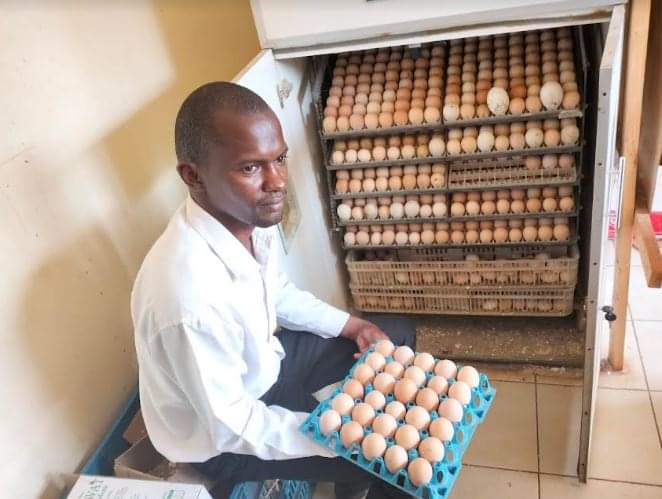
Kenya’s urban population is driving a surge in demand for chicken products. Paul Wacira, an entrepreneur and businessman, runs a successful hatchery in Murang’a, offering a low-labor-intensive business model. He sells over 40 chicks weekly, making an average monthly profit of Sh. 30,000. The hatching process takes 21 days.

Over 18,000 vulnerable households have been added to the Murang’a County enhanced health scheme, Kang’ata Care, bringing the total number of beneficiaries to 38,865 households, or approximately 120,000 individuals. Governor Irungu Kang’ata signed a Memorandum of Understanding with the National Health Insurance Fund (NHIF) to add new beneficiaries to the scheme, which will start benefiting from health coverage in January 2024. The medical coverage is offered to vulnerable households registered in a county-wide program spearheaded by the community. Those registered receive the Kang’ata Care card, allowing them to access medical services in any NHIF-accredited health facility. The Murang’a County government allocated Sh. 164 million to support Kang’ata Care last financial year, providing free medical care in both public and private hospitals. The premium payable per beneficiary per household per year is Sh. 8,490, while the premium payable for the last expense is Sh. 10,000 once in a financial year.
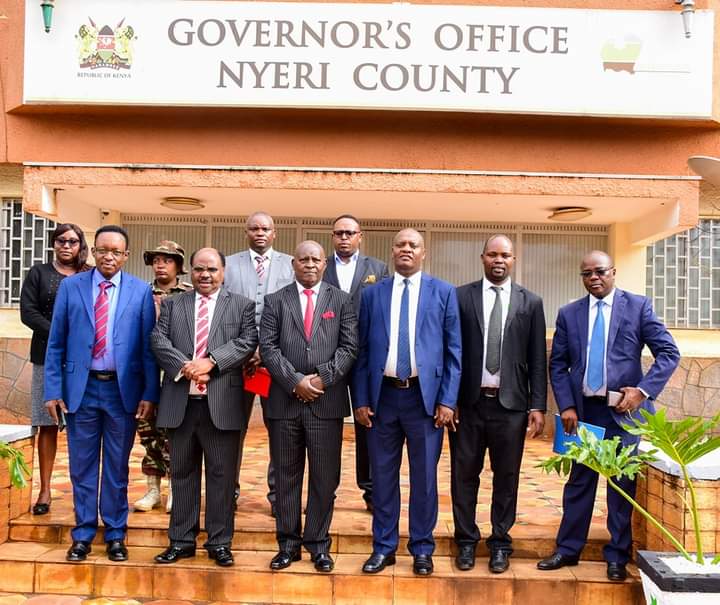
Nyeri County governor Mutahi Kahiga and his deputy David Kinaniri yesterday hosted a team from the National Water Harvesting and Storage Authority (NWHSA) led by the chairman Simon Kimaru.
The meeting was a follow-up to an MoU signed between the County Government and the Authority aimed at enhancing water security and storage for multi-purpose uses, mitigation of drought and flood effects in a sustainable manner in the County.
The areas of collaboration will include designing and development of water infrastructure including desilting of dams, enhancing water security and storage, provision of good management of water services as a mitigation of drought and flood effects in a sustainable manner, survey, design and construction of dams for water supplies and irrigation and creating effective schemes of flood control by land drainage and construction of dykes.
The Authority team disclosed that they have identified priority projects and categorized them into three; short, medium and long term projects. In the first phase, 8 irrigation and water supply projects and 18 boreholes have been identified for rehabilitation purposes. The Authority is keen on solarize and creating irrigation component like kitchen gardens in the boreholes, improving nutrition at the household level.
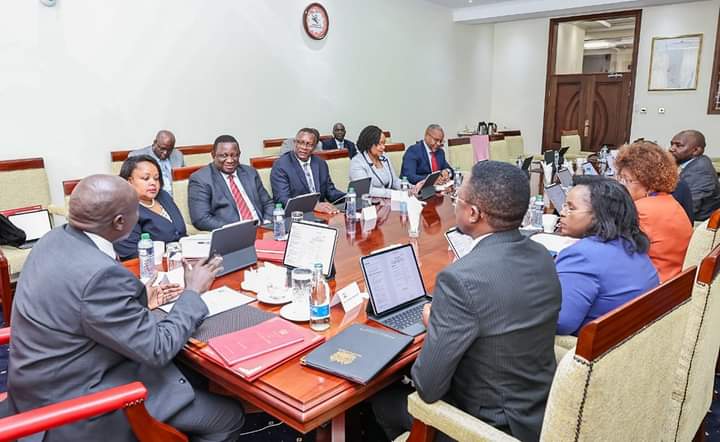
Deputy President Rigathi Gachagua yesterday chaired a Cabinet committee meeting at the Official Residence in Karen, Nairobi.
For a People-centred implementation of the Bottom-Up Economic Transformation Agenda, through interministerial strategic consultations and review of decisions, this is crucial.
It allows the government to make necessary and timely adjustments for effective and efficient service delivery.
Similar Posts by The Mt Kenya Times:
- Ruto unveils tax relief for low-income earners as Kenyans seek respite from rising costs
- Violence mars Meru Mashujaa Day as Mwangaza motorcade attacked
- Ghost hospitals and Kenya’s healthcare crisis
- Eldoret hosts Kenya’s 63rd Mashujaa Day in historic North Rift celebration
- No matter how long the night, the day will come
About the Author