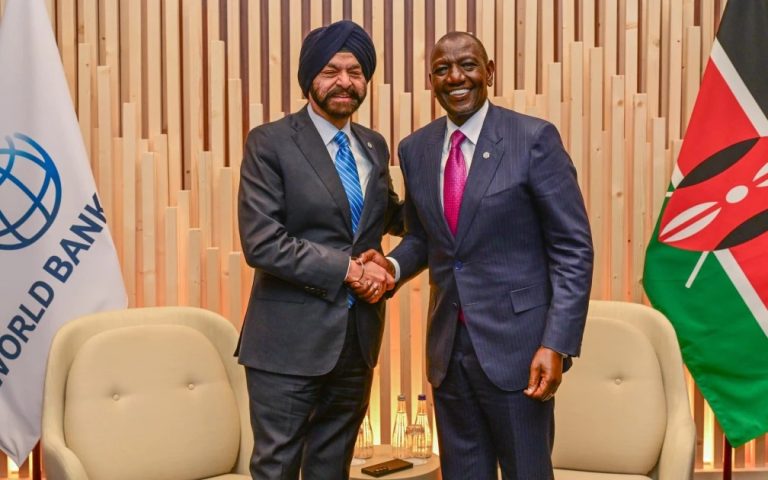
Kenya’s Port of Mombasa is attracting traders from the Democratic Republic of Congo (DRC), according to the Kenya Ports Authority (KPA). The DRC is the third largest market in the port, with an 8.2% market share. The port is mainly used by traders in the Eastern part of DR Congo. Kenyan MP Badi Twalib led a delegation of officials of the honorary consulate of DR Congo in Mombasa to meet with Governor Abdullswamad Nassir to deepen integration and friendship with the country that joined the East African Community (EAC). He praised KPA Managing Director Capt. William Ruto for enhancing port efficiency and urged Kenyans to market the country’s ports to attract traders from the EAC and beyond.
 The Kenyan government has increased monitoring systems across game parks to prevent wildlife loss due to El Nino rains. The institute, led by Dr. Patrick Omondi, has activated monitoring to document the impact of flooding on old, sick, and newborn animals. Heavy rains have already led to the deaths of 46 people in several areas. Researchers are studying effective methods to control and eradicate deadly invasive tree species in game parks and wildlife sanctuaries. The institute’s Head of Research, David Ndere, emphasizes the need to accelerate scientific research to save critically endangered wildlife species, including zebras, envelopes, and rhinos. The National Wildlife Census Report 2021 flagged six wildlife species as critically endangered, with populations threatened by poaching, climate change, habitat changes, and illegal bush meat trade. Researchers have launched research interventions on habitat monitoring, increased wildlife diseases, and genetic studies to reverse decreasing wildlife populations.

The Principal Secretary of the State Department for Public Health and Professional Standards, Mary Muthoni, visited the Kenya Medical Training College (KMTC) to assess the available human resources and infrastructure in the health sector. She emphasized the importance of addressing gaps in the health sector and emphasized the need for collaboration between national and county governments in preventive and promotive health. Muthoni also highlighted the need for bolstering primary care facilities and programs to ensure a comprehensive and accessible healthcare system for all Kenyans. She also highlighted the interlink between climate change and health, stating that 14 thousand people die annually from respiratory diseases. The Ministry of Health has the right to lead public health specialists in planting trees to mitigate climate change.
 The Kenyan government has procured 100 dryers to assist farmers in drying maize, with the cost of drying a 90-kg bag reduced to Sh70. Agriculture and Livestock Development Cabinet Secretary Mithika Linturi announced that the government has agreed with the National Cereals and Produce Board (NCPB) to bring down the cost of drying a 90-kg bag to Sh70. The government has 17 warehouses in the country that can store over four million bags to prevent aflatoxin infection. The government is committed to buying four million bags from farmers at Sh4,000 per bag, ensuring no farmer is pressured to sell maize below Sh4,000. The government has also implemented the Warehouse Receipt System (WRS) to facilitate maize storage and borrowing at interest rates below 10%. The government has opened up an additional 200,000 acres for food production, and the government has ensured that Agricultural Development Corporation (ADC) land will be used for seed production in the coming planting seasons.
 At a conference in Nairobi, experts and stakeholders in neuroscience and mental health convened to discuss innovative solutions for promoting brain health in low and middle-income countries. The conference aimed to exchange research, raise awareness of brain health challenges, and foster collaborations among stakeholders. The Brain and Mind Institute (BMI) focuses on strengthening neuroscience and mental health research and interventions through capacity building and partnerships. Africa has the highest number of suicidal cases in the continent, and digital technology can help reduce suffering. Aga Khan University CEO Rashid Khalani emphasized the importance of local research for developing relevant treatments.
 The Kenyan government is aiming to benefit artisanal miners and sand harvesters in Murang’a County by implementing a programme for the construction of affordable houses. The Principal Secretary for Mining, Elijah Mwangi, has registered these miners through Saccos to participate in the programme. The Ministry of Housing has signed a Memorandum of Understanding, requiring them to contribute 60% of construction materials. The programme is expected to commence by the end of the year, with construction already underway in the Makenji area. Mwangi has called on the County Government to facilitate the registration of miners and encourage them to register with Saccos.
 Kenya’s State Department for Investment Principal Secretary Abubakar Hassan has announced that Special Economic Zones (SEZs) are set to attract Sh1.48 trillion worth of foreign investment annually. The government has gazetted 28 SEZs across the country to tap FDI. The Nairobi Gate Industrial Park, launched in the Northlands, has seven of the SEZs gazetted as customs-controlled, with three already operational. Investors have invested USD 40 million in the project in the last 1.5 years and plan to spend another 160 million over the next five years to complete the industrial zone. The SEZ, designed by Improvon Group, aligns with the East African Community Customs Management Act requirements and offers turnkey projects ranging from mini units to warehouses.

Health Cabinet Secretary Susan Nakhumicha has launched a Sh1bn four-year project to integrate diabetes and hypertension into primary health care in Kenya. The project, funded by the World Diabetes Fund, aims to improve the management and care of diabetes patients. The funds will go towards capacity-building community health promoters (CHPS) to ensure proper testing of diabetes. Nakhumicha emphasized the importance of training CHPs to test at the household level and stressed the need for proper referral of patients to hospitals. She also emphasized the need for kidney transplants under the Social Health Insurance Act. The ministry is focusing on the management of children and adolescents, offering insulin and supplies to 4,000 patients. However, Nakhumicha urged donors to align their programs with government priorities and work with all governors to improve health service delivery.
 Medical graduates are advised to join regulating bodies to differentiate themselves from quacks in the workplace. Martha Njeri from the Directorate of Nursing warned against unprofessional conduct and urged the Kenya Universities and Colleges Central Placement Service (KUCCPS) to consider privately managed medical colleges for secondary school placements. Private medical colleges have adequate infrastructure and human resources to support training, and the government’s enactment of laws removing handicaps will ensure a functional health system.
 The Kenya Wildlife Service (KWS) has pledged to crack down on illegal fishing in Lake Nakuru to reduce human-wildlife conflict and loss of lives. KWS Senior Assistant Director in Charge of the Central Rift Conservation Area, Joseph Dadacha, warned against the practice, which is now becoming a threat to both humans and wildlife. The lake hosts the world-renowned Lake Nakuru National Park, which hosts wildlife such as gazelles, baboons, zebras, leopards, buffaloes, and black and white rhinos. A multi-agency taskforce has been formed to enforce the fishing ban. The Kenya Marine and Fisheries Research Institute (KEMFRI) warned in its 2021 report that fish taken from the lake had a high presence of toxic substances. However, fishermen at the shores of Lake Nakuru have ignored these findings and continue to consume or sell the fish to the public. The booming tilapia and mud fish business continues to thrive despite the presence of three newly introduced tilapia fish species.
Similar Posts by The Mt Kenya Times:
- Mt Kenya Times ePAPER October 3, 2026
- Ruto puts Coast landlords on notice over squatter harassment
- Nairobi lights candles for Raila in Uhuru Park tribute
- Jambojet returns to Entebbe with daily flights and fares from KSh22,950
- From Lamu to the region: What the Dangote Refinery could mean for Kenya’s energy economy
About the Author