Behind every poor grade may be a story of hunger, debt and quiet desperation that no examination result can capture.
By Yvonne Wambui
Before a lecturer marks a student absent or a classmate whispers about poor grades, someone should ask a simpler question: do we actually know what that student is going home to?
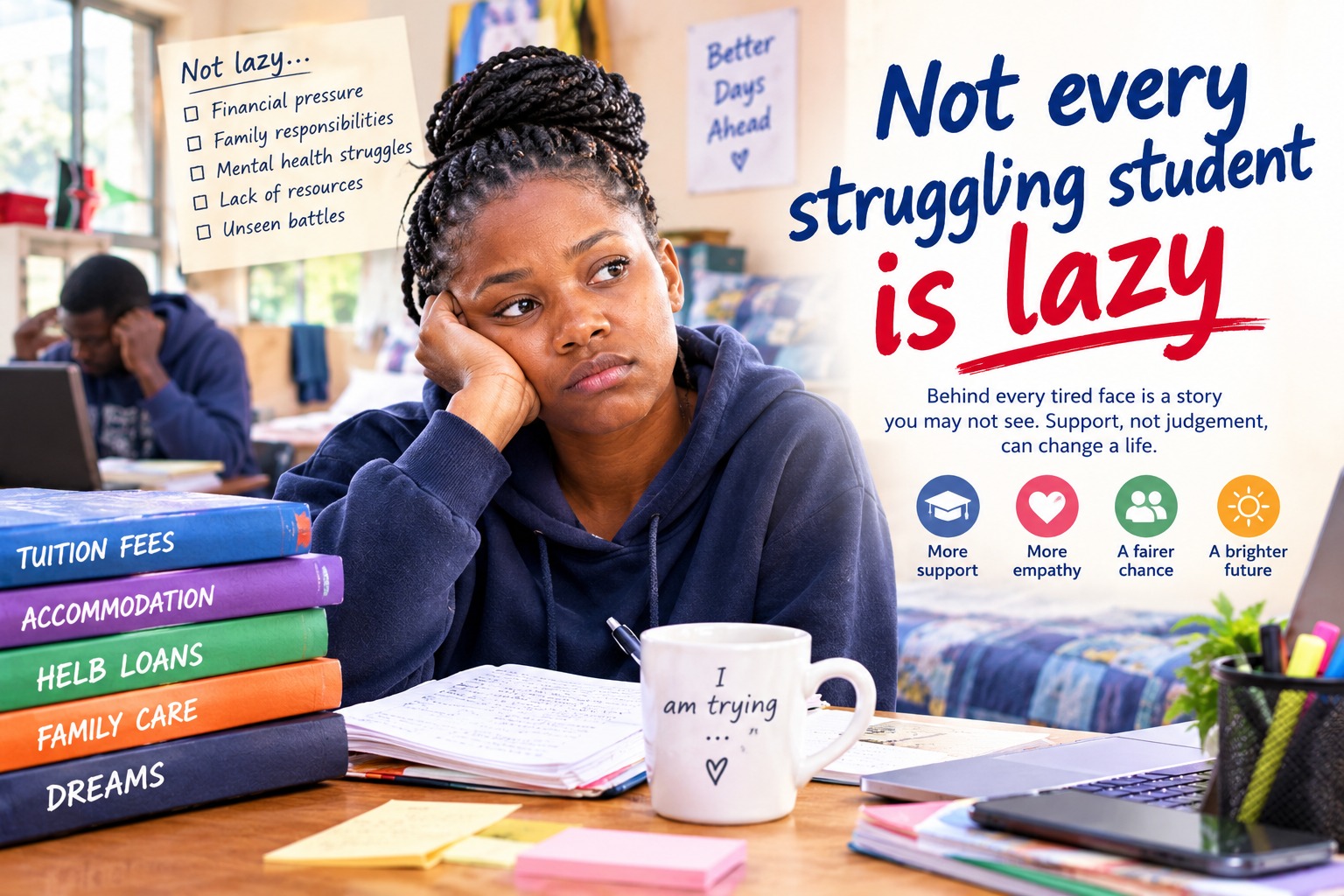
University campuses are not level playing fields. Some students arrive with fees paid, food in their stomachs and a quiet room to study in. Others sit through the same lectures wondering where their next meal will come from, whether unpaid fees will get them sent home, or how to concentrate on a textbook when a family crisis is unfolding back in the village. For these students, university is not just an academic pursuit — it is an act of daily survival.
Financial hardship is the most visible pressure, but rarely the only one. Some students support younger siblings, care for unwell parents or contribute to household income while simultaneously trying to meet assignment deadlines. They smile in class, participate when called upon and give every impression of coping — because admitting otherwise feels like failure.
None of this excuses poor effort. Students carry a genuine responsibility to attend, engage and push through difficulty. But there is a meaningful difference between a student who refuses to try and one who is trying under conditions most of their classmates will never face.
Universities must do more than track grades. Counselling services, financial assistance and mentorship programmes exist on most campuses — but only help students who know about them and feel safe enough to ask. Lecturers who listen before they judge, and peers who choose encouragement over mockery, can make that difference.
Asking for help is not weakness. It is often the first courageous step towards turning things around.
Not every struggling student is lazy. Some are simply carrying more than anyone around them can see.
Similar Posts by The Mt Kenya Times:
- When comradeship saves a life
- Laikipia University: A natural haven for learning
- Why you should not milk a Kenyan buffalo
- Beyond the scars: The grief, fear and hope of living after breast cancer
- Obaga Momanyi hosts free medical camp for Persons with Disabilities in Bonchari
About the Author