United Alternative Government Western Kenya Tour
The United Alternative Government’s three-day Western Kenya blitz puts Kenya Kwanza’s two most powerful region brokers directly in the political crosshairs
By MKT Reporter
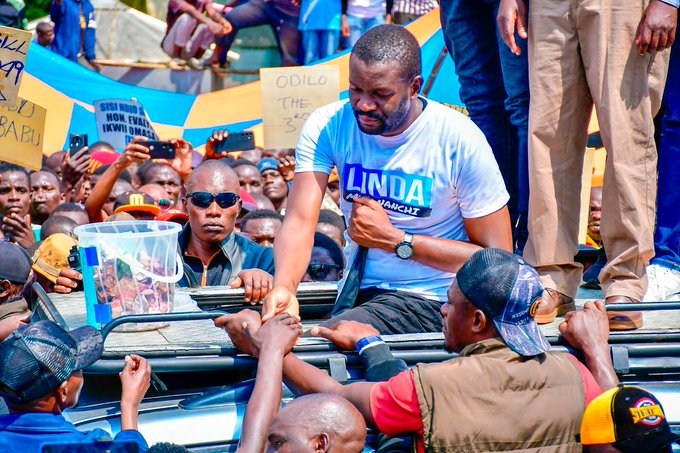
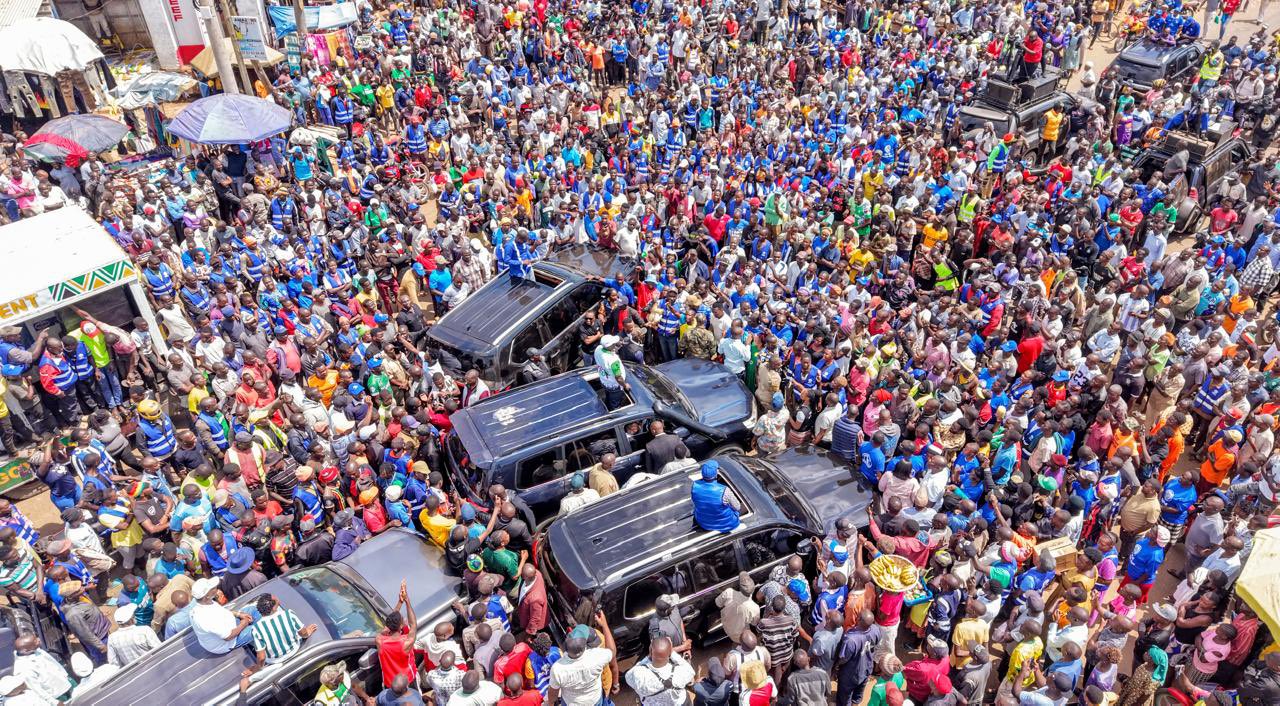
The United Alternative Government launched a three-day political offensive across Western Kenya on Friday, sending a coalition of opposition heavyweights deep into territory that Prime Cabinet Secretary Musalia Mudavadi and National Assembly Speaker Moses Wetangula have long regarded as their exclusive political inheritance.
The team brings together former Deputy President Rigathi Gachagua, Wiper Patriotic Front leader Kalonzo Musyoka, Democratic Action Party–Kenya leader Eugene Wamalwa, and Democratic Party’s Justin Muturi. Trans Nzoia Governor George Natembeya, DCP Deputy Party Leader Cleophas Malala, and several Members of Parliament including Eseli Simiyu, Wafula Wamunyinyi, Caleb Amisi, and Peter Salasya also joined the delegation. Notably absent were People’s Liberation Party leader Martha Karua and Jubilee’s Fred Matiang’i — a pattern that has become a recurring feature of United Alternative Government field operations, and one the coalition’s principals have struggled to explain away convincingly.

As far back as April 2026, Gachagua was already accounting for the absences of both leaders from opposition tours in Ukambani and the Coast, saying each principal needed space to popularise their own party. “I would want to popularise DCP, same as Karua with PLP, Kalonzo with Wiper, and Matiang’i with Jubilee. But on the United Opposition’s mission, we remain one,” he said. The explanation has worn thinner with each successive tour.
The Western blitz kicked off on Friday in Luanda before moving through Khwirumbi, Khayega, Malava, Mayuge, and Shikomari on Saturday, with Sunday’s programme set to traverse Kibabii, Chewele, Misikhu, Naitiri, and Kiminini before concluding in Kitale. Every stop is a calculated incursion into communities that Mudavadi and Wetangula have cultivated for decades — communities they delivered to Ruto in 2022 and need to deliver again in 2027.
Gachagua, who arrived at Kisumu Airport to jubilant supporters on Friday morning, made no effort to soften the coalition’s intent. “I am very happy that Governor Natembeya, just like me and my colleagues in the United Alternative Government, is clear that the only way to liberate our country is to identify one presidential candidate to face Mr William Ruto on August 10, 2027,” he said.
The significance of that geography cannot be overstated. Western Kenya is not simply a constituency for Mudavadi and Wetangula — it is the foundation of their entire political value to the Kenya Kwanza government. Their worth to President Ruto has always rested on a single proposition: that they can mobilise the Luhya vote, Kenya’s second-largest ethnic bloc, and direct it where they choose. If that proposition is undermined, their leverage evaporates with it.
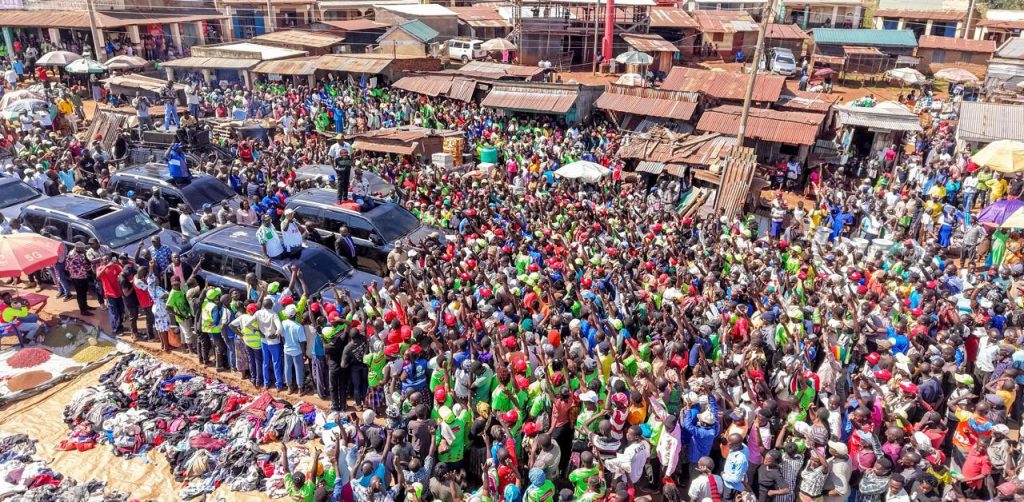
In recent months, that foundation has shown visible cracks. Figures such as Natembeya, Nairobi Senator Edwin Sifuna, Vihiga Senator Godfrey Osotsi, and Saboti lawmaker Caleb Amisi have emerged as direct challengers, questioning the two leaders’ governance style and threatening their grip on the region. The United Alternative Government tour is an organised attempt to institutionalise that challenge — to give the insurgency a national platform and a coalition identity that transcends individual personalities.
Gachagua, who held breakfast talks with Natembeya in Nairobi on Thursday ahead of the tour, framed the Western offensive in the bluntest possible terms. “The Governor has briefed me on the commitment of the great people of Western to join other Kenyans in liberating our nation which has been mismanaged by this kleptomaniac regime,” he said. The language was not accidental. It was designed to be heard by Mudavadi and Wetangula as much as by any Western Kenya voter.
For Mudavadi, the pressure is layered. He folded the Amani National Congress into UDA — a move that cost him his party’s independent identity but secured his position as Prime Cabinet Secretary. Having surrendered the ANC brand for proximity to power, he now finds that power being contested in the very region his merger was meant to deliver. As recently as January 2026, Mudavadi was in Kakamega urging Western leaders to stop asking questions and start acting, insisting the region must join UDA and reclaim its rightful influence in the national political arena. That message faces a direct counter-narrative this weekend, delivered on his doorstep.
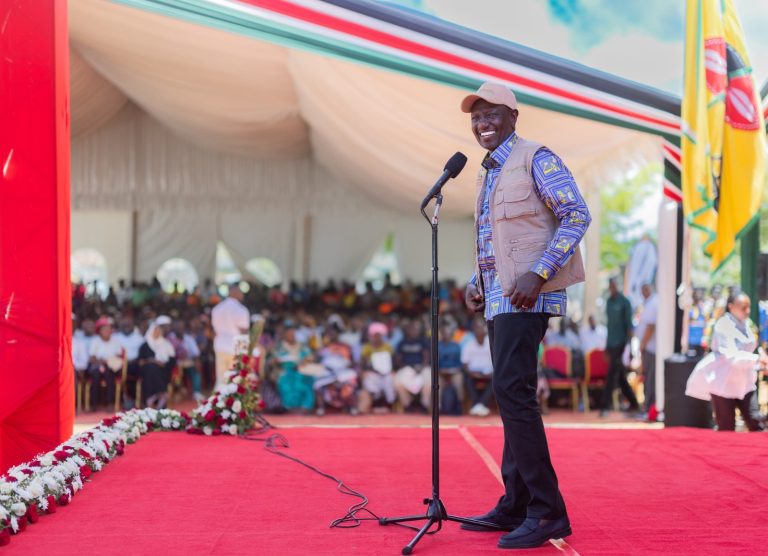
Wetangula’s position is structurally different but equally precarious. Unlike Mudavadi, he has resisted dissolving Ford Kenya into UDA, signalling a reluctance to cede political identity — particularly in Western Kenya, where the party retains meaningful presence. But that resistance risks creating friction within Kenya Kwanza as Ruto seeks to consolidate political support under a unified banner. As recently as 6 June 2026, Wetangula was in Luanda rallying support for Ruto’s re-election while challenging Western leaders in senior government positions to ensure their influence translates into tangible development for residents. Six days later, the opposition arrived to contest the same ground.
The opposition’s decision to centre the tour on Western Kenya is also a direct challenge to Ruto’s 2027 arithmetic. Political analysts argue it will be extremely difficult for Ruto to secure meaningful support from the Mt Kenya region, where former President Uhuru Kenyatta has reasserted influence through the Azimio coalition. That makes Western Kenya not merely important to Ruto — it is potentially decisive. Losing ground there does not merely inconvenience Kenya Kwanza; it could determine the presidency.
Wamalwa, who repeatedly invoked the 2002 NARC model that united opposition forces behind a single candidate, insisted coalition principals understand that a divided opposition cannot defeat Ruto. “We all know that only one of us can become the sixth President of Kenya,” he said at his DAP-Kenya party offices in Karen, Nairobi, days before the tour launched.
That unity, however, remains aspirational. The absences of Karua and Matiang’i from yet another field operation are not trivial footnotes — they are data points in a pattern that raises legitimate questions about whether the United Alternative Government is a coalition in the full sense, or a series of parallel operations dressed in shared branding.
Gachagua has launched a 45-day stakeholder engagement at his Wamunyoro residence specifically designed to build consensus around a single presidential candidate ahead of 2027. “This is as espoused in our party, DCP Party, philosophy of listening to the people,” he said. The retreat’s outcome will determine whether the Western tour was the opening act of a genuine national movement — or simply the latest chapter in Kenya’s long tradition of opposition mobilisation that promises unity and delivers division.
For Mudavadi and Wetangula, the weekend’s events carry a message that no government title can fully insulate them from: Western Kenya is no longer a settled matter.
The opposition has arrived. And it brought the whole weekend with it.
Similar Posts by The Mt Kenya Times:
- Mt Kenya Times ePAPER October 1, 2026
- Museveni backs Lamu but keeps Uganda’s money at home
- Sifuna’s party wins its name — and Kenya’s opposition race begins in earnest
- Lamu’s $16B gamble: Africa’s biggest refinery divides the region
- Ruto launches KSh2.2 trillion Lamu refinery in East Africa’s biggest energy bet
About the Author