Pedagogical Conditions Of Individualization Of Independent Education Of Students
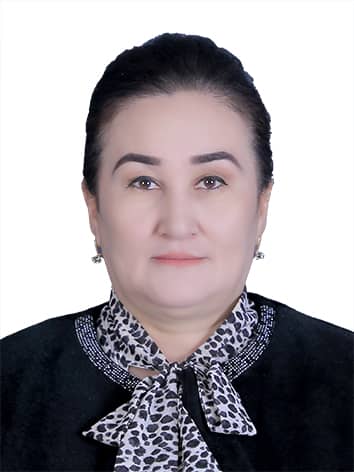
Arzikulova Surayyo Faizullayevna

By: Arzikulova Surayyo Faizullayevna
ANNOTATION
This article discusses the important conditions for the use of individualized educational technologies in the process of independent education of students, the differentiation of education, the individualization of independent educational tasks, and the generality of control.
Key words: Independent education, individualization, differentiation, educational material, program, approach, educational technologies.
INTRODUCTION
Since the most acute problems in the field of education and training are associated with the lack of motivation for learning in the majority of students, this leads to a decrease in the main indicators of education and training of graduates. Student activities have different meanings for different types of students. Determining the essence of educational motivation and the meaning of education for a student in each specific case plays a decisive role in determining the measures of pedagogical influence of the teacher.
First of all, if we pay attention to the meaning of the word motivation, the following meanings can be understood from the sources:
Motivation is the reason why humans and other animals initiate, continue, or stop a behavior at a particular time. Motivational states are generally understood as forces acting within an agent that create a propensity for goal-directed behavior. Often different mental states compete with each other, and only the strongest state determines behavior.
This means that we can be motivated to do something without actually doing it. The paradigmatic state of mind that provides motivation is desire. But various other states, such as beliefs about what to do or intentions, can also provide motivation. Motivation is derived from the word motive, which means a person’s needs, wants, or urges. It is the process of motivating individuals to act in order to achieve a goal. Psychological elements that drive people’s behavior in the context of work goals may include the desire for money.
The meaning of education for each student depends on his environment (famifriends, colleagues) determined by the system of ideals and values received. Due to this, before the start of training, the child has a certain idea about the educational activity. However, during high school, these ideas can change significantly.
The meaning of education includes the following points: the child’s understanding of the objective importance of education, which is determined by the moral values developed in society, accepted in the social environment and in the child’s family; understanding of the importance of learning for oneself, the level of the child’s aspirations, his self-management and self-evaluation of educational work, and his individual relationships. Since all these aspects are a process of development in the educational process, the content of education can change qualitatively with the development of educational activities. Psychological research shows that when students understand the meaning of learning, success in educational activities increases (the stock and quality of knowledge increases, the methods of acquiring knowledge are improved), learning material becomes easier and more comfortable. will remember it.
For example, the desire to acquire knowledge in order to be useful to society, the desire to fulfill one’s duty, the understanding of the need to learn, the sense of responsibility. In this, the motivations for understanding social necessity, duty and responsibility, and striving for careful preparation for choosing a profession are of great importance. Social motives also include positional motives expressed in the desire to occupy a certain position in relations with others, to gain their approval and prestige. The motives of social cooperation are that the student not only wants to communicate with other people, but also seeks to understand, analyze and constantly improve the ways and forms of his cooperation and relations with his teacher and fellow students. This motive is an important basis for self-education and personal self-improvement.
Researcher Moiseeva Yana Pavlovna gives the following explanation about motivation: motive (Latin movero – to move, push) -ly,it is called the thing that moves a living being, it spends its life force. According to the researcher, the motive, which is an indispensable “insurance” of any actions and their “combustible material”, is always at the level of worldly wisdom in various ideas about feelings (pleasure or displeasure) – motivations, inclinations, aspirations, desires, passions, willpower.
So, the role of the teacher is many, and within the framework of the credit-module education system, the teacher must first become a motivator, then an assistant, and in the process of activity, a teacher. In other words, the teacher should motivate the students while instructing them, provide the most favorable attitude for independent work, coordinate and advise the students in the course of educational activities.
The above-mentioned information and communication technologies provide an opportunity to monitor the actions of each user separately, which is important in the context of the discussed problem. Web-seminars, teleconferences, video chats between students and the teacher when discussing a specific task – this is a method that can lead to real independent work of students under the guidance of the teacher in the most convenient national mode.
An independent student acquires the necessary knowledge, skills and qualifications, learns to work systematically, and forms a unique style of mental activity. The difference between independent work and other forms of education is that the student organizes his own cognitive activity. M. Antonyuk, L. Derkach, N. Sagina, A. Chijj, I. Shaydur and other scientists believe that it is necessary to organize students’ independent learning activities taking into account their specific characteristics and cognitive abilities.
Authors such as V. Vergasov, A. Mirolyubov and others understand independent work as a purposeful, active and relatively free activity of students. I. Shaydur, in turn, “Taking into account the individual characteristics of independent students, learning of different levels of complexity both in the auditorium and outside the auditoriumIt is a specially organized activity aimed at independent performance of tasks. The purpose of such activity, in his opinion, is “to form the ability of students to independently supplement their knowledge, to act in the flow of scientific information.” Analyzing the concepts of “independence”, “self-study” and “independent work”, it can be seen that all these terms have the prefix “self”.
On the other hand, the goal of students’ independent work is to develop their independence, and independent education implies a certain independence. Thus, independent work is the basis of self-education and helps to form the student’s readiness for self-education. V. Kurinsky and S. Dneprov consider such a concept as “autodidactic”, which, in fact, is synonymous with self-learning.
In fact, according to scientists, this is a purposeful, systematic, independent and autonomous activity of the subject of the self-learning process. The essence of self-learning lies in the conscious self-organization of the process of acquiring knowledge and acquiring the necessary skills. It helps to develop and improve the qualities, abilities and skills of a person with the methods of self-education and self-development.
All three components (self-discipline, self-discipline, self-development) are closely related to each other, but none of these components is the main one. The effectiveness of self-education and self-development depends on the independent activity of students, which is based not only on the development of the individual’s volitional processes.
Independent education is a form of education in the form of a systematic activity aimed at the student’s independent acquisition of knowledge, skills and abilities without direct scientific support of the teacher, but on the basis of direct or indirect instructions in necessary cases. lib, which is mostly organized outside of the audience.
Ulima Surayyo Rakhimova makes the following suggestions for organizing independent education: to constantly increase the professional and pedagogical training of the trainees of the professional development institution in terms of organizing, implementing and monitoring independent training and independent education; improving the mechanism of equipping listeners with methodological knowledge, skills and qualifications for independent training and independent education;
Forms and methods of independent training and independent education of students, organization of independent education, attention to the creation of educational and methodological literature, recommendations, guidelines, instructions on the scientific-theoretical and methodical bases of monitoring its results increase;
study of advanced international experiences in organizing independent training and independent education and implementing them into our national personnel training system.
Independent work helps to develop independence as the main characteristic of a person. Independence is a quality of a person that is manifested in initiative, criticality, decent self-esteem and personal responsibility for one’s activities and actions.
Therefore, a ready and independent student should know the following as a future specialist:
– independent establishment and systematization of one’s work order;
– independently plan the sequence of their actions; – independently control and correct these actions, that is: monitor their progress, make corrections and explanations.
In order to develop independence in students, in our opinion, it is necessary to determine the level of readiness of students for independent educational activities, if possible, to increase this level and accordingly is to organize independent work taking into account individual characteristics, level of preparation and necessary motivation. As criteria for the development of personal independence, the intensity of the tasks offered for independent work, as well as the percentage of tasks performed in the conditions of self-organization in relation to the total number of tasks offered for a certain subject, can be considered. In addition, the work should be done with interest. Thus, the analysis of scientific literature allowed us to identify the main approaches to defining such a concept as “independent work”, in particular:
– types of individual and group cognitive activities of students, in the auditorium and outside the auditorium (R. Nizomov, A. Chizh, N. Sagina);
– educational tasks of various types performed under the guidance of the teacher (P. Pidkasisty, M. Garunov, N. Nikandrov);
– the work organization system, in which the management of students’ educational activities is carried out in the absence of the teacher and without his direct assistance (V. Graf, I. Ilyasov, N. Sagina);
– student work carried out according to a special individual study plan made taking into account the individual characteristics and cognitive abilities of students (S. Arkhangelsky, L. Derkach, I. Shaidur, A. Chijj);
– a specific type of educational activity, the main goal of which is to form the independence of the subject, and at the same time, the formation of its skills, knowledge and skills takes place indirectly through the content and methods of all types of educational activities. (V. Kazakov).
Thus, in the credit-module education system, it is the main form of organizing students’ independent education, which includes individual and collective learning activities and classroom and extra-curricular activities, taking into account individual characteristics and cognitive abilities. is carried out in classes. The goal of students’ independent work is not only to develop students’ ability to independently supplement their knowledge and move freely in the flow of scientific information, but alsois the development of activity and independence as a necessary condition for self-learning and self-awareness.
A student who wants to carry out independent education must solve a number of educational and logical tasks with the teacher:
including selecting information to answer a question posed by the teacher;
to distinguish primary and secondary items in the educational text;
creating a text plan;
work on concepts, patterns, theoretical principles;
grouping and classification of the studied material;
summarizing and minimizing what has been learned, applying the acquired knowledge and consolidating it in memory.
Organization and control of independent education of students, experience shows that it allows to successfully solve the problems related to the improvement of the training of a person with higher education who is able to regularly supplement his knowledge, which:
reducing the adaptation period of first-year students;
regulation of independent education, daily routine, creation of conditions;
creation of favorable conditions for a person’s full development;
reduction of delays in legislation;
studying student assignments and improving their quality;
wider involvement of students in public events, scientific-research works;
formation of the need for continuous self-education;
improving educational efficiency and quality of education.
It is known that mastering educational material, skills and competenciesformation, development of students’ cognitive abilities occurs in the process of independent performance of the system of exercises corresponding to the goal of mastering, that is, in the process of mastering. Independent educational process, depending on the level of their preparation, the level and profile of the educational institution, different types of independent educational tasks are used, and their content also changes. The following are the most widely used in the university of our country.
Types of independent educational tasks of students:
strengthening and deepening learning of educational material with the help of textbooks, training manuals and other resources;
independent study of separate subjects and sections of science;
performing graph, calculation and other individual homework;
seminar, practical training, laboratory work, colloquiums, intermediate control of knowledge, control and preparation for independent work;
participation in the implementation of research.
The process of independent education is not only learning, repeating and strengthening the educational material, that is, solving narrow educational problems, but also developing students’ creative work, research abilities, persistence in achieving the goal, hard work, necessary and effective in life. is the formation of qualities such as labor activity.
One of the important stages of organizing independent education of students is planning. The student’s cognitive activity, amount, content and time are taken into account in the planning. Scheduling makes it possible to organize free time in the auditorium for both students and teachers, the amount of work required increases. In general, the planning of independent educational tasks creates conditions that ensure its systematicity, which helps to increase the quality of training of specialists, frees up time for participation in socially useful work, and creates favorable conditions for the comprehensive development of a person. In planning independent education of studentsthe following main tasks are solved:
teaching students the skills of independent work;
determining the content and time of seminars;
colloquium, independent and control work, individual;
tasks, checking intermediate knowledge;
determine the time spent by students on all types of independent activities;
development of a system of tasks, control of independent education, taking into account the time spent by students.
Attention to this area of higher education reform, all attempts of scientists to find a scientific-pedagogical formula based on classical traditional educational principles and able to process all the difficulties faced by university teachers have been successful. is explained by the lack of Today, it is necessary to harmonize the existing educational theories with the requirements of modern pedagogical practice, to give them more knowledge.
Wide use of information and communication technologies is considered as the main direction of increasing the effectiveness of the organization of independent education of students of higher educational institutions in the process of credit-module education.
Summary
The process of globalization in society is also finding its expression in the development of science. In this regard, the application of the credit-module system to the higher education process is the main factor for the development of this field and the increase in the quality of student education.
Individualization of education serves to increase the quality of education and prioritize motivation in education by giving it to students’ capabilities and needs.
Apply individualized education to higher education institutionsthere are great opportunities for it, and it helps to organize the independent education of students effectively.
One of the important conditions for the use of individualized educational technologies in the process of independent education of students is the differentiation of education, the individualization of independent educational tasks, and the totality of control.
– Senior teacher of Shahrisabz branch of Tashkent State Pedagogical University named after Nizomiy
2021-2022 -y.y- Senior teacher of the Department of Preschool and Primary Education Methodology at the Pedagogical Institute of Karshi State University
2022-2023 year-Senior teacher of the Department of Preschool Education, Faculty of Pedagogy, Shahrisabz State Pedagogical Institute.
2023 x.v-Shahrisabz State Pedagogical Institute, Faculty of Pedagogy, Head of Preschool Education Department.
Arzikulova Surayyo Faizullayevna
Researcher of Shahrisabz State Pedagogical Institute
surayyoarziqulova1972@gmail.com
Phone: +998 94 527 70 72
Similar Posts by The Mt Kenya Times:
- The paradox of inclusion: Kenya’s progressive disability laws and the persistent reality of exclusion
- The marketplace mirage: Kenya’s dual mandate and the persistent carnival of deception
- Wamunyoro Alliance Takes Shape; Gachagua, Kalonzo, Wamalwa unite
- Gachagua, Kalonzo, Wamalwa unite: Kenya’s 2027 opposition battle takes shape
- Beyond the rubble: Nairobi’s building collapses are a failure of systemic oversight
About the Author