RCMRD Unveils Map Book as It Celebrates Five Decades of Regional Service

RCMRD @ 50 Anniversary.
By Aoma Keziah,
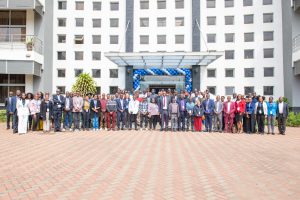
The Regional Centre for Mapping of Resources for Development (RCMRD) celebrated its golden jubilee this week, marking fifty years of advancing geospatial technology and regional cooperation in Eastern and Southern Africa, at the Centre’s headquarters in Nairobi.
In his opening remarks, Minister of Lands Malawi Deus Gumba, expressed Malawi’s pride in being one of the founding member States and reaffirmed the country’s commitment.
“ RCMRD’s evolution over the past 50 years is growing from 5 to 20 member States and its critical role in supporting African countries through geospatial solutions in land management, Agricultural monitoring, climate change adaptation, and disaster preparedness,” he remarked
More than just a commemoration, the launch served as a platform to launch RCMRD’s first-ever Map Book, a striking visual chronicle of the institution’s work over the decades. The book features detailed maps, satellite imagery, and narratives that trace the Centre’s impact across sectors including agriculture, water management, urban development, and disaster response.
RCMRD Director General Dr. Emmanuel Nkurunziza described the Map Book as a “living record of their journey as an Intergovernmental Organization.
“The challenges we’ve faced, and the milestones we’ve achieved with our member states, this book is not only a showcase of technical expertise but also a testament to regional partnerships and innovation,” he stated.
RCMRD Governing Council Chair, also the PS, Ministry of Lands and Natural Resources, Zambia Patrick Mucheleka reaffirmed its regional commitment.
“On behalf of the Zambian Ministry of Lands, I commit to supporting RCMRD’s mandate. As the current Chair of the Governing Council, we will work collectively with member States to build on the successes of our predecessors and add greater value to the Centre’s regional impact,” he reaffirmed.
With speakers at the event emphasizing the importance of data in shaping policy, especially in the face of climate change and rapid urbanization, Several partner organizations shared how RCMRD’s data products have helped improve food security, manage natural resources, and strengthen disaster preparedness.
“The past fifty years have been transformative, but we’re looking ahead to deeper integration, smarter tools, and even more responsive services for the challenges that lie ahead,” Nkurunziza added.
The ceremony attended by dignitaries, scientists, and partner organizations, RCMRD reflected on half a century of contributions to sustainable development, environmental monitoring, and regional planning.
Founded in 1975 under the auspices of the United Nations Economic Commission for Africa, RCMRD has grown from a training facility to a regional hub for cutting-edge mapping, remote sensing, and data analysis. It now serves over 20 member countries, supporting governments and institutions in evidence based decision making.
As guests explored the exhibits and flipped through the Map Book’s pages, the sentiment was clear: RCMRD’s past is impressive, but its future holds even more promise.
Similar Posts by Aoma Keziah:
- Nationwide Youth Business Drive Enters Last Lap With New Nyota Trainings
- Green Light From Washington Sets G42 On Fast Track to Build Region’s Most Powerful AI Network
- Safina Eyes Kariobangi North Seat in Intensified Push Before Poll Day
- KEBS Opens Talks With Manufacturers On New Standards Levy Order 2025
- Kenya, Uganda And South Sudan Chart Way Forward On East Africa Rail Corridor
About the Author


 The Mt Kenya Times