Sudan’s war reaches a dangerous new front as El Obeid braces for onslaught
Half a million civilians trapped in North Kordofan capital as rival forces wage war on the battlefield and in the information space
By Diaspora Times Team
The Sudanese city of El Obeid has become the latest and most perilous flashpoint in a civil war now entering its fourth year, with United Nations officials warning that the window to prevent a catastrophe on the scale of last year’s massacre in El Fasher is closing by the day.
Repeated warnings of an imminent assault on the North Kordofan state capital have mounted for weeks, accompanied by reports of intensifying military movement in the surrounding countryside. The siege of El Obeid dates back to the earliest days of the war, when Rapid Support Forces fighters seized the city’s airport from Sudanese Army forces in April 2023, before the army spent February 2025 breaking a two-year encirclement. That respite has proved short-lived. By mid-June this year, the United Nations was again warning that the RSF was moving against El Obeid, with more than half a million people in danger, and a drone strike on a fuel station in the city killed a civilian on 25 June.
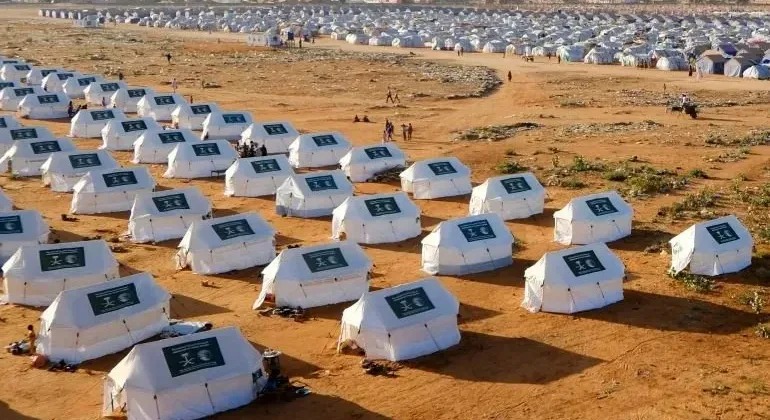
The scale of what is now at stake is difficult to overstate. The European Union has said a major military build-up by the RSF threatens a city sheltering roughly 500,000 civilians, including around 100,000 people already displaced from other parts of the country, while a coalition of nations including Britain, Germany, Ireland, the Netherlands and Norway formally requested an urgent debate at the UN Human Rights Council, warning that approximately 500,000 civilians are at risk of being targeted in large-scale violence.
A city under relentless bombardment
The immediate crisis has been driven by an intensifying campaign of drone warfare. The UN’s human rights chief, Volker Türk, told the Human Rights Council in Geneva that his office documented 15 drone strikes on El Obeid and its surrounding areas in the space of just three weeks last month, killing at least 45 civilians. Describing the weapons involved, Türk said the strikes — launched by the former battlefield allies now locked in conflict, the paramilitary Rapid Support Forces and the national Sudanese Armed Forces — have repeatedly struck markets, schools, fuel stations, water infrastructure and civilian vehicles.
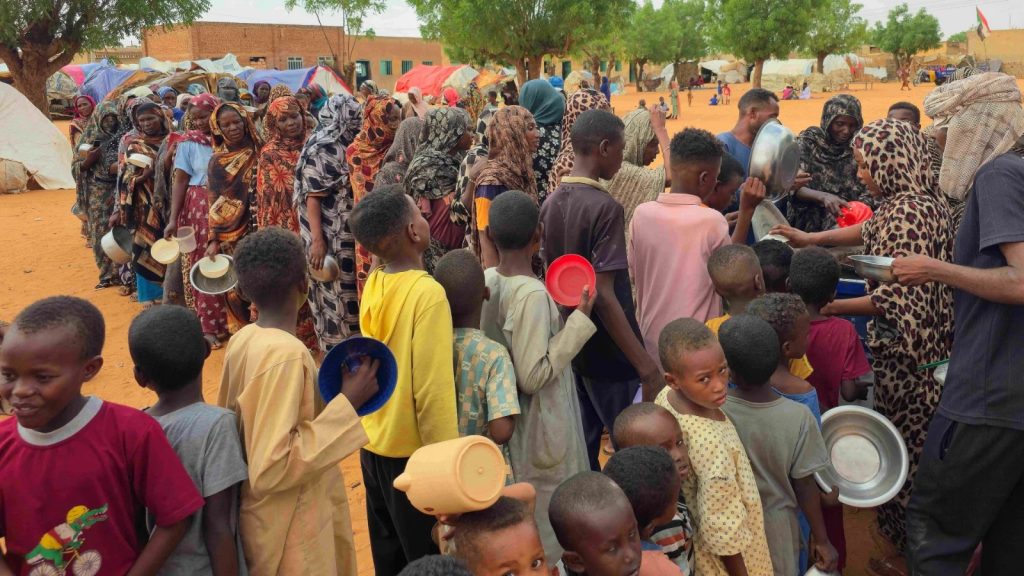
The human cost of trying to escape has become as severe as the risk of staying. Türk said that some residents are selling their belongings simply to finance their escape from the city, while for many others the exorbitant cost of transport and constant attacks on vehicles along exit routes make leaving impossible. He added that his office had documented patterns of summary executions, abductions, torture and ill-treatment, sexual violence and looting along the routes taken by displaced people across the Kordofan region.
That account was echoed by Mona Rishmawi of the UN’s Independent International Fact-Finding Mission for Sudan, who addressed the same urgent debate. “We have spoken with residents of the city. Fear is pervasive,” Rishmawi said, describing how footage and statements circulating on social media accounts affiliated with the RSF showed military build-up around El Obeid and preparations to enter the city. She told the council that hospitals, markets, schools and residential areas had reportedly been struck, causing civilian casualties and disrupting essential services, with women and children among those killed and injured.
A separate joint statement from UN human rights experts, cited by Al Jazeera, put the toll starkly: “Ten consecutive days of drone strikes have killed at least 50 civilians across El Obeid and North Kordofan, and have caused significant damage to civilian infrastructure,” the experts said, adding that “widespread credible reports of ethnically targeted violence, including sexual and gender-based violence, are deplorable.”
 Encirclement and the fear of a second El Fasher
The pattern unfolding around El Obeid has drawn direct and repeated comparison to the fall of El Fasher, the North Darfur capital that endured an 18-month siege before RSF forces overran it last October. That assault led to a three-day rampage in which roughly 6,000 people were killed, according to UN accounts of war crimes and crimes against humanity, and Amnesty International has since accused the RSF of committing crimes against humanity and ethnic cleansing during the massacre.
Officials fear El Obeid is now following the same trajectory. Mohamed Refaat, the International Organization for Migration’s Chief of Mission for Sudan, warned from Port Sudan that “there is concern that El Obeid could become the next El Fasher,” noting that residents there have been stranded for months and that, without action, there will be a repeat of what happened in El Fasher. In earlier remarks, Refaat said El Obeid is approaching a total siege that will soon leave civilians unable to leave or return safely, warning conditions could soon match those seen in El Fasher.
Latest information from the city indicates the RSF now controls all surrounding routes except towards the east, according to the UN Human Rights Council briefing, with residents describing growing military movement around the city and increasing insecurity from drone attacks along the remaining exit routes.
Türk himself framed the stakes for the international system as a whole, not just for Sudan. “El Obeid is a classic case that shows why the use of the veto should be limited, as proposed by France and Mexico more than 10 years ago,” he told the council, while stressing that accountability for crimes already committed must follow, and welcoming the continued engagement of the International Criminal Court in seeking justice for Sudan’s war victims.
Why El Obeid matters strategically
Beyond the immediate humanitarian toll, El Obeid’s fall would carry significant strategic weight. The city is the primary gateway linking Khartoum, some 550 kilometres to the northeast, with the vast Darfur region, and is a stronghold of the Sudanese Armed Forces’ 5th Infantry Division, known as Al-Hagana or the “Camel Corps.” It also hosts an airbase, a major oil pipeline and a large gum arabic market.
Analysts say control of the city would reshape the balance of the wider war. Ahmed Ben Omer, an independent Sudan analyst, told Al Jazeera that the city sits at the heart of a network linking Darfur, Kordofan and central Sudan, and that control of it would give the RSF an opportunity to connect vast geographical areas and rebuild its political project after losing Khartoum — a reference to the RSF’s expulsion from the national capital in March 2025. Whoever holds El Obeid effectively controls a key gateway through which goods, people and supplies flow into central Sudan.
Kholood Khair, another Sudanese affairs researcher, offered a blunter assessment of the motives driving the battle, telling Al Jazeera that the fight for El Obeid is fundamentally about “power, land and money.” The siege has already driven food prices sharply higher; the encirclement has seen prices surge by up to 300 percent, leaving much of the population unable to afford rising costs or reach safety. One resident, 35-year-old Aqsam Mohammed, has been forced to walk long distances to secure murky, undrinkable water for her seven children after strikes crippled electricity and water services.
Civilians caught between rival narratives
Observers increasingly describe the contest for El Obeid as being fought as much through competing narratives as through military manoeuvre, with each side seeking to shape international opinion ahead of any major escalation on the ground. One regional analysis argued that warnings of an “imminent attack” on El Obeid have coincided with military movements by the Sudanese army and allied militias in North Kordofan, which some observers believe are intended to divert attention from preparations under way in areas such as Jabra Al-Sheikh and Rahad Al-Nuba, while channelling international pressure toward a single narrative favouring the authorities based in Port Sudan.
That same analysis placed the protection of civilians squarely at the centre of the crisis, arguing that the presence of hundreds of thousands of civilians inside a city threatened by escalation must not be turned into a bargaining chip or a means of securing military or propaganda advantage for any party. According to field accounts cited in the report, the Sudanese army and allied militias — including groups linked to the Islamic Movement — have been preventing civilians from leaving El Obeid, raising fears that residents could be trapped or used as human shields should fighting intensify.
For their part, the RSF and its political umbrella, the Sudan Founding Alliance, have sought to position themselves as willing to mitigate the humanitarian fallout. The two groups announced their readiness to open safe corridors for civilians wishing to leave El Obeid, in line with the principles of international humanitarian law, and said they were willing to coordinate with the United Nations and international and regional organisations to ensure the delivery of humanitarian assistance and the protection of civilians.
Verifying claims from either side has proved difficult. Continued denial of access to Sudan for the UN’s Fact-Finding Mission has undermined independent verification, fuelling competing narratives and giving warring parties greater scope to use the humanitarian file as a further weapon in the conflict. Compounding the danger, the same analysis noted that the drone campaign has been enabled by external supply lines, with the increasing use of Iranian- and Turkish-made drones by the Sudanese army and allied battalions expanding both the scope and nature of violations, including strikes on residential neighbourhoods, markets and civilian facilities in areas not necessarily witnessing direct confrontation.
Aid agencies sound the alarm
Humanitarian organisations operating in Sudan say the country’s aid architecture is buckling under the strain of a war now well into its fourth year. The International Rescue Committee warned that escalating RSF drone strikes on El Obeid are killing civilians, cutting off access to food, water and fuel, and paving the way for a ground offensive that would put hundreds of thousands of people at grave risk of a major humanitarian emergency. The charity said drone strikes on fuel depots and water stations have left residents facing acute shortages of both, and that civilians risk being trapped in the city if key evacuation routes toward Kosti are cut off, warning starkly that “El Obeid risks facing the same trajectory” as El Fasher “without sustained international action to halt the offensive.”
The strain on humanitarian operations extends well beyond El Obeid itself. Zoe Brennan of the International Organization for Migration said the number of newly displaced people across the wider Kordofan region has surged by nearly two-thirds in just three months, with the agency documenting more than 100 displacement-triggering incidents in under nine months — an average of one major incident every two to three days. Refaat, speaking separately, said the IOM’s resources are completely depleted, particularly for emergency shelter and food items, and criticised the international trend of reducing humanitarian funding even as global defence spending rises, calling instead for member states to invest clearly in peace.
Attacks on humanitarian operations themselves have added to the toll. UNHCR spokesperson Eujin Byun confirmed that a driver survived an attack on a UN refugee agency vehicle, though the entire consignment it carried was lost — the second time this year a UNHCR vehicle has been struck in Sudan. “This reflects a deeply worrying trend of attacks affecting civilians,” Byun said, calling for guaranteed safe and secure humanitarian access across the country. The UN has described Sudan as the second most deadly environment globally for humanitarian workers.
Amid the grim assessments, Sudan’s own representative to the Human Rights Council struck a note of defiance on behalf of his home city. “For your information I am from El Obeid; this wounded city, it will never fall, as long as we are alive,” said Salim Ahmed Ibrahim, addressing fellow ambassadors during the council’s proceedings.
Diplomatic manoeuvring continues
Efforts to broker a broader end to the conflict have so far struggled to gain traction. Sudan’s foreign ministry recently denied it had rejected a US proposal to end the war, describing remarks by Massad Boulos, an adviser to US President Donald Trump, as “inaccurate,” and insisting it had engaged constructively with the proposal while remaining committed to the May 2023 Jeddah declaration. The European Union, meanwhile, has said it is watching the situation with alarm as a member of the diplomatic Quintet monitoring Sudan, and has warned that any attack targeting the civilian population, obstruction of safe passage, or deliberate blocking of humanitarian access would constitute a violation of international humanitarian law. “El Obeid cannot become another El Fasher,” the bloc’s statement said, warning that violations “will lead the EU to consider robust measures against those responsible.”
There has been at least one incremental sign of movement on humanitarian access. The United Nations has welcomed Sudan’s decision to extend the opening of an aid corridor with neighbouring Chad, even as it continues to express concern over the ongoing escalation in El Obeid.
For now, though, the balance of evidence points toward a city standing on the edge of catastrophe, with rival forces still contesting not only its streets but the story the world is told about them. As the UN’s senior officials have repeatedly stressed, the priority for the international community must be independently verified fact over competing claims — and above all, the safety of the roughly half a million people who remain inside El Obeid’s shrinking perimeter, with fewer routes out by the day.
Similar Posts by The Mt Kenya Times:
- Mt Kenya Times ePAPER October 12, 2026
- Gachagua’s party storms Kikuyu from afar as 2027 countdown begins
- Counties caught: The KSh100B payroll scandal Kenya can no longer hide
- CS Ogamba: tree planting could generate carbon credit millions to fund education
- Farouk Kibet calls for unity and development as leaders rally behind Ruto’s 2027 re-election bid
About the Author