Tesla Roadster finally arrives, and it may just leave the ground
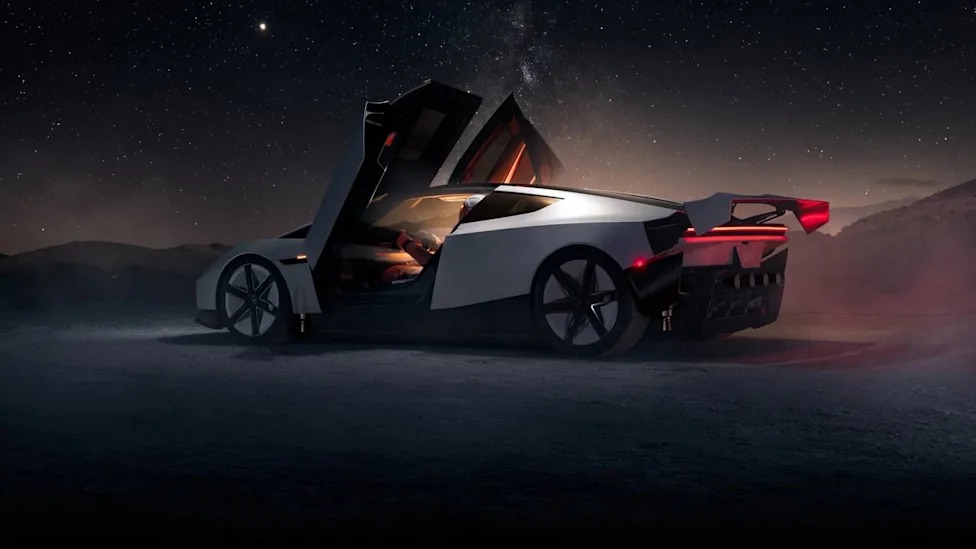
Nearly a decade after its first reveal, Musk’s long-delayed supercar unveiled in Texas with a SpaceX thruster package that could redefine what a car is allowed to do
By Jeremiah Kingamu
There is a particular kind of anticipation that builds around a product people have been waiting for so long that they have begun to doubt it will ever arrive. For Tesla enthusiasts and electric vehicle watchers globally, the Roadster had become something of a running joke — promised in 2017, targeted for delivery in 2020, and then delayed, rescheduled and delayed again through at least eight missed milestones. So when Elon Musk posted “New Tesla Roadster Unveil 10.01” on X on 13 September, alongside Tesla’s teasing “Go for launch” graphic, the reaction was less celebration than cautious disbelief.
But the event happened. On 1 October 2026, in Waco, Texas — near SpaceX’s rocket test facility at McGregor — Tesla finally pulled back the curtain on the production-spec Roadster, nearly nine years after the world first saw its concept. And based on what was shown, the wait may have been for something genuinely extraordinary.
At the heart of the Roadster story is not just speed, though speed is very much part of it. It is the integration of SpaceX cold-gas thruster technology into a road vehicle — a concept Musk has teased for years and which, according to multiple credible reports including Reuters and The Information, Tesla has been actively developing in two distinct versions. One is a standard electric sports car, ambitious by any measure. The other, the limited SpaceX Edition, is equipped with what Tesla internally calls the A71 thruster package and is, by all accounts, not street legal. It is a vehicle that is designed to briefly leave the ground.
That sentence deserves to sit for a moment. A consumer vehicle, however limited and expensive, that can temporarily lift off the tarmac. That is not marketing language. That is the stated engineering objective of the programme, confirmed by Musk himself in prior interviews, where he said the thruster package could push the car from 0 to 60 miles per hour in under one second and allow it to hover briefly above the road surface under controlled conditions.
To understand why this matters, it helps to understand what cold-gas thrusters do in their original context. They are used in spacecraft to make fine adjustments to position and orientation in the vacuum of space — small bursts of compressed gas that provide precise, controllable force. Adapted for a ground vehicle, they offer a form of propulsion and lift that is utterly unlike a conventional tyre-and-road relationship. The demonstration at McGregor was intended to take place in a controlled environment precisely because what the SpaceX Edition can do would be impossible to show safely at a conventional motor show.
The standard Roadster, for those not invited to the SpaceX Edition’s exclusive circle, is no less impressive in conventional terms. Tesla’s previously announced performance targets — unconfirmed as final production specifications until the October reveal — included a 0 to 60 mph time of under 1.9 seconds, a top speed exceeding 250 miles per hour and a range of approximately 620 miles from a 200 kWh battery pack. Whether the production car matches, exceeds or falls short of those figures is something the reveal event was designed to clarify. Final pricing has not been officially confirmed, though a base figure in the region of $200,000 has been associated with the car since its original concept reveal.
Production is expected no earlier than late 2027, more likely 2028. Given the Roadster’s history, even that timeline attracts scepticism in some quarters. Tesla’s Chief Designer Franz von Holzhausen and Vice President of Vehicle Engineering Lars Moravy confirmed in May 2026 that the car would be built in Texas, which at least answers one of the longer-standing logistical questions around the project. The decision to base production at Giga Texas, rather than the Fremont facility where earlier plans had pointed, places the Roadster geographically close to SpaceX’s operations, which makes collaborative development of the thruster package considerably more practical.
For international observers, particularly in Africa, the Roadster’s significance is less about personal purchase prospects and more about what it signals for the direction of technology and mobility. The SpaceX Edition will never be road-legal in Kenya. No regulatory framework currently exists anywhere in the world to certify a ground vehicle capable of becoming briefly airborne, and building one will be a slow process. But the broader conversation it triggers is worth paying attention to.
Electric vehicle adoption in Kenya and across East Africa has been gathering momentum, albeit from a low base. Charging infrastructure remains limited, electricity costs and reliability present challenges, and import duties on new vehicles make even conventional EVs expensive for most consumers. But the pace of change in the global automotive industry is accelerating in ways that will eventually reach every market. Watching Tesla merge aerospace engineering with consumer transport is a reminder that the definition of what a vehicle is capable of doing is being rewritten in real time.
For African policymakers and infrastructure planners, the lesson from the Roadster is not about flying cars. It is about the speed at which technology is moving and the importance of building regulatory and physical infrastructure that does not simply react to change but anticipates it. Countries that begin now to develop EV charging networks, update vehicle classification frameworks and invest in technical education for next-generation automotive systems will be far better positioned than those that wait for the technology to arrive fully formed at their borders.
The Roadster itself, whether it can be purchased or not, matters as a signal. It tells engineers, investors and governments that the ceiling for what an electric vehicle can do has not been found yet. Nine years of waiting, eight missed deadlines, and eventually: a car that can leave the ground.
That is either the most impressive product launch of 2026, or the beginning of yet another wait. Given what was shown in Waco on 1 October, the difference this time feels smaller than it ever has before.
Similar Posts by The Mt Kenya Times:
- Cledun Realtors recognised for opening land ownership to Kenyans abroad
- Marnju Tiles named best in East Africa at Starbrands awards
- Arati defends Kazi Mashinani workers: “They are not goons”
- Rains may ease milk prices but Kenya’s bread and cooking oil follow the world
- No ID, no voter’s card, but loud online
About the Author