Jetour
In a market where trust takes years to earn, a well-equipped Chinese SUV must prove it can go the distance — long after the showroom lights go off
By John Irungu
Kenya is a difficult market for a new automotive brand to crack, and Jetour is finding that out the hard way.
It is not enough to arrive with a well-equipped vehicle, an attractive design and an impressive list of specifications. Kenyan motorists buy with the future firmly in mind. They want to know whether the car will hold up on punishing roads, whether spare parts will be available when something goes wrong, whether any mechanic in their neighbourhood will understand the engine — and, perhaps most pressingly, whether they will find a willing buyer when it is time to move on. These are not secondary concerns. They are often the deciding factor.
This is precisely where Jetour faces its steepest hill.
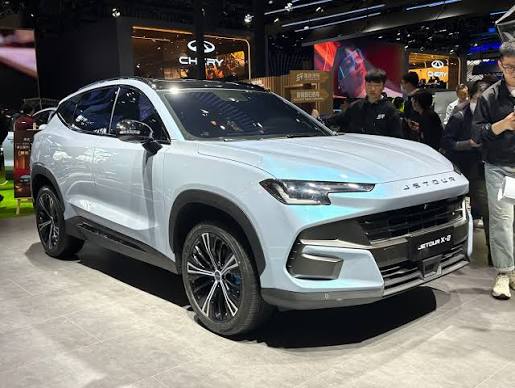
The Chinese brand has entered Kenya with products such as the T2 — a rugged, modern SUV offering four-wheel-drive capability, a 2.0-litre turbocharged engine, an impressively equipped cabin and the kind of road presence that turns heads at traffic lights. On paper, the proposition is genuinely compelling. In the showroom, it is easy to be impressed.
But getting people to admire a car is considerably easier than getting them to trust a brand.
For decades, Kenyan motorists have built deep, practical relationships with established Japanese and European names. Toyota, Nissan, Subaru and Mitsubishi are not merely popular because their vehicles are good. They are popular because of what surrounds them — an enormous, organically grown ecosystem of independent mechanics, spare-parts dealers, used-car importers and experienced buyers who have handled these vehicles for years. That ecosystem creates a confidence that no brochure can replicate. A motorist buying a Toyota is not simply buying the vehicle. They are buying into a vast support network that has been road-tested on Kenyan tarmac and Kenyan murram for generations.
Jetour does not yet have that depth — and it will not acquire it quickly.
For a prospective buyer, the questions begin the moment the warranty conversation ends. Where will the car be serviced once the dealership’s coverage runs out? Can an independent mechanic in Nakuru or Mombasa get to grips with its electronics, its turbocharged drivetrain, its four-wheel-drive transfer case? How long does it take to source a specialised component? These concerns can cool enthusiasm for an otherwise impressive vehicle, because in Kenya, the cost of being stranded — financially and practically — is not abstract.
The T2 illustrates the challenge particularly well. It is the kind of SUV that draws attention immediately, and rightly so. Its styling is purposeful without being garish, its cabin feels genuinely modern, and its mechanical credentials give it a legitimate claim on buyers who need something capable beyond the city. Yet capability and credibility are different things.
Credibility is built over years. It comes from watching the same vehicles survive Kenyan roads season after season. It comes from owners maintaining their cars without drama. It comes from knowing, from personal experience or a trusted friend’s, that when something eventually goes wrong — because something always does — the situation is manageable. That kind of reputation cannot be manufactured. It has to be lived.
The second-hand market adds another layer of pressure. Kenyan motorists are acutely conscious of resale value, and for good reason — many buyers use the sale of their current vehicle to partially finance the next one. A car with a strong resale reputation is not just a good car; it is a financial asset. A relatively young brand with few examples on the road and limited market history struggles on this front, not necessarily because its vehicles are unreliable, but because there simply is not enough evidence yet to reassure a cautious buyer.
This creates a difficult cycle. Fewer vehicles on Kenyan roads means fewer used examples. Fewer used examples means less familiarity among independent mechanics and private buyers. Less familiarity means more caution from prospective customers. And without a growing customer base, building a genuine enthusiast community becomes an uphill task.
None of this means Jetour makes poor cars. That may well be the wrong question entirely. The bigger question is whether the brand can persuade Kenyan motorists that it will be present and dependable for the entire ownership journey — not just at the point of sale.
A good car attracts the first buyer. A strong ownership experience creates the second, third and fourth. That is how automotive fan bases are genuinely built, and Jetour’s path forward in Kenya runs directly through that logic.
The brand needs more vehicles on Kenyan roads, more robust after-sales infrastructure, more accessible parts supply chains and, above all, more owners who can speak from real experience. Those owners, if well supported, become the brand’s most powerful and credible advocates. Word of mouth travels fast in Kenya’s car market. One satisfied T2 owner telling friends that the vehicle has been reliable, practical and affordable to run can achieve more than any billboard campaign. But the reverse is equally true — and equally swift.
Jetour’s battle in Kenya, then, is not ultimately about horsepower or features or price points. It is a battle for trust. The T2 can open the door with its design and specifications. Keeping it open will require something no marketing budget can purchase overnight: time, reliability, genuine after-sales commitment, and thousands of kilometres of positive ownership experience accumulated on Kenyan roads by real owners living real lives.
Until that foundation is laid, Jetour risks remaining what it currently is — an interesting newcomer with genuine potential. In Kenya’s automotive market, becoming known is the easy part.
Becoming trusted is the real work.
Similar Posts by The Mt Kenya Times:
- “‘रूह से रू-ब-रू’”: The World of Emotions in Bharti Raina’s Poems and Ghazals
- The forgotten identity: Is Kenya doing enough to preserve Sengwer culture?
- Kinity warns Gen Z: Slogans alone will not save Kenya
- Cledun Realtors recognised for opening land ownership to Kenyans abroad
- Marnju Tiles named best in East Africa at Starbrands awards
About the Author