Behind the gates of children’s homes are young people carrying stories most of us will never hear — and a resilience that deserves far more than our sympathy
By Hadassah Karangu
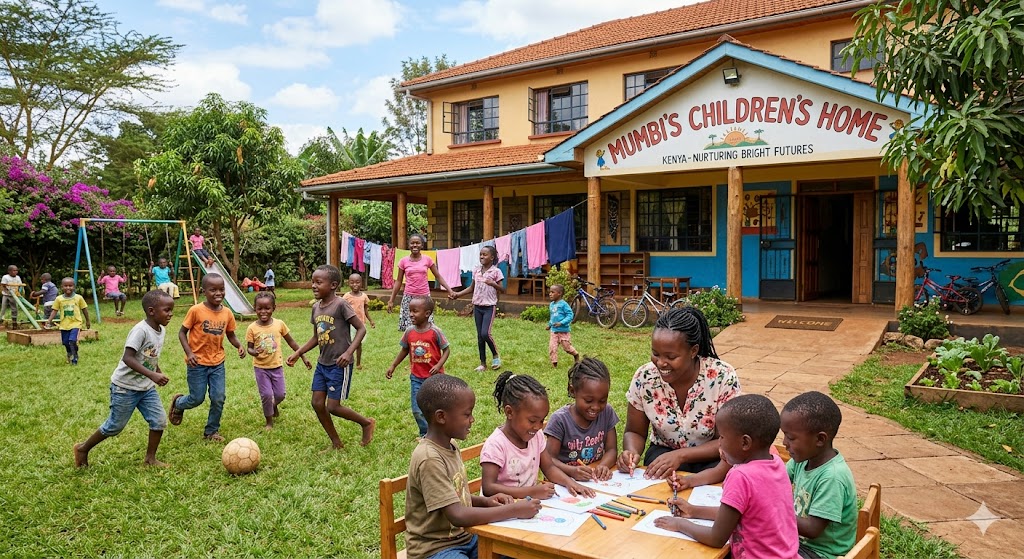
Every day, we pass children’s homes and orphanages without giving much thought to the lives unfolding behind their gates. We see children playing football, singing in church, walking to school, smiling for visitors. To most of us, these places look like exactly what they are meant to be — havens of safety and hope. But behind many of those smiles lie stories of pain, loss, and quiet struggle that rarely find their way into the open.
For many children living in care, the deepest wound is not the absence of material things. It is the absence of family. They may have a roof over their heads, food on the table, and a school uniform pressed and ready each morning. But they also carry questions that no caregiver, however devoted, can fully answer. Why did my parents leave? Do they think about me? Will I ever belong somewhere?
Those questions surface most sharply on the days that are supposed to be joyful. Birthdays, school visiting days, graduations, public holidays — these are the occasions when the contrast is hardest to ignore. While other children are embraced by parents and relatives, many children in homes stand a little apart, watching. The feeling of being different does not disappear simply because someone has done their best to make you feel loved. It settles quietly, and it stays.
There is also the struggle with identity that few people talk about. Many children in care grow up knowing little about their own family background — their relatives, their origins, the circumstances that brought them into a children’s home in the first place. As they get older, they try to piece their stories together from fragments of information, half-remembered details, documents they may or may not be allowed to see. That uncertainty leaves marks. It can undermine confidence, complicate a sense of belonging, and make it harder to answer the most basic of questions: who am I, and where do I come from?
Society, too, often makes things harder rather than easier. There is a stubborn tendency to label children from care homes as troubled, dependent, or unlikely to amount to much. These stereotypes are as unfair as they are damaging. Young people who are already working hard to overcome difficult beginnings should not also have to fight the assumptions of people who have never taken the time to know them. Yet that is frequently what they face — not understanding, but judgement; not support, but exclusion.
The emotional weight of all this is usually carried in silence. Children in care learn early to manage their feelings carefully. They do not want to appear ungrateful for what they have been given, and they do not want to seem weak. So the grief, the loneliness, the anxiety about the future — all of it tends to go inward. The question of what happens when they eventually leave the home is a source of particular worry, and it rarely goes away.
And yet this is not, at its heart, a story of despair. It is a story of resilience — of young people who wake up every morning, go to school, work towards their dreams, and refuse to be defined by circumstances they did not choose. Many children from care homes go on to excel academically, to lead in their communities, and to inspire people around them in ways that have nothing to do with where they came from. That determination is real, and it is worth far more than the occasional donation of tinned food and used clothing.
Because that is where our responsibility as a society tends to fall short. We give when it is convenient. We drop off supplies, attend the annual fundraiser, pose for a photograph. What these children actually need is harder to package and easier to postpone: mentorship, sustained educational support, emotional investment, and genuine acceptance from people willing to show up not once but consistently. They need adults who believe in their potential and are prepared to walk alongside them over time — not just when it is easy, or visible, or makes us feel good about ourselves.
The true measure of any society is how it treats those with the least power to demand better. Behind the walls of children’s homes are young people with dreams as large as anyone else’s. They are not asking for pity. They are asking for opportunity, for dignity, and for the chance to belong.
The next time you pass a children’s home, or meet a child who grew up in one, look a little closer. Beyond the uniform, beyond the practised smile, beyond the label — there is almost always a story of courage and quiet strength. It deserves to be heard.
Similar Posts by The Mt Kenya Times:
- Mt Kenya Times ePAPER October 26, 2026
- Sakaja challenges Kamukunji police over Eastleigh suspect bail
- Muturi demands binding livestreaming rules for 2027 polls to prevent repeat of 2022 chaos
- NTSA calls for road safety to be declared a national disaster after 24 die in Mtito Andei crash
- Ruku turns on Waiguru over deputy president ambitions: ‘That seat is not being contested for’
About the Author