The Global Chessboard: Unmasking The Power Play In Modern Geopolitics
 The Mt Kenya Times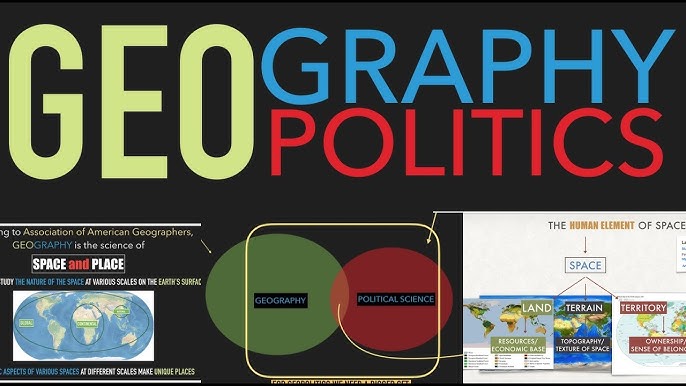
By: Midmark Onsongo
Worth Noting:
- While China spreads its economic tentacles, Russia sharpens its claws in the sphere of military power and political interference. Since the collapse of the Soviet Union, Russia has longed for the days of being a superpower, and Vladimir Putin plays the game with a ruthlessness that only a former KGB officer can muster. Ukraine is the clearest example.
- “When the lion is hungry, it does not negotiate with its prey,” and Putin’s annexation of Crimea and the invasion of Ukraine show that Russia is willing to defy international norms, sanctions, and threats to reclaim its influence over Eastern Europe. But the battlefield is not just one of guns and bombs—Russia has perfected the art of cyber warfare, disinformation campaigns, and political meddling.
In the grand game of geopolitics, “the eagle does not hunt flies,” and yet, today’s global powers are grappling not only with each other but with smaller, seemingly insignificant conflicts that ripple through the international arena. Like chess players poised at the board, the moves are complex, the stakes are high, and every action—or inaction—reverberates far beyond the borders of the initiating nation. To those who pay attention, the world is on fire, and the embers of conflict, economic rivalry, and political manipulation are spreading faster than ever before.
What we see today is a global power struggle, a contest of wills between the titans of international diplomacy, military might, and economic prowess. The United States, China, and Russia—each vying for supremacy, each claiming dominance in a new world order. “When elephants fight, it is the grass that suffers,” and indeed, the smaller nations caught in the crossfire of these global giants find themselves trampled underfoot, victims of a geopolitical chess game where they are mere pawns, disposable and forgotten once their usefulness is exhausted.
Let us talk first of China. The dragon has awakened, not in a sudden rush but in a slow, deliberate crawl that began decades ago. “A snake that moves slowly still strikes with venom,” and China’s rise to global prominence has been just as calculated. Through its Belt and Road Initiative (BRI), China has extended its influence far and wide, embedding itself into the infrastructure of countries across Africa, Asia, and even parts of Europe. On the surface, it looks like a win-win—the dragon helps you build roads, ports, and railways, and you pay it back later. But like a fisherman casting his net, China has entrapped these nations in a web of debt and dependence, ensuring that when the time comes, they must bow to Beijing’s whims. “The hand that gives is always above the one that takes,” and with every bridge built, every loan extended, China tightens its grip on the throat of these developing nations.
While China spreads its economic tentacles, Russia sharpens its claws in the sphere of military power and political interference. Since the collapse of the Soviet Union, Russia has longed for the days of being a superpower, and Vladimir Putin plays the game with a ruthlessness that only a former KGB officer can muster. Ukraine is the clearest example.
“When the lion is hungry, it does not negotiate with its prey,” and Putin’s annexation of Crimea and the invasion of Ukraine show that Russia is willing to defy international norms, sanctions, and threats to reclaim its influence over Eastern Europe. But the battlefield is not just one of guns and bombs—Russia has perfected the art of cyber warfare, disinformation campaigns, and political meddling.
“A wolf in sheep’s clothing is still a wolf,” and while Moscow may speak of diplomacy, behind the curtain, it sows discord in Western democracies, manipulating elections, and weakening alliances such as NATO and the European Union.
Meanwhile, the United States—once the undisputed king of the geopolitical jungle—finds itself in a precarious position. “The crown is heavy on the head of a king who does not watch his throne,” and America, distracted by internal divisions, social unrest, and a growing economic divide, is struggling to maintain its grip on global leadership. From the failed wars in Iraq and Afghanistan to the botched response to the rise of ISIS, the U.S. has lost much of its moral and strategic authority on the global stage. And yet, Washington is still playing the game. Its alliances in the Pacific, its NATO commitments, and its trade wars with China show that while the American eagle may have faltered, it is far from grounded. But can the U.S. sustain this role as the global policeman in an era where its influence is waning? “The tree that bends to every wind will soon break,” and America’s response to global crises has been inconsistent, leaving its allies questioning its reliability and its adversaries emboldened.
Africa, the oft-forgotten continent in the global chess game, is no longer content to sit on the sidelines. It is now the battleground for influence, as China, Russia, and the U.S. seek to stake their claims. “The silent antelope is not weak, it waits for its moment,” and Africa’s vast resources—oil, minerals, and agricultural potential—make it a key player in the future of global geopolitics. Yet, Africa is at a crossroads. Will it align itself with China, as many nations already have through the BRI? Will it fall under Russia’s sphere of influence, given Moscow’s increasing military presence in places like Libya and the Central African Republic? Or will it seek partnership with the West, hoping for investment without the strings of neo-colonialism attached? “The man who has many suitors must choose wisely,” and Africa’s future depends on whether its leaders can navigate this complex geopolitical landscape without falling into the same traps that ensnared their predecessors during the Cold War.
The Middle East, as always, remains a tinderbox. “When the fire burns in the forest, all animals run in fear,” and the flames of conflict in Syria, Yemen, and now Israel and Palestine threaten to spread far beyond the region. But this time, the players have changed. The U.S. is no longer the dominant force, with Russia and Iran filling the void in Syria. Saudi Arabia and Iran, the two regional powerhouses, are locked in a proxy war in Yemen that shows no sign of ending. Meanwhile, Israel’s recent turmoil with its neighbors threatens to drag the entire region into another cycle of violence. “The scorpion stings not out of anger, but out of instinct,” and the perpetual conflicts of the Middle East are as much about survival as they are about ideology. But the impact of these conflicts is global—energy prices, refugee crises, and terrorism are all consequences that ripple through the global economy, destabilizing countries far from the battlefield.
In the midst of all this chaos, the European Union stands as a question mark. “The man who builds a tall fence keeps out the wild animals but also traps himself inside,” and Europe, particularly after Brexit, finds itself caught between a rock and a hard place. It wants to maintain its independence from both the U.S. and China but is not strong enough, politically or militarily, to stand on its own. The migrant crisis, economic instability, and rising populism have left the EU fractured, with no clear sense of direction. While Germany, France, and the UK jockey for leadership, the rest of the continent watches in uncertainty, unsure whether to move closer to Washington, Beijing, or find a new path altogether.
In this world of geopolitical chess, “the game is not won by the pieces that move first, but by those that make the last move,” and we are far from the endgame. The world order is shifting, and those who once held all the cards are finding that their hands are not as strong as they used to be. But this is where the danger lies. “The cornered animal is the most dangerous,” and as global powers fight to maintain their influence, they risk unleashing conflicts that could spiral out of control.
The question we must ask ourselves is this: are we prepared for the consequences of this great power struggle? The rise of nationalism, the erosion of international institutions like the United Nations, and the growing disregard for human rights are warning signs that the world is heading down a dangerous path. “When the blind lead the blind, they both fall into the ditch,” and if we allow ourselves to be led by leaders more interested in power than peace, we too will fall into that same ditch—only this time, the stakes are higher, and the consequences more dire.
The global chessboard is more volatile than ever, with each move bringing us closer to either a new world order or global chaos. “The fire that is not put out will one day burn the house down,” and unless the world’s leaders take responsibility for the direction we are heading, we may all find ourselves engulfed in flames. The time for passive observation is over. The game is on, and the stakes could not be higher.
MIDMARK ONSONGO
(Sustainable economist, Geopolitics strategizer)
Similar Posts by The Mt Kenya Times:
- Mt Kenya Times ePAPER August 27, 2026
- Opposition will have a candidate by April, says Gachagua
- Kalonzo takes his campaign to the people across three counties
- Kenya’s election technology tender: A KSh10B procurement under fire
- The goon question: What Ruto’s vow to act personally really means for Kenya
About the Author