The Haze Over Nairobi: Navigating Long-Distance Challenges for Clearer Skies
 The Mt Kenya Times
Prof Paul Njogu of Jomo Kenyatta University of Agriculture and Technology addressing the media during Air pollution workshop in Nairobi
By Elizabeth Angira
Worth Noting:
- Beth Elliot, a Communications Lead at the World Resource Institute, underscores the importance of journalism that not only highlights the problem but also champion’s solutions. Supported by the U.S. Agency for International Development, this global partnership aims to foster locally tailored strategies to combat air pollution, thereby safeguarding human health and mitigating climate change.
- According to a report by the United Nations Environment Programme (UNEP), the transport sector in Nairobi alone contributes to about 60% of the city’s air pollution. The study indicates that the high concentration of air pollutants, especially particulate matter, is due to the high number of vehicles on the roads, poor road conditions, and a lack of proper vehicle maintenance.

Air pollution stands as one of the most formidable threats to our health, economy, and the delicate balance of our ecosystem. In Nairobi, the vibrant heart of Kenya, the battle against this invisible enemy has reached a critical juncture. Studies reveal that the city’s air quality has deteriorated alarmingly, with average annual PM2.5 levels soaring above double the World Health Organization’s (WHO) recommended limits (WRI, 2021).
At the core of Nairobi’s pollution problem are the long-distance public vehicles, weaving through the city’s arteries, laden with passengers and goods. These vehicles, integral to the city’s bustling life, emit a cocktail of pollutants, significantly compromising the air quality.
John Mokua, a seasoned long-distance driver, and his faithful truck, Simba, exemplify the personal stories intertwined with Nairobi’s broader environmental challenge.
Over two decades, Mokua has observed Nairobi’s skies grow increasingly obscured by pollution, a testament to the city’s explosive growth and the heightened demand for transportation services.
This surge in demand has led to a marked increase in emissions from various sources, not just trucks but also buses, matatus, and personal vehicles, weaving a complex web of pollution that hangs over Nairobi. The consequences are dire, with air pollution ranking as one of the top five risk factors for death globally.
In Kenya alone, WHO estimates suggest that 19,000 deaths annually can be attributed to air pollution, with Nairobi witnessing 260 deaths in 2024 due to this crisis. The financial toll is equally staggering, with air pollution-costing Nairobi approximately $40,000,000 in the same year.
Amidst this bleak landscape, initiatives like the Clean Air Catalyst program offer a beacon of hope.
Beth Elliot, a Communications Lead at the World Resource Institute, underscores the importance of journalism that not only highlights the problem but also champion’s solutions. Supported by the U.S. Agency for International Development, this global partnership aims to foster locally tailored strategies to combat air pollution, thereby safeguarding human health and mitigating climate change.
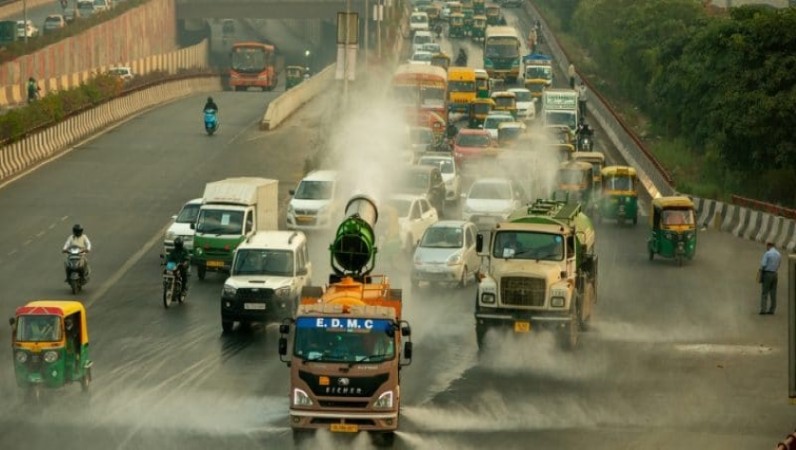 According to a report by the United Nations Environment Programme (UNEP), the transport sector in Nairobi alone contributes to about 60% of the city’s air pollution. The study indicates that the high concentration of air pollutants, especially particulate matter, is due to the high number of vehicles on the roads, poor road conditions, and a lack of proper vehicle maintenance.
The transport sector, as identified by Maurice Kavai, Deputy Director of Air Quality and Climate Change at the Nairobi City County Government, is the principal contributor to the city’s air pollution, responsible for 45% of the total emissions. This is closely followed by waste and stationary energy sources.
Prof. Paul Njogu of Jomo Kenyatta University of Agriculture and Technology emphasizes the lethal nature of PM2.5, the fine particulate matter that poses the greatest risk to human health globally.
Way forward
To chart a course towards cleaner air, Prof. Njogu advocates for stringent emissions standards for all vehicles, coupled with regular inspections and maintenance to ensure compliance
Additionally, he suggests incentivizing the phase-out of older, more polluting vehicles in favor of newer, cleaner models.
The path to reclaiming Nairobi’s skies from the grip of pollution is fraught with challenges but illuminated by solutions that promise a healthier, more sustainable future.
Through concerted efforts across sectors, Nairobi has embarked on a journey towards clearer skies, setting a precedent for cities worldwide grappling with the scourge of air pollution.
Similar Posts by The Mt Kenya Times:
- Mt Kenya Times ePAPER October 14, 2026
- Kalonzo takes Kenya’s economic case to London
- Court refuses to halt ruling on KSh204B Safaricom share sale
- Kenya’s budget watchdog flags record KSh209B in unplanned government spending
- Opposition cracks widen as Nyoro and Methu trade Ruto bribery claims
About the Author