The Kenyan Diaspora: Neglected and unaccompanied, but who Cares?
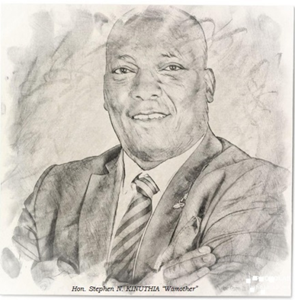
Stephen N. KINUTHIA

By: Stephen N. KINUTHIA
Worth Noting:
- Most diaspora members who send money do so in order to support family and friends, although nearly half say that they do so in order to invest in Kenya’s social or economic development.
- Three quarters of diaspora members interviewed say that they send money to Kenya for the purpose of benefitting family and friends (76%), although a significant proportion also say that they do so in order to invest in social and economic development (45%).
- Investing or saving for personal benefit is less common, although around a third say that they do so to improve their financial circumstances (35%) for their retirement or resettlement (33%), or for a sense of duty and personal pride (30%). Only one in ten (10%) say that they send money to Kenya in order to gain political influence.
Some call them Kenyans residing abroad and others the Diaspora. The average Kenya citizen only sees them when they return home, often with valises in cars loaded with goods and gifts of all kinds, or during reports on their “setbacks” at the ports of arrival JKIA Nairobi or Moi International Airport Mombasa. They do not have a definition applicable to them and do not even have the same figures.
Diaspora Remittances to Kenya
Remittances inflows in Q1, 2021 were the highest ever recorded. According to the Central Bank, they continue to provide a stable source of income of foreign exchange for Kenya and a key support for many low-income households, totalling UDS 3,094 million in 2020. Remittances in March 2012 amounted to USD 290.8 million, compared to USD 228.8 million in March 2020, an increase of 27.1%. The US remains the largest source of these inflows, accounting 55.9% of remittances in March 2021.
The other top source countries were: UK (11.2%), Saudi Arabia (4.0%), Canada (2.9%), and Australia (2.9%).As of September 29, Kenyans abroad had sent Sh231 billion with July posting the highest cash flows at USD 336.7 million in the period under review.
Current practice – Reasons for sending money
Most diaspora members who send money do so in order to support family and friends, although nearly half say that they do so in order to invest in Kenya’s social or economic development.
Three quarters of diaspora members interviewed say that they send money to Kenya for the purpose of benefitting family and friends (76%), although a significant proportion also say that they do so in order to invest in social and economic development (45%). Investing or saving for personal benefit is
less common, although around a third say that they do so to improve their financial circumstances (35%) for their retirement or resettlement (33%), or
for a sense of duty and personal pride (30%). Only one in ten (10%) say that they send money to Kenya in order to gain political influence.
Diaspora inflows have remained Kenya’s largest source of foreign exchange since 2015.
Data from the World Bank shows that Kenya is the third-largest recipient of diaspora cash inflows in sub-Saharan Africa. Only Nigeria and Ghana receive higher inflows from the diaspora, with earnings equivalent to KSh 2.38 trillion (US$ 23.8 billion) and KSh 350 billion (US$ 3.5 billion) respectively.
Diaspora remittances by source region, 2020
Source: Central Bank of Kenya.
Based on these statistics, it is clear that in recent years, inflows from remittances sent home by Kenyans working and living abroad have always been higher than tourism earnings and continue to register growth, outpacing forex earnings from key areas of the economy including tourism.
Kenyan diaspora remittance overtakes earnings from tea, coffee and tourism.
Tourism, Diaspora remittances and Tea and Coffee export earnings, 2015–2019
Source: Central Bank of Kenya; World Bank; KNBS Economic Survey 2019 and KNBS Economic Survey 2020.
Despite a narrowing in the difference with earnings from tourism, diaspora cash inflows remain the largest source of foreign exchange inflows for the country. Meanwhile, tourism earnings have surpassed revenues generated from both tea and coffee exports, making it a more significant foreign exchange earner for Kenya.
Is the Diaspora under Immigration or Foreign Affairs? The Ministry of Foreign Affairs and Trade (MOFA&T), part of which would take care of them. But no government has undertaken to tool itself up with a strategy to manage and optimize this economic and financial force. Only a few MPs have used it as a Trojan horse for political purposes.
To the Diaspora disappointment, the government keeps appointing individuals who are not conversant with matters affecting the Diaspora. We have elected leaders: governors, Members of Parliament, Senators, Women representatives, MCAs; we even appointed CSs, PSs, parastatal heads and State Corporation boards members who are former Diaspora but they don’t care advancing the interest of their fellow Kenyan abroad. Weak or lack of coordination of labour migration, inadequate information on labour migration, policy and legal framework are factors that slow down “Brain drain” export of labour in the country.
Obstacles to saving and Investment
Diaspora members report a number of challenges, obstacles that stand in the way of saving and investing in Kenya. Corruption ranks highest amongst governance issues, although many also view political instability as a key barrier.
A lack of stability in the financial system, together with currency fluctuations and taxation policy are perceived to be central issues for the financial system. For many, the practical difficulties of saving and investing from afar also present a considerable barrier, in particular lack of knowledge about investment opportunities or the organisations that might reliably manage investments.
Sign of the absence of a clear policy, political goodwill, lack of protection of their investments, and economic mobilization of this Diaspora is evident. Diaspora is endowed with well qualified and experienced men and women but has been totally ignored by the Government without recognizing de-facto leaders for appointment to represent Diaspora in the Government.
Conclusion to the solution
What is missing is firstly a strategy that would structure the relationship with the Diaspora other than through the passport and the missions’ abroad. It is then governance. It is also and above all, “the implementation of Diaspora Policy, Rights to Vote, Projects and support tools that meet the real needs and challenges of this Diaspora”. This is, not to mention, “the creation of a Ministry for Diaspora Affairs or appoint a Permanent Secretary for Diaspora Affairs, the implementation of financial and fiscal incentive programs that promote investment and consumption in key sectors for this Diaspora”.
Who will listen to the Grievances of the Kenyan Diaspora Community?
I thank you.
Stephen N. KINUTHIA “Wamother”
Chairman – Kenya Community in Diaspora
Director at Agricultural Development Corporation (ADC)
For MP GITHUNGURI CONSTITUENCY 2022
Similar Posts by The Mt Kenya Times:
- Mt Kenya Times ePAPER October 23, 2026
- Ruto’s parting COMESA call: Remove the barriers, honour the commitments
- Direct hospital access to KEMSA cuts drug delays, says PS
- Africa can’t wait: Continent seeks $1 trillion for climate adaptation
- Ruto passes the baton as Africa’s trade bloc faces a fragmenting world
About the Author