The Machinery Of Silence: How Kenya’s Legal System Became A Weapon Against Its Citizens
 The Mt Kenya Times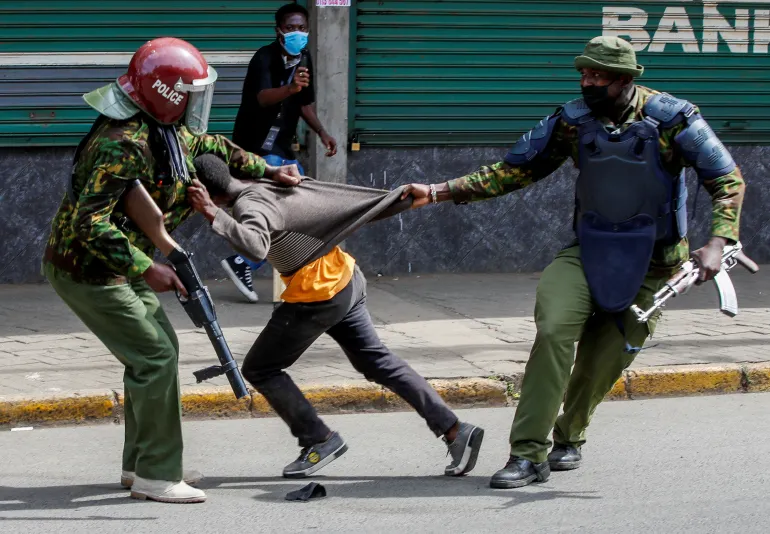
Police brutality
By Jerameel Kevins Owuor Odhiambo
The steady erosion of democratic freedoms in Kenya has reached a critical threshold. In 2024, CIVICUS reclassified Kenya’s civic space from “obstructed” to “repressed,” a damning assessment that reflects the government’s systematic deployment of legal instruments to neutralize dissent. This downgrade is not merely symbolic, it documents a calculated transformation of the criminal justice system into an apparatus of political control, where constitutional guarantees of freedom mean little against the weight of repressive legislation and impunity-shielded enforcement.
The Public Order Act stands as the cornerstone of this architecture of suppression. By mandating advance police notification for public gatherings and granting authorities sweeping powers to deny or disrupt demonstrations, the law effectively criminalizes the spontaneous expression of collective grievance. During the 2024 anti-Finance Bill protests, this framework revealed its lethal potential. Police deployed live ammunition against citizens exercising their constitutional right to peaceful assembly, transforming streets into zones of violence where the state’s monopoly on force was wielded without restraint or accountability. The requirement that organizers “oversee” gatherings creates an insidious trap: activists become legally liable for events they cannot control, particularly when police themselves instigate chaos.
Digital space, once a frontier of relative freedom, has become another battlefield in the state’s war on dissent. The Cybercrimes Act and its amendments function as legal cover for the intimidation of activists, journalists, and ordinary citizens who dare to criticize government action online. Surveillance has moved beyond abstract concern into documented practice. Safaricom’s reported sharing of customer location data with law enforcement has facilitated a campaign of terror enforced disappearances, extrajudicial killings, and targeted harassment that operates in the shadows of due process. When citizens cannot speak freely without fearing that their digital footprints will lead security forces to their doors, civic engagement withers at its roots.
The bodies tell a story that official statements refuse to acknowledge. Human rights organizations have documented cases of missing protesters whose remains were later discovered bearing unmistakable signs of torture and mutilation. These are not isolated incidents but patterns that reveal the calculated use of extrajudicial violence to send a message: dissent carries a price that extends beyond arrest or prosecution. The impunity enjoyed by perpetrators within law enforcement confirms that these acts are not aberrations but features of a system where accountability has been deliberately dismantled. When the machinery of justice is turned against justice itself, citizens are left without recourse.
Strategic lawsuits against public participation, SLAPPs, represent another dimension of this multi-pronged assault. Civil society organizations face bureaucratic suffocation through funding delays, threats of deregistration, and frivolous legal challenges designed not to win in court but to drain resources and energy. These tactics are devastatingly effective because they exploit the vulnerability of organizations dependent on donor funding and legal standing. Activists and journalists covering sensitive issues operate under constant threat, knowing that their work could trigger legal retaliation that consumes years and drains organizational capacity. The effect is predictable: self-censorship, withdrawal, and the gradual hollowing out of the civil society sector.
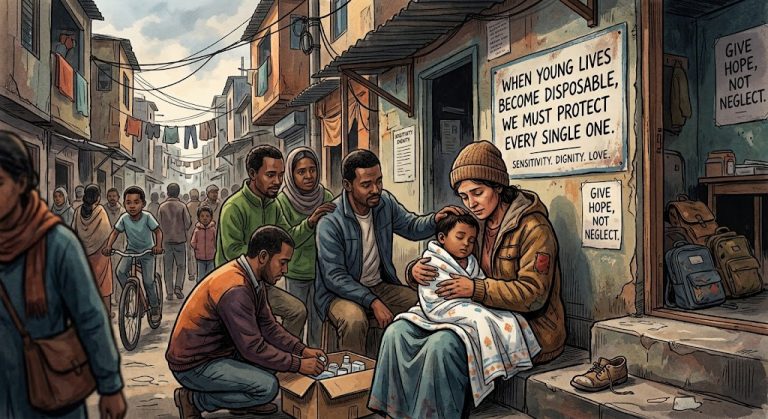
Young activists, who should represent the future of democratic participation, instead find themselves primary targets of state surveillance and police infiltration. Their digital fluency makes them effective organizers and therefore threats requiring neutralization. Internet shutdowns during moments of political tension have become routine, severing the communication networks that enable collective action. Cyber surveillance tracks their movements, maps their networks, and identifies pressure points. Rural youth and minorities face compounded vulnerabilities, lacking both resources for legal defense and access to platforms that might amplify their voices. The state’s strategy is clear: break the next generation of civic leaders before they can build sustainable movements.
Kenya’s Constitution enshrines protections for freedom of expression, association, and peaceful assembly in Articles 33, 36, and 37. These guarantees exist on paper with considerable eloquence. Yet the gap between constitutional text and lived reality has become a chasm. Courts have occasionally issued rulings that impose limits on police overreach, moments of judicial resistance that offer brief hope. But implementation remains the critical failure. Without enforcement mechanisms that carry real consequences for violations, these rulings become symbolic gestures rather than binding constraints. The criminal justice system processes what it chooses to process, and what it increasingly chooses is the prosecution of citizens exercising democratic rights.

The system’s focus on petty offenses accounting for over seventy percent of cases in a 2018 audit has been weaponized with particular cynicism. Activists and protesters find themselves charged with unlawful assembly, blocking roads, or spreading misinformation, offenses that clog courts with cases designed not for conviction but for harassment. The process becomes the punishment: arrests that disrupt organizing, bail requirements that drain limited funds, court dates that consume time and energy. This judicial harassment operates as a tax on dissent, making civic participation costly enough that many cannot afford to pay. It is criminalization by bureaucratic attrition, a slow suffocation of democratic practice through administrative burden.
Media freedom, the oxygen of democratic accountability, faces parallel assault. Journalists exposing corruption and human rights abuses encounter harassment, censorship pressures, and threats that make their work increasingly dangerous. Calls for legal defense funds and enhanced protections acknowledge what is already clear: reporting the truth in Kenya now requires courage that should never be necessary in a functioning democracy. When those who document abuses become targets themselves, the cycle of impunity accelerates. The Public Order Act, Cybercrimes Act, surveillance apparatus, and judicial harassment function as interlocking components of a system designed not to deliver justice but to eliminate challenge. This is the machinery of silence, and it operates with bureaucratic efficiency to ensure that those who would hold power accountable face criminalization, violence, or erasure. The question is not whether this system exists, the evidence is overwhelming, but whether Kenyans will accept its continued operation as the price of stability, or demand the democratic space their Constitution promises and their dignity requires.
The writer is a legal scrivener
Similar Posts by The Mt Kenya Times:
- Trauma, Friendship, Love, and the Search for Self-Worth in Hanya Yanagihara’s A Little Life
- Kenya’s scouting laws face overhaul: Kiarie leads push to align movement with devolved governance
- Mt Kenya Times ePAPER September 19-20, 2026
- Kenya joins US and UK to put citizens on the terrorism frontline
- Kenya’s parliament races to tame the AI frontier
About the Author