The Paradox Of Lawful Lawlessness: Article 37 And The Constitutional Right To Disrupt
 The Mt Kenya Times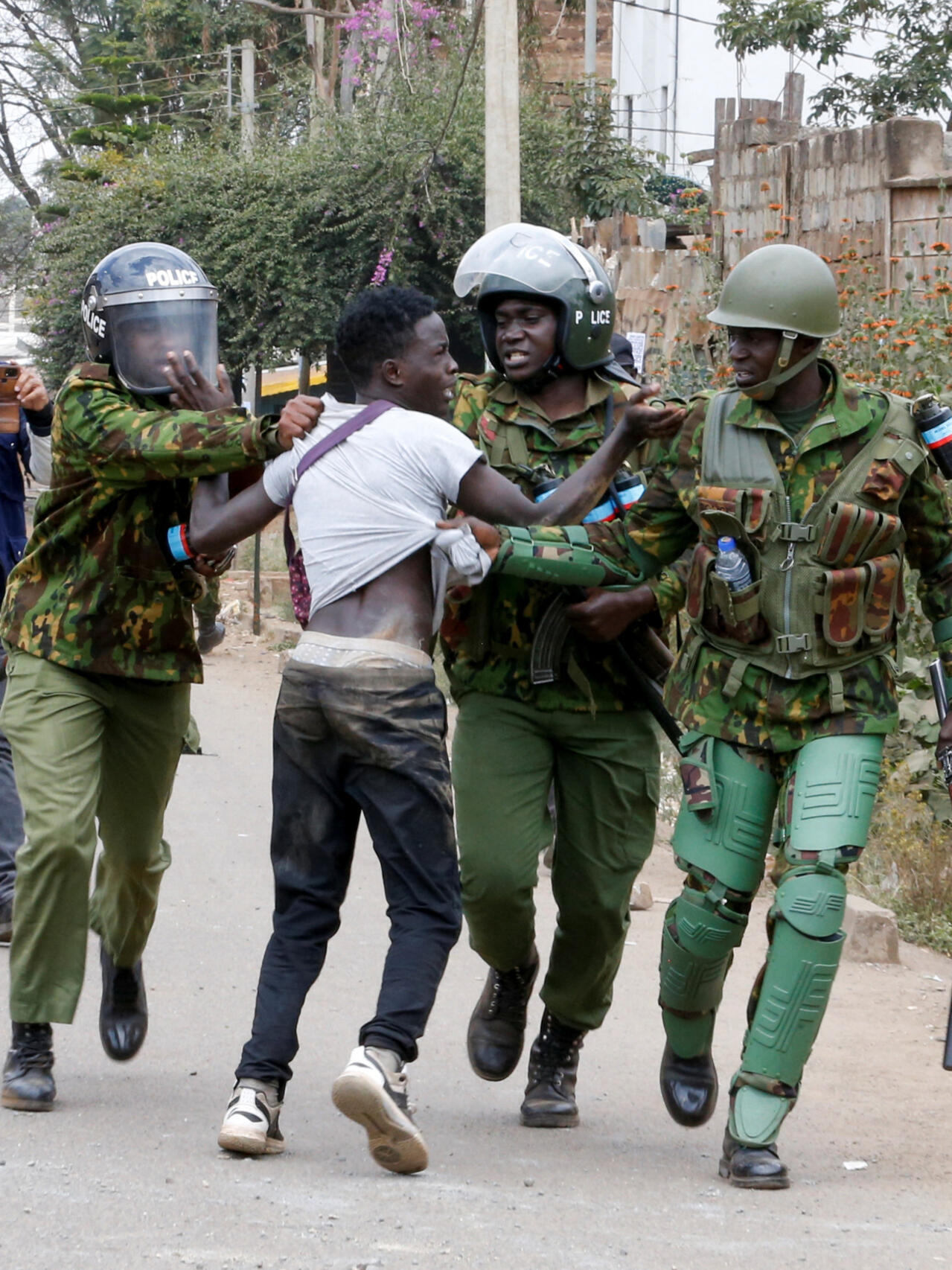
By Jerameel Kevins Owuor Odhiambo
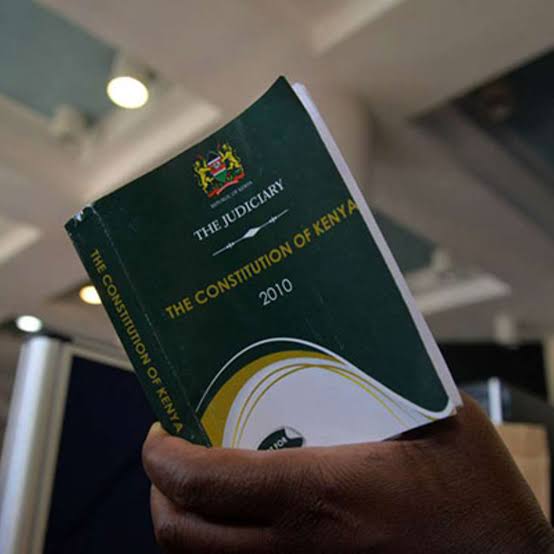
The constitutional architecture of democratic societies contains within it a profound paradox: the legal sanctioning of lawlessness. Article 37 of Kenya’s Constitution declares that “Every person has the right, peaceably and unarmed, to assemble, to demonstrate, to picket, and to present petitions to public authorities,” yet this seemingly straightforward provision masks one of the most sophisticated legal concepts in democratic jurisprudence the institutionalization of legitimate disruption. As constitutional scholars have long recognized, protest rights exist precisely because conventional channels of political engagement have proven inadequate to address systemic dysfunction. The current crisis in Kenya, where peaceful petitions fall on deaf ears and parliamentary processes serve power rather than people, exemplifies the exact circumstances that necessitate what I term “lawful lawlessness” the constitutional permission to disrupt the normal order of things in service of a higher constitutional imperative.
The theoretical foundation for this paradox finds its most eloquent expression in Henry David Thoreau’s seminal essay “Civil Disobedience,” where he argued that “individuals should prioritize their conscience over compliance with unjust laws, asserting that passive submission to government authority enables injustice.” Thoreau’s insight remains profoundly relevant to contemporary Kenya: when government becomes the instrument of oppression rather than service, citizens retain not merely the right but the obligation to resist. As Thoreau declared, “I ask for, not at once no government, but at once a better government. Let every man make known what kind of government would command his respect, and that will be one step toward obtaining it.” The burning of tires, the blocking of roads, the disruption of commerce, these are not acts of criminality but constitutional expressions of sovereign will when all other avenues of redress have been systematically closed.
 The jurisprudential sophistication of Article 37 lies in its recognition that meaningful protest must necessarily involve some degree of disruption. A protest that changes nothing, disturbs no one, and challenges no established order is not a protest at all, it is political theater. The constitutional framers understood this fundamental truth: that the right to “demonstrate” necessarily implies the right to alter the status quo through peaceful but disruptive means. The word “demonstrate” derives from the Latin “demonstrare,” meaning to show clearly or to prove by evidence. How can citizens demonstrate governmental failure without disrupting the smooth functioning of that failed system? How can they prove the inadequacy of existing arrangements without temporarily suspending those arrangements? The constitutional right to protest is, by its very nature, a right to inconvenience power until power becomes accountable.
This principle finds its most compelling philosophical articulation in the work of John Rawls, whose “Theory of Justice” provides the intellectual framework for understanding when disruption becomes not merely permissible but morally required. Rawls argued that civil disobedience is justified when three conditions are met: the existence of substantial and clear injustice, the failure of normal political processes to address that injustice, and the public nature of the disobedient act designed to bring about reform. Contemporary Kenya satisfies all three conditions in spectacular fashion. The injustices are substantial and clear economic inequality, police brutality, systemic corruption, and governmental unresponsiveness. Normal political processes have failed catastrophically, with parliament serving as a rubber stamp for executive power rather than a check upon it. The public nature of recent protests, from the peaceful demonstrations that were met with deadly force to the road blockades that finally forced governmental attention, exemplifies Rawls’s criteria for justified civil disobedience.
The concept of lawful lawlessness finds further theoretical grounding in the work of Ronald Dworkin, whose distinction between “rules” and “principles” in legal interpretation provides crucial insight into the constitutional protection of protest. While traffic laws prohibit blocking roads and municipal ordinances regulate noise levels, these rules must yield to the higher constitutional principle of democratic accountability embodied in Article 37. Dworkin’s analysis reveals that law is not merely a collection of rules but a coherent system of principles, and when rules conflict with principles, principles must prevail. The principle of popular sovereignty that all power derives from the people supersedes the rules of ordinary social order when that order has become an instrument of oppression rather than service.
The practical mechanics of this lawful lawlessness operate through what legal scholars call “constitutional necessity” the doctrine that extraordinary circumstances justify extraordinary measures. When Kenyan protesters block roads or burn tires, they are not committing crimes against the state; they are exercising their constitutional right to force the state to confront its own failures. The disruption is not an unfortunate side effect of protest but its essential mechanism. As Gandhi understood when he adopted Thoreau’s ideas in developing his concept of Satyagraha, “individuals could resist immoral government action by simply refusing to cooperate.” Non-cooperation necessarily involves disruption, and disruption necessarily involves some degree of lawlessness but lawlessness sanctioned by the higher law of the Constitution itself.
The current Kenyan government’s response to this constitutional principle reveals a profound misunderstanding of democratic governance. By treating protesters as criminals rather than constitutional actors, the administration demonstrates what Hannah Arendt called the “banality of evil” the bureaucratic processing of fundamentally political acts through criminal categories. The observation that “the right of peaceful assembly is not fully respected in Kenya, particularly in the case of protests against the government” understates the severity of the crisis. When government treats constitutional rights as criminal acts, it ceases to be a government and becomes merely an occupying force. The state’s monopoly on legitimate violence exists only insofar as the state itself remains legitimate and legitimacy depends upon responsiveness to popular will.
The pain that drives protest economic desperation, police brutality, governmental neglect represents the failure of what social contract theorists call the “basic structure” of society. When this basic structure fails to deliver justice, security, and opportunity, citizens retain what Locke called the “right of revolution” the ultimate check on governmental power. But modern constitutional democracy has institutionalized this right in the form of protest rights, transforming revolution from a last resort into a regular feature of democratic governance. Article 37 essentially says to government: “You will be disrupted when you fail to serve the people, and this disruption is not a breakdown of law and order but the Constitution itself in action.”
The tragedy of Kenya’s current situation lies not in the existence of protest but in its necessity. A government that functioned properly that responded to citizen needs, that provided economic opportunity, that protected rather than brutalized its people would not face the sustained civil resistance that has characterized recent years. Protest is always a symptom of governmental failure, and the intensity of protest corresponds directly to the severity of that failure. When protesters resort to burning tires and blocking roads, they are not expressing malice toward the state but desperation at the state’s indifference to their suffering. They are exercising their constitutional right to force a conversation that power would prefer to avoid a conversation about justice, accountability, and the true meaning of democratic governance. The Constitution does not merely permit this conversation; it guarantees it, even when especially when that conversation requires disrupting the comfortable arrangements of those who benefit from the status quo.
The writer is a lawyer and legal researcher
Similar Posts by The Mt Kenya Times:
- Diaspora Times Global Sep 19 – Sep 25, 2026
- Tibet’s glacial catastrophe: Behind Beijing’s wall of silence, a climate disaster reshapes a region
- Museveni says Uganda overpaid for fuel through Kenyan middlemen as new terminal breaks ground
- Court orders throw KPL season kickoff into doubt
- Can Kenyans abroad become the untapped force that transforms Kenya?
About the Author