The price of a vote: When money speaks louder than leadership in Ol Kalou
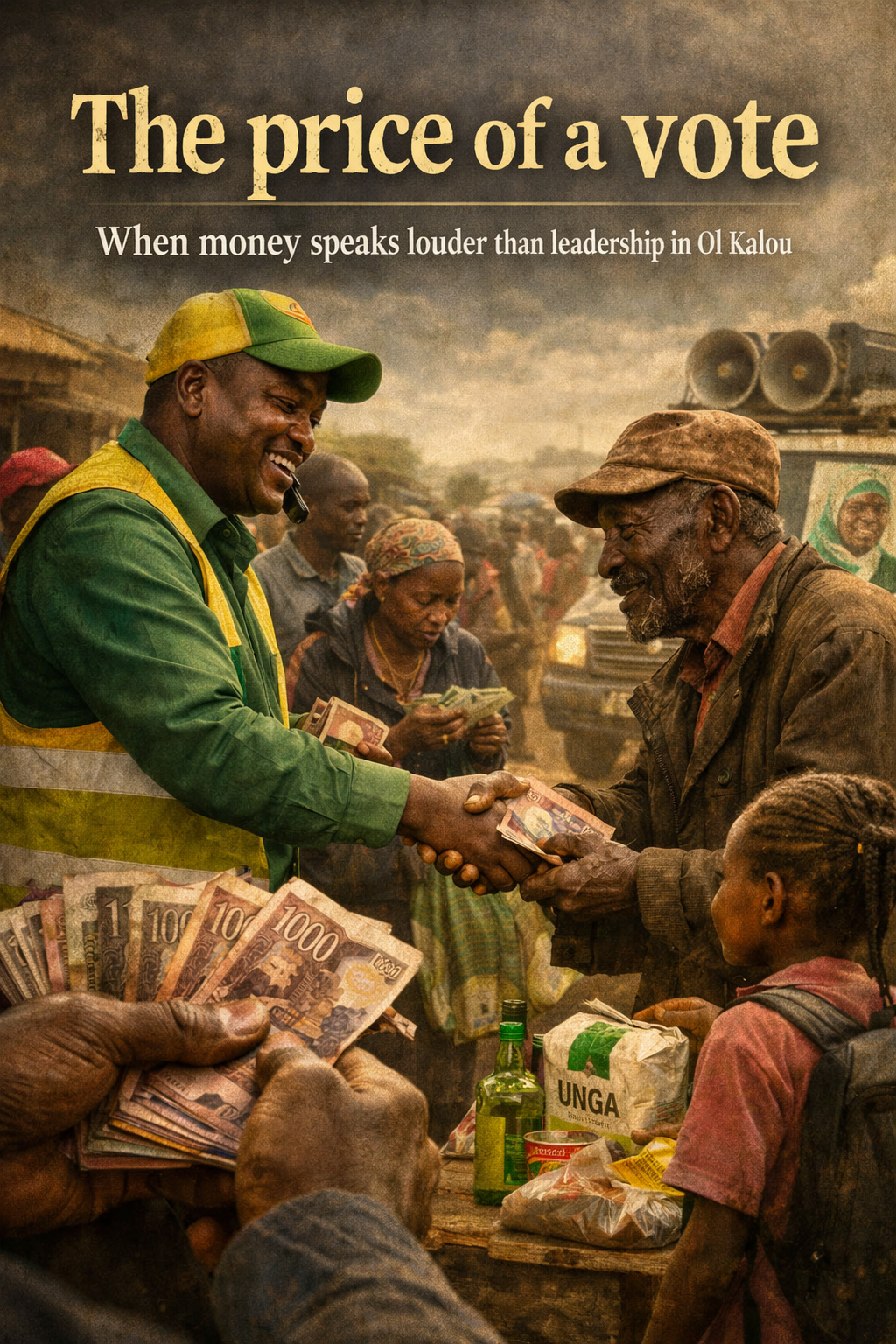
Graphical illustration
As politicians hand out cash and gifts, residents must ask: are we electing leaders, or selling our future?
By Hadassah Karangu
As political temperatures rise in Ol Kalou, a familiar scene is quietly unfolding across villages, trading centres, markets, churches and public gatherings. Politicians and their allies are becoming ever more visible, not necessarily because of new development projects or fresh ideas, but because money is changing hands.
From small cash handouts to fundraiser donations, from sponsoring local events to quietly assisting selected groups, the flow of political generosity has become hard to ignore. For many families facing genuine economic hardship, the temptation is understandable. When school fees are due, businesses are struggling and the cost of living keeps climbing, a few thousand shillings can feel like a lifeline.
But beneath the smiles and handshakes lies a harder question every resident of Ol Kalou should sit with: what happens after the money is spent?
History has shown, time and again, that vote-buying is one of democracy’s greatest threats. When elections become transactions, leadership loses its meaning. Citizens begin choosing leaders based on immediate reward rather than long-term vision, competence, integrity and service delivery.
The danger is not simply that money influences voters. The deeper danger is that it lowers expectations. Instead of demanding better roads, quality healthcare, improved schools, employment opportunities and accountability, communities can find themselves settling for handouts that disappear within days.
A politician who spends heavily to secure a seat may come to see public office not as a chance to serve, but as an investment to recover. The people end up paying the price through poor governance, stalled projects and years of unfulfilled promises.
What makes this particularly concerning is how many of these same politicians tend to vanish after the votes are counted. The faces currently at every gathering, greeting residents warmly and giving generously, can become strangely hard to reach once power is secured. Calls go unanswered. Pledges are quietly forgotten. Constituents are left waiting for the next election cycle, when the generosity conveniently reappears.
Ol Kalou deserves better than leadership that only shows up in season.
Residents should press every aspiring leader with harder questions. What is your plan for youth employment? How will you support agriculture? What will you do for small businesses? How will you ensure transparency in the use of public funds? What lasting impact will your time in office actually leave behind?
Those answers are worth far more than any envelope of cash.
The future of Ol Kalou will not be decided by who gives the most today. It will be decided by who offers the clearest vision for tomorrow. As campaigns gather pace, voters would do well to remember that money can paper over today’s problem, but only good leadership can solve tomorrow’s. The roads their children will use, the schools they will attend, the hospitals they will depend on and the opportunities open to the next generation cannot be built on handouts alone.
Democracy works best when citizens vote with their minds, not their pockets.
The people of Ol Kalou stand at a crossroads. One path leads to temporary rewards and recurring disappointment. The other leads to accountability, development and meaningful change.
The choice, as always, belongs to the voters.
Similar Posts by The Mt Kenya Times:
- Mt Kenya Times ePAPER October 10-11, 2026
- Cabinet clears path for pending bills payout in relief for Kenya’s struggling suppliers
- Karanja quits UDA and targets Nakuru governorship on Gachagua’s DCP ticket
- Gachagua’s team plants DCP flag in Kiambu as 2027 battle lines harden
- A moment of recognition for service in energy
About the Author