Africa in motion: Power, protest and peril shape a continent on edge
 The Mt Kenya Times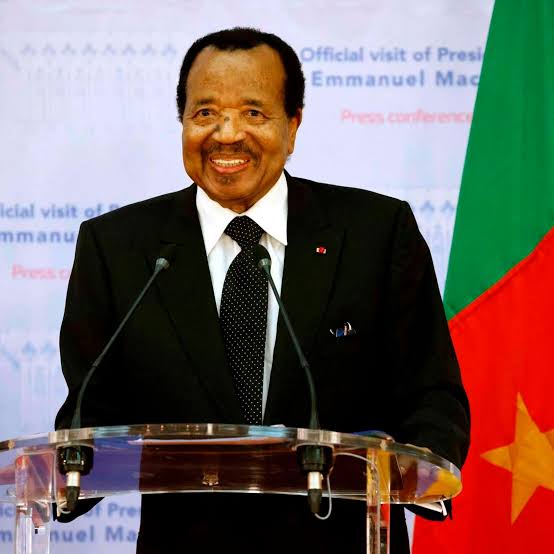
President Paul Biya
From constitutional rewrites to Sahel bombings, this month’s headlines show a continent testing the limits of its own institutions
By Norman Mwale
From Yaoundé to Bamako, from Lagos to Kigali, Africa this month has been defined by hard choices. Governments are consolidating power, citizens are demanding accountability, and old crises — war, migration, debt — are colliding with new shocks, from fuel prices to piracy.
In Cameroon, 93-year-old President Paul Biya, the world’s oldest serving head of state, is set to receive a vice-president for the first time in his four-decade rule, following controversial constitutional changes approved by parliament. The post was scrapped in 1972; until now, the Senate president was expected to act as interim leader. Under the new law, the vice-president will be appointed by Biya rather than elected, and will automatically assume the presidency and serve out the remainder of the term if anything happens to him. Opposition parties called the amendment “hastily drafted” and aimed at consolidating power, and even one senator from Biya’s own party described the process as “suspicious.” Biya secured an eighth term last October with roughly 54 percent of the vote, in an election the opposition maintains was flawed.
The debate over power is not confined to Central Africa. In Zimbabwe, parliament has passed, and President Emmerson Mnangagwa has now signed, a sweeping constitutional amendment that extends presidential and parliamentary terms from five to seven years and hands the choice of president to parliament rather than to voters directly. The change keeps Mnangagwa, 83, in office until 2030, beyond the end of his current term. ZANU-PF argues the changes are constitutional and necessary for stability, while opposition parties, civil society groups and constitutional lawyers have argued such fundamental changes should have gone to a national referendum. Separately, the ZANU-PF Youth League has urged parliament to reject a reported US$3.6 million donation from businessman Wicknell Chivayo, warning it could create perceptions of undue influence. “Parliament must remain independent and not appear bought or swayed,” said Deputy Secretary for Youth Affairs John Paradza.
Security remains fragile across the Sahel. In Mali, Defence Minister Sadio Camara was killed when a suicide car bomb struck his residence in the garrison town of Kati, near Bamako, as part of coordinated attacks by the al-Qaeda-linked JNIM and Tuareg separatists from the Azawad Liberation Front. Camara’s second wife and two of his grandchildren also died in the assault; a mosque was hit in the same wave of attacks, killing worshippers. Mali’s government declared two days of national mourning. UN Secretary-General António Guterres condemned the violence, and the West African bloc ECOWAS issued a similar statement.
Further east, Ugandan and Congolese forces rescued more than 200 civilians who had been held captive by the Allied Democratic Forces, a group affiliated with the Islamic State, at a camp along the River Epulu in eastern Democratic Republic of Congo. Several ADF fighters were killed in the operation and a weapons cache was recovered. Freed captives, including a 14-year-old girl, described harsh conditions in the camp, among them forced labour and untreated illness.
The migration crisis continues to claim lives. At least two people died and dozens more were reported missing after a boat carrying around 105 migrants capsized off Libya. The German NGO Sea-Watch said survivors were rescued by merchant vessels and taken to Lampedusa. The UN’s International Organization for Migration reports that at least 683 migrants have drowned or gone missing crossing the central Mediterranean so far in 2026.
Economic pressure is mounting across the continent. Nigeria’s House of Representatives approved a US$6 billion external borrowing package requested by President Bola Tinubu — a US$5 billion facility with First Abu Dhabi Bank and a US$1 billion UK-backed loan earmarked for rehabilitating the Lagos Port Complex and Tin Can Island Port. Tinubu said the funds would support infrastructure and refinance more expensive existing debt, even as the borrowing adds to a national debt stock already above US$110 billion. Mozambique, meanwhile, surprised observers by clearing its entire US$630.1 million IMF debt in March, becoming the only country among 85 listed to reach zero arrears that month — a move officials hope will unlock talks on a new support programme.
Maritime crime has also resurfaced. The oil tanker Honour 25, carrying around 18,500 barrels of fuel, was hijacked by pirates roughly 30 nautical miles off Somalia’s Puntland coast in April — the most serious tanker seizure in years in waters once notorious for piracy, with rising fuel prices linked to the Middle East conflict making such vessels more attractive targets. In South Africa, President Cyril Ramaphosa has authorised the deployment of 2,200 soldiers to five provinces for just over a year to help police tackle illegal mining and gang violence under Operation Prosper. Critics continue to question how effective a military deployment can be in what is fundamentally civilian policing work.
Memory and justice also featured prominently this month. Rwanda marked the 32nd anniversary of the 1994 Genocide against the Tutsi, with President Paul Kagame warning against historical distortion. “The proof is undeniable,” he said. “And yet, we still find people throwing doubt and twisting the facts up to today.” He pointed to the Gacaca court process and international tribunal findings as having settled the historical record beyond doubt. In Sudan, political parties and civil groups marked the seventh anniversary of the April 6 sit-in that helped topple Omar al-Bashir in 2019, renewing calls for civilian rule and an end to the ongoing war. Sovereignty Council chief Lieutenant General Abdel Fattah al-Burhan used the occasion to position the army as aligned with the Sudanese people, while opposition groups continued to demand a ceasefire and accountability.
External shocks are compounding these domestic strains. Reports from continental institutions have warned that the wider Middle East conflict presents a serious risk to Africa, threatening higher fuel and food prices, rising shipping costs and pressure on exchange rates. Some countries, including Nigeria and Mozambique, could see short-term gains from oil and gas exports, and ports from Cape Town to Mombasa may benefit from rerouted shipping — but officials caution these gains are unlikely to offset the broader hit to inflation and food security.
From constitutional amendments to counter-terror operations, from debt deals to remembrance, the continent is navigating turbulence with little room for error. The through-line is clear: citizens are watching closely, and legitimacy will be tested not in parliaments alone, but in markets, classrooms and on the roads where ordinary Africans live.
As Rwanda’s commemorations reminded the world this month, history cannot simply be rewritten. The question for Africa’s leaders now is what they will write in the next chapter.
Similar Posts by The Mt Kenya Times:
- Mt Kenya Times ePAPER October 10-11, 2026
- Cabinet clears path for pending bills payout in relief for Kenya’s struggling suppliers
- Karanja quits UDA and targets Nakuru governorship on Gachagua’s DCP ticket
- Gachagua’s team plants DCP flag in Kiambu as 2027 battle lines harden
- A moment of recognition for service in energy
About the Author