The Mt Kenya Times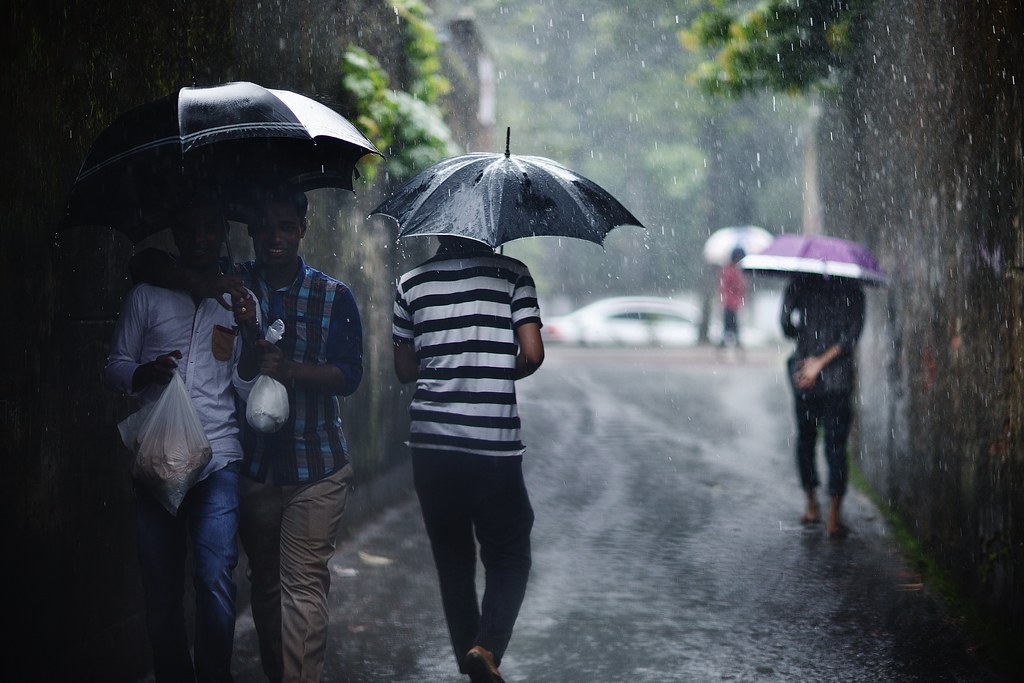
By Njonjo Mue
Worth Noting:
- During this second season I had all my faculties fully alert to enable me to appreciate the beauty of Oxford, to make wonderful new friends from around the world and to immerse myself in the challenges of scholarship and the fun of diverse co-curricular activities.
- By January 1994 when I returned to Oxford after my medical leave of absence, I had decided that I had nothing to prove to anyone and that I would enjoy the experience for all it was worth. I would therefore work hard but also play hard.
- I joined the Jesus College Choir and I became a member of the Oxford University Africa Society which I served as Secretary. I was also one of the founder members of the Oxford Civil Liberties Society on whose advisory board I served.
[Previously in our on-going series on the life and times of lawyer activist Njonjo Mue: In Episode One, we sat with Njonjo as he joined a multitude of excited Kenyans in celebrating the promulgation of the new Constitution of Kenya in August 2010. In Episode Two, Njonjo took us to a time before the beginning of his lifelong journey advocating for democracy and social justice, where we met his parents and grandparents, the rocks from which he was hewn.
In Episode Three, we were transported to Njonjo’s hometown of Thika where he enjoyed a magical childhood that laid the foundation of the man he would become. In Episode Four, Njonjo spoke of the early years when he began to hear echoes of injustice that he found impossible to ignore and that would eventually transform him from a curious child into a restless activist.
In Episode Five, Njonjo explained that despite his Alma Mater, Alliance High School having a mixed record as far as its contribution to the fortunes and misfortunes of Kenya is concerned, he was proud to have been counted among a short list of those alumni who have pushed back against dictatorship and oppression, and advocated for democracy, good governance and social justice in independent Kenya. After six years at Alliance, Njonjo joined the University of Nairobi’s Law school for his LL.B degree. In Episode Six, Njonjo took us back to 1989, a momentous year when the world was engulfed in revolutions that toppled autocratic communist rule in Eastern Europe and threatened despotic one-party dictatorships in Africa. It was also a momentous year for Njonjo as he attended an exchange programme with American students, travelled abroad for the first time, and engaged in his own personal act of resistance against empire by working in London without a work permit.
In Episode Seven, Njonjo took us back to February 1990, a time when he took part in the first of many peaceful demonstrations when he joined other university students in condemning the gruesome assassination of Foreign Minister Robert Ouko. In Episode Eight, Njonjo spoke about his upbringing in a Christian home, attending a Christian school and his own journey towards finding faith.
In Episode Nine, as the world marked the thirtieth anniversary of the first assassination of an elected leader in post-colonial Africa, Patrice Lumumba of Congo, and as allied armies gathered for the mother of all battles in the Persian Gulf, Njonjo’s love for music drew him in to a church meeting where in spite of his best laid out plans for that warm Thursday evening, God finally caught up with him and he surrendered his life to the saving power of Jesus Christ. In Episode Ten Njonjo shared his pilgrimage from a purely personal faith to embracing the wholistic salvation of the true gospel of Jesus Christ who is King and Lord of all and who presides not just over individual lives, but also reigns over galaxies and governments.
In Episode Eleven, after graduating with an LL.B degree from the University of Nairobi, Njonjo was awarded the prestigious Rhodes Scholarship and was full of high expectations of conquering the world as he left home for Oxford University for his further studies, but his hopes were quickly dashed when he got there only to realize that, in the opinion of the academic powers that be, he may have been good, but he was not good enough.
In this Episode, after one and a half years out of residence, Njonjo returns to Oxford in January 1994. His return marks the beginning of a season that is as different from his earlier sojourn as day is from night, as he embraces a life of scholarship balanced with co-curricular activities, maintains a busy travel schedule that takes him to Israel, Europe, Scandinavia and America, and as he finds himself hopelessly drawn to a passionate trans-Atlantic love interest. ]
***
I was out of residence from Oxford for a year and a half from June 1992 until January 1994.
I spent part of this time at home in Nairobi recovering from clinical depression and part of it visiting my siblings in California.
My time in Oxford can be divided into two distinct periods that were as different as day and night.
The first period (October 1991 – June 1992) was marked by a hopeless descent into the abyss of depression followed by admission in to hospitals in Nairobi and in California where I was first diagnosed with clinical depression and bipolar disorder respectively though I thankfully made an impressive recovery.
The second period (January 1994 to July 1995) was marked by wondrous joy, great fun, and impressive personal growth.
During this second season I had all my faculties fully alert to enable me to appreciate the beauty of Oxford, to make wonderful new friends from around the world and to immerse myself in the challenges of scholarship and the fun of diverse co-curricular activities.
By January 1994 when I returned to Oxford after my medical leave of absence, I had decided that I had nothing to prove to anyone and that I would enjoy the experience for all it was worth. I would therefore work hard but also play hard.
I joined the Jesus College Choir and I became a member of the Oxford University Africa Society which I served as Secretary. I was also one of the founder members of the Oxford Civil Liberties Society on whose advisory board I served.
I also became an active member of the Christian Union (CU), which provided an important spiritual anchor.
Each college in Oxford had its own CU which would meet once a week for an evening of worship, fellowship and Bible Study.
Our Jesus College CU had its weekly meeting in the college chapel on Wednesday evening. Once in a while, the college chaplain would host us in his house for Holy Communion followed by a shared meal.
Every Saturday evening during term time, all the college CUs of Oxford University (known collectively as the Oxford Inter-Collegiate Christian Union or OICCU) would converge at Saint Aldate’s Church for an evening of worship and a sermon by a guest speaker.
Often after the OICCU meeting, I would link up with a number of friends and go out to a restaurant for a meal or stop by a pub for a drink.
In my early days at Oxford, I was surprised to see fellow Christians, even CU leaders, enjoying a pint of beer after OICCU meetings or at the college bar during the week. This is because I grew up in a Christian tradition where believers never touched alcohol.
At first I was disturbed and was even tempted to question their faith. However, given that in everything else they walked by faith, I was forced to re-evaluate the issue of drinking alcohol on the basis of what the Bible actually taught, rather than what my tradition said.
After searching the scriptures, I found that in no place does the Bible prohibit the drinking of alcohol. The nearest it comes to doing so is in Ephesians 5:18 which says ‘Do not get drunk on wine which leads to debauchery. Instead be filled with the Spirit.’ But this is not a prohibition of drinking wine but rather of getting drunk!
Elsewhere in the Bible, drinking wine (as opposed to getting drunk) is actually spoken of without condemnation if not with outright approval. Jesus’ first recorded miracle at a wedding in Cana of Galilee was turning water into wine.
We grew up being taught that it was not actually wine that he made but grape juice. But from the context this is clearly untrue given what the Master of Ceremonies observed, upon receiving the wine that Jesus had made, “Every man serves the good wine first, and when the guests are drunk, then he serves the poorer wine; but you have kept the good wine until now.”
Clearly, then, what Jesus made was not grape juice but the sort wine that could be expected to make people drunk!
For the rest of my time in Oxford therefore, I would enjoy a pint of bear or a glass of wine from time to time being only careful not to overindulge.
However, as a rule, I never drank whiskey because previous experience had taught me that with whiskey, it was easy to inadvertently cross the line from drinking to drunkenness.
I also never kept any form of alcohol in my rooms because I understood how easy it might be to turn to alcohol for comfort in times of loneliness or stress and thereby to slide into alcoholism.
All this is not to deny the very real and serious problem of alcohol addiction and abuse in many societies including our own and the need for complete avoidance of alcohol for recovering alcoholics.
On 1st March 1994, I contested the presidency of the Graduate Common Room (GCR) of Jesus College and won.
The GCR is the representative body for all graduate students which represents their interests in the college Governing Body, and liaises with other college committees and other relevant university bodies. It also works to develop and promote opportunities for graduate students to fully engage with the academic, social, sporting, cultural and recreational life of the College.
It is noteworthy that the presidential election was held on St. David’s Day because Jesus is a traditionally Welsh college and St. David is the Patron Saint of Wales and the opponent whom I trounced in the election was Welsh, and so winning that election was no mean feat!
I also travelled the world, taking advantage of several travel grants that were available to students as well as the generous amount of money that the Rhodes Trust provided to scholars for their living expenses.
Jesus College had a fund known as the Dodd Fund out of which students could apply for travel grants to travel anywhere in the world provided, strangely, that the travel was for non-academic purposes.
I successfully applied for support from the Dodd Fund and spent the money on a trip to Israel in the week leading up to the Easter weekend of 1994.
I arrived in Tel Aviv airport at 10 p.m. with no clue as to where I was going to spend the night. Such was the adventure!
But I was armed with the budget traveller’s bible, a book titled ‘ Let’s Go Travel ,’ which had many useful tips for student travellers including names and addresses of numerous student hostels.
I was able to find one affordable hostel just ten minutes away from Ben Gurion Airport where I lodged for two nights as I explored Tel Aviv before taking the bus to Galilee where I stayed for three days, walking in the footsteps of Jesus.
After that, I went up to Jerusalem to explore the sights and sounds in and around the Holy City including day trips to Gethsemane, Bethlehem, the Dead Sea, and Masada.
My pilgrimage ended on Easter Sunday morning when I joined other worshippers to celebrate the resurrection at a glorious service held at the Garden Tomb just outside the Old City walls.
In the springs of 1994 and 1995, I travelled to the US to participate in the annual African students conferences at Harvard and Yale respectively, and on holiday to California to visit my siblings during the summer of 1994.
I also won a scholarship to attend a summer school in international law at the University of Finland in Helsinki in late summer of 1994 after which I travelled to Athens to visit a friend for a few days.
Finally, I travelled to continental Europe on a tour of European Union institutions that took a number of students to the European Commission in Brussels, the European Court of Justice in Luxembourg, and the European Parliament in Strasbourg, France.
Love was also in the air.
Quite literally, since it began in the ether of the then still nascent technology of electronic mail.
I was part of a mailing group known as Kenyanet that brought together Kenyans in the Diaspora, mainly students on both sides of the Atlantic and as far away as Australia and New Zealand.
I would regularly post random thoughts and poems in the group for whoever might be interested to read.
I was not even sure that anyone actually read them until one day when, out of the blue, someone broke the silence.
“Who are you?” I opened my email to find a private note from a complete stranger. “I have been reading what you post on Kenyanet and you sound like you have a very good head on your shoulders.”
I liked her straightforward, direct-to-the-point, manner, not to mention the warm feeling I felt at being so generously complemented by someone I had never met.
“I am a Kenyan graduate law student at Oxford University,” I answered, intentionally over-describing myself to my mysterious new friend. “But I often find it much more interesting to write stories and poems than read huge volumes of arcane rules and old cases. Writing articles and poems is what I do to stay sane.”
“How interesting,” came her prompt reply. “I am also a Kenyan graduate law student at Cornell University in Ithaca in upstate New York. I too love poetry though I don’t write as much. Your poetry reminds me of Jonathan Kariara; has anyone else ever told you that?”
And so began an interesting friendship which was at the same time long-distance in terms of actual miles, being cross-Atlantic, but also increasingly intimate due to the accessibility to each other that the Internet gave us as we could exchange a seemingly limitless number of notes on any given day.
It was a most interesting relationship and it reminded me of my childhood when we would exchange letters with pen pals from different parts of the world whom one had little chance of ever meeting.
In late February 1995, as our friendship continued to blossom, my new friend sent me a note asking, “Have you heard of the African students conference scheduled for mid April at Yale?”
“Not only have I heard about it,” I boasted gleefully. “I am planning to be there. Will you be going?”
She answered in the affirmative and my heart skipped a beat at the chance of actually getting to meet her.
Up to this point, we had not even exchanged photos and so we did not know how we each actually looked like. It was a friendship purely based on an intellectual connection that was undeniably quickly becoming an emotional one.
It was also about to become somewhat political.
In November 1993, Kenyan politician and human rights activist Koigi wa Wamwere and three others had been arrested following an alleged raid on Bahati Police Station near Nakuru and charged with attempted robbery with violence which carried the death penalty if convicted.
It was widely believed that these were trumped up charges and the prosecution was part of a well-known strategy of the Moi dictatorship to silence its critics.
Koigi was an alumnus of Cornell University. A friend of his from their Cornell days, New York- based attorney, Neil Getnick, had provided some funds to set up the Kenya Human Rights Initiative based at Cornell to spearhead and coordinate an international campaign to publicise human rights violations in Kenya and to save Koigi and his co-accused from Moi’s gallows.
My new friend was at the forefront of the initiative which was run by Cornell students. She invited me to travel to Cornell ahead of my forthcoming trip to Yale as a guest speaker at a public lecture hosted on campus by the Initiative. It was also clear that she also wanted to meet me so that she could have home ground advantage for this first encounter.
“How will I recognize you?” I asked her once we agreed that I would fly into Syracuse Airport from JFK in New York and she would come from Ithaca to meet me.
“Don’t worry,” she wrote back, “I’ll be the only black face within a ten mile radius. You will not have any trouble recognizing me.”
I could not help chuckling to myself in the computer room of Jesus college, attracting curious glances from other users. I loved her sense of humour.
***
It was a few minutes after 11 p.m. when I left a rainy JFK Airport aboard a small twin-propeller plane bound for Syracuse.
I was hardly able to contain my curiosity regarding the physical appearance of the intelligent, funny and charming woman that was about to be unveiled.
Part of me wished I could extend the mystery a little longer but another part felt giddy like a child who was just about to unwrap his birthday gift and could hardly wait to behold what lay beyond the gift wrapper.
Shortly after we landed, I stepped out of the plane and took a couple of deep breaths of the crisp cold air of Syracuse airport in a vain effort to contain the butterflies in my stomach.
I then walked briskly to the terminal building, picked up my bag and made my way to Arrivals where I found “the only black face within a ten-mile radius” eagerly waiting to receive me.
She had a glowing smooth chocolate complexion that contrasted nicely with a perfect set of white teeth that were exposed by her genuinely warm welcoming smile. Her braided hair cascaded gently down to her shoulders amplifying her natural African beauty.
She wore a Cornell-branded fleece sweater and a pair of jeans that were not too tight but well fitting enough to reveal an attractive curvy figure.
In the beginning was an email and the email became a conversation and the conversation led to two months of joyful correspondence resulting in a great friendship and, shortly after the midnight hour on a cool Wednesday night at an airport in upstate New York, this strange friendship put on flesh and, behold, there before me stood the form of a woman every bit as beautiful and vivacious as my mind had imagined long before I had laid my eyes on her.
It was official; I was beginning to fall hopelessly in love!
We hugged, awkwardly at first, like platonic childhood friends who were experiencing the strange feelings of falling in love for the first time.
She then introduced me to her friend who had accompanied her on the one-hour drive to the airport and soon we were on our way on virtually deserted streets that took us on to the highway for the return trip to Ithaca.
I stayed in Ithaca for three days, delivered my address to a packed hall at the KHRI meeting, and together with my friend’s housemate and her boyfriend, we rented a car and drove to New Haven, Connecticut, to attend the African Students Conference at Yale.
When the conference was over, we reluctantly said our goodbyes and my Cornell friends drove back to Ithaca as I took the train to New York City for a meeting with Neil Getnick who had asked to see me to discuss the Koigi Wamwere trial before I returned to Oxford the following day.
When I felt we had known each other long enough for me to take the risk, I cautiously let my new love interest know that I lived with bipolar disorder, half-expecting the rejection that so often comes with the territory of mental illness.
“But that’s just what makes you so interesting,” she wrote back. “You are beautiful and funny and colourful and authentic. In comparison to you, most of the guys that I have met before seem as flat as any old pastel-coloured Monet.”
If such a thing was possible, my love for her quadrupled that day.
I returned to Ithaca in June and spent a long weekend with my friend. They tell me it rained, but I did not notice it as we stayed indoors talking endlessly, laughing playfully, eating junk food ordered over the phone, dancing to old love songs, reading poetry to one another, and watching classic romantic movies including ‘ Casablanca ‘, ‘ An Affair to Remember ‘, and ‘ Sleepless in Seattle ‘, while holding hands as if in fear that someone might come in and pull us away from each other.
As I prepared to leave, however, a strange sadness suddenly swept over me as my sixth sense whispered in my inner ear that for some reason we would not see each other again.
I did not understand this feeling, coming as it did during a stage in our relationship when our flight of romance seemed to be taxiing smoothly towards the runway of love on its way to taking off for the destination of happily ever after.
Long before I met her, I had made a commitment to myself that once I finished my studies in Oxford, I would avoid giving in to the temptation to stay on in the UK or to go elsewhere for that matter other than head straight back home where I knew my services were needed most.
She, on the other hand, told me that she needed to find a job in the US to enable her to pay off her student loan before she could consider returning home.
She tried to persuade me to join her in the States for the duration of the time she needed to pay off the loan and even sent me several advertisements of relevant job openings, but my mind was made up.
I however prayed that despite the temporary winds of change that were threatening to blow us in different directions, our love would survive.
It did not.
This was 1995. There was no email or Internet in Kenya. The emails that used to take three seconds to cross the Atlantic and reach Ithaca from Oxford became the letters that would take three weeks to reach Washington from Nairobi and three more weeks for the reply to come.
However what our correspondence lacked in frequency, it more than made up for in depth as we regaled each other with colourful details of what was happening in our lives in eight to ten pages of arguably the most interesting love letters of our generation.
Still, over time, as we each got too busy with our lives, the distance began to take its toll and we had to admit that our long-distance romance was quickly becoming untenable.
Eventually we agreed to remain friends but not to hold each other back any longer.
In the period immediately following that mutual decision, I thought of her fondly and often and I missed her terribly.
But there was none of the bitterness or ill feeling that tends to follow many break-ups, for alas our love did not die; it just faded away.
(To be continued…/)
Similar Posts by The Mt Kenya Times:
- Mt Kenya Times ePAPER October 1, 2026
- Museveni backs Lamu but keeps Uganda’s money at home
- Sifuna’s party wins its name — and Kenya’s opposition race begins in earnest
- Lamu’s $16B gamble: Africa’s biggest refinery divides the region
- Ruto launches KSh2.2 trillion Lamu refinery in East Africa’s biggest energy bet
About the Author