Top Scholars Charter Promising Future For DNA Research In Africa

By MKT Reporter
Academicians in Africa have contributed to a research paper published by The American Journal of Human Genetics on the need for an equitable and inclusive future for DNA and ancient DNA (aDNA) research.
The paper has been co-authored by an international team of 36 from all over the world and notably 11 scholars from Kenya. The team led by Dr Elizabeth A. Sawchuk of Cleveland Museum of Natural History, authored the paper that sets a vision for how to achieve equitable genomics research in Africa in ten years’ time.
The report is an outcome of the groundbreaking DNAirobi workshop held at the National Museums of Kenya in May 2023. It is one of the first workshops in Africa around the spheres of DNA and aDNA.
DNAirobi brought together geneticists, archaeologists, and educators from across Africa and around the world to discuss the future of population history-focused DNA and aDNA research on the continent.
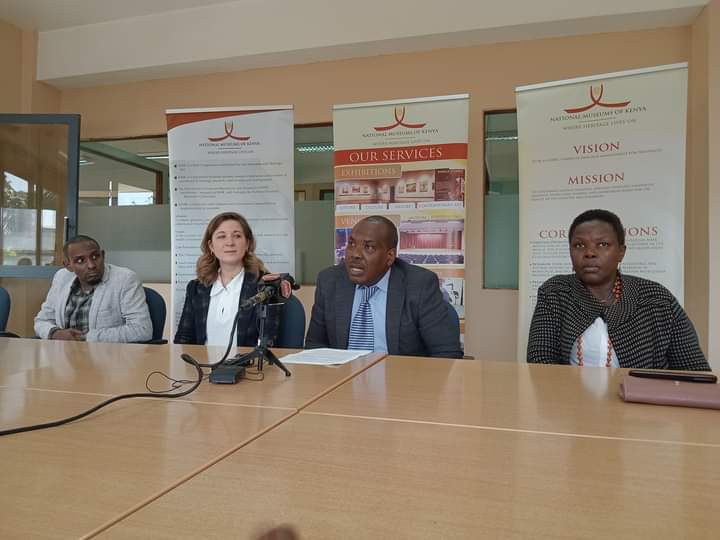
“This study involved researchers from both the Global North and the Global South and underscores the potential DNA and ancient DNA hold for understanding ancient and modern human populations” said Dr.Fredrick Kyalo Manthi, Director of Antiquities, Sites and Monuments for the National Museums of Kenya, adding that it amplifies the need to train more African scholars, particularly in studies related to ancient DNA.
Speaking in Nairobi, Dr Manthi considered this as a new dawn since it ushers a new way of doing things where Africans are not just at the backstage, but in the forefront, participating in research.
He also emphasized that Kenya is the home of human origin and the fossil records underscore so.
Scholars agreed that such work should be the work of equitable partnerships, engaging diverse audiences including communities relevant to the research thereby creating opportunities for capacity building.
Despite recent papers focusing on the ethics of genetic research, it has proven difficult to adapt to general best practice recommendations to specific geographic contexts.
On her part, Dr. Sawchuk reiterated the need for support as the study of DNA is rather young.
“We need to think about how we need to invest in Kenyan scientists and make them be at the forefront of the research,” challenged Dr. Sawchuk.
She, at the same time, urged foreign investors to invest in Africa as there are no DNA and aDNA research centers in Africa, underscoring the need for collaborations.
In her remarks, Dr Christine Ogola, Head of Archaeology at the National Museums of Kenya said, “We seek to build a dynamic research ecosystem in which African scholars can effectively lead and partner in genomics research, and access the collaborators, labs, and funding they need to achieve their goals.”
Similar Posts by The Mt Kenya Times:
- Mt Kenya Times ePAPER October 6, 2026
- Maraga takes anti-graft pledge to diaspora as US lobby group backs his 2027 bid
- Kenya’s gender election crisis: Will 2027 finally break the deadlock?
- Ruto pledges 50,000 teacher promotions and new career framework within two weeks
- Maharagwe number tatu: Decoding Chuka University’s campus food language
About the Author