Tribunal voids Kenta’s appointment as Jubilee secretary-general, deepening party’s pre-election crisis

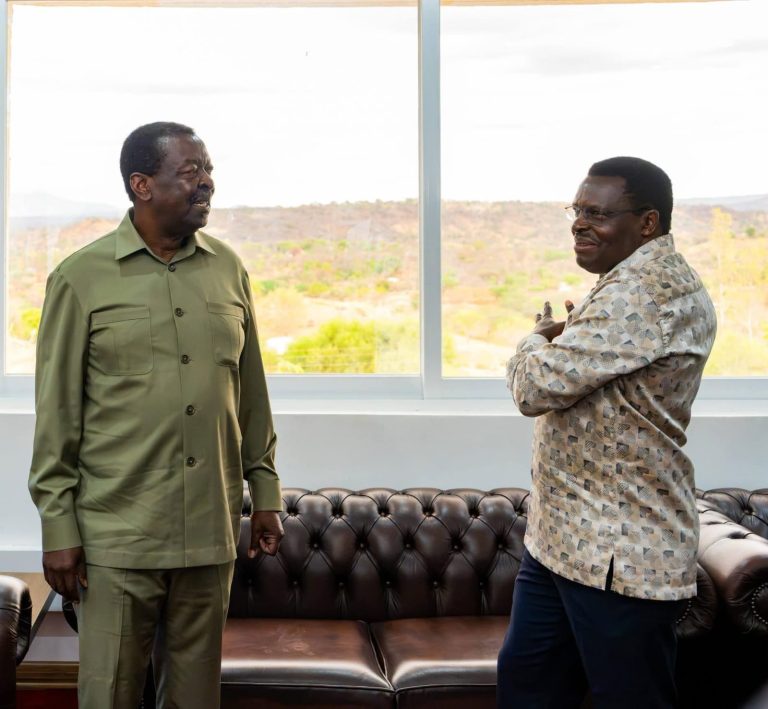
Moitalel Ole Kenta
The ruling exposes months of procedural failures within a party already struggling to project unity ahead of 2027
By James Mwangi
The Political Parties Disputes Tribunal yesterday nullified the appointment of Moitalel Ole Kenta as Jubilee Party secretary-general, finding that he was not a registered member of the party when he was nominated and appointed to the position — a ruling that strips Jubilee of a key official at one of the most critical junctures in the party’s turbulent recent history.
In a ruling delivered by a panel led by tribunal chair Innocent Muganda, the tribunal found that Kenta did not meet Jubilee’s constitutional requirement that its secretary-general be a card-carrying party member at the time of appointment. The consequences were immediate and sweeping. The tribunal declared the entire process leading to Kenta’s appointment and his subsequent recognition by the Registrar of Political Parties invalid, ruling the nomination “unlawful and void ab initio.”
The Latin phrase — void from the beginning — is not merely legal formality. It means that every decision Kenta made, every document he signed and every process he oversaw as secretary-general now exists in a legal grey zone. The tribunal quashed both the appointment and the Registrar’s recognition, ordering Jubilee to restart the process of selecting a new secretary-general in compliance with its own constitution.
The case was brought by former Nyeri Town MP Ngunjiri Wambugu, a Jubilee member who has been one of the party’s most persistent internal critics. Represented by lawyer Moses Mabeya, Wambugu argued that the Registrar of Political Parties had failed to properly scrutinise the proposed leadership changes before entering them in the party’s records, and that he had been denied a hearing despite filing a formal objection. On his social media platforms after the ruling, Wambugu disclosed that the tribunal had also faulted the Office of the Registrar of Political Parties for failing to play its oversight role.
The tribunal was not, however, entirely persuaded by Wambugu’s arguments. It dismissed several other grounds raised in the petition, saying certain allegations against other officials were largely based on speculation rather than evidence. “The complainant’s case on this ground is speculative,” the panel found.
To appreciate what this ruling means, it is necessary to understand the condition Jubilee was already in before it landed.
Once the most powerful political machine in Kenya — the vehicle that carried Uhuru Kenyatta to two presidential terms and commanded parliamentary majorities — Jubilee has spent the past several years locked in an almost continuous cycle of internal warfare. Since Kenyatta and his then-deputy William Ruto parted ways bitterly ahead of the 2022 election, the party has haemorrhaged members, lost influence and struggled to define a coherent political identity.
Kenta had been appointed secretary-general in January, replacing former Ndaragwa MP Jeremiah Kioni, who was moved to the position of Second Deputy Party Leader. Jubilee said at the time the reshuffle was intended to strengthen its grassroots structures ahead of the 2027 General Election. That stated ambition now looks considerably more complicated.
The dispute also touched on the listing of former Interior Cabinet Secretary Fred Matiang’i as Deputy Party Leader, along with other officials entered in the party register. Matiang’i has emerged as Jubilee’s presumptive presidential candidate for 2027, having formally declared his bid on a Jubilee ticket in October 2025. He has since been on a countrywide grassroots mobilisation drive, telling supporters that “the journey to fix our nation begins at the grassroots.”
But the effort to rebuild has been complicated at every turn by internal dissent and legal challenge. As far back as April, the Registrar of Political Parties had written to party leader and former President Uhuru Kenyatta flagging Wambugu’s formal objection to the proposed leadership changes, directing Jubilee to resolve the dispute before any changes could be effected. By June, fresh divisions had erupted after Deputy Party Leader Kioni launched a fierce defence of the party’s endorsement of Matiang’i, even as the legal challenge was still active — exposing deep cracks within the former ruling party over its political direction.
Wambugu, for his part, insisted through the period that Jubilee remained a formidable parliamentary force, pointing to 30 elected MPs and senators still operating under its banner. But his simultaneous legal campaign against his own party’s leadership changes illustrated a contradiction that has defined Jubilee’s internal politics for years: members who believe in the party’s potential, but not always in the decisions of those running it.
Yesterday’s ruling crystallises that contradiction in the most public way possible.
The latest ruling adds another setback to Jubilee’s mobilisation efforts ahead of the 2027 General Elections, coming at a moment when the party can least afford distraction. With the election less than a year away, a party that needs to be signing up candidates, opening offices and building voter lists must instead turn its attention back to the basic question of who is legitimately in charge.
For Jubilee, that question has never been simple. Even Kenyatta, speaking at a delegates’ meeting in May, acknowledged the party had “survived internal wrangles, court battles and political pressure,” insisting nonetheless that “Jubilee is heading in the right way.”
Yesterday’s tribunal ruling suggests the wrangling is far from over.
The immediate practical question is whether Jubilee will move quickly to fill the now-vacant secretary-general position through a process that satisfies both its constitution and the tribunal’s requirements, or whether the appointment will become yet another site of internal contestation. Either path takes time and energy the party does not have in abundance.
The deeper question is whether a party that has spent years litigating its own leadership can project the stability and credibility that Kenyan voters increasingly demand. A secretary-general appointment declared void from the very beginning is not a procedural embarrassment. It is a signal about institutional discipline — and right now, Jubilee is sending the wrong one.
Similar Posts by The Mt Kenya Times:
- Mt Kenya Times ePAPER September 12-13, 2026
- Nairobi is next: Linda Mwananchi marches into the capital under the shadow of Homa Bay blood
- Mudavadi backs Ruto 10M vote haul and shuts down deputy president speculation
- DP warns against anti-foreigner rhetoric as investor confidence at stake
- Head of public service calls for mapping of oral health workers in all counties
About the Author