Universities told to spearhead changes to end inequalities in East Africa
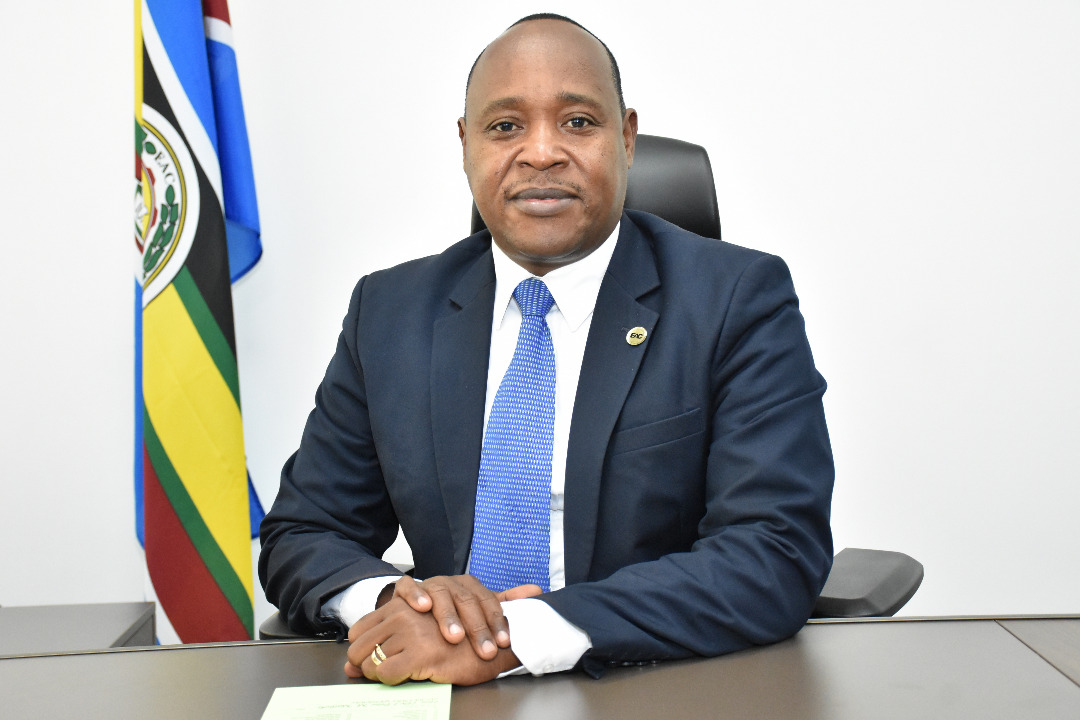
Dr Peter Mutuku Mathuki, Secretary General of the East African community

By James Wakahiu
Worth Noting:
- He congratulated MKU for having been bestowed upon the responsibility of serving as the United Nations Academic Impact (UNAI) Hub for SDG No. 10 on Reduced Inequalities. “This is an achievement which comes with a lot of responsibilities and expectations on what the university ought to institutionalise to achieve this mandate,” he said.
- “I am also aware that MKU has implemented programmes that support all the SDGs 2030 and in so doing, contributes quite well toward sending inequalities through capacity building in health sciences, in education, ICT, engineering and energy production, gender and persons living with disabilities, among others, which contribute variously in the achievement of the SDGs 2030.”
Institutions of higher learning in East African must endeavor to contribute towards ending political, social and economic inequalities in the region through their triple-mandate of teaching, research and community outreach.
Specifically, every university should contribute towards creation of awareness of the 17 Sustainable Development Goals (SDGs) 2030 and ensure all institutional activities are directed towards the achievement of the SDGs, Dr Peter Mutuku Mathuki, Secretary General of the East African community has said.
“Universities need to establish strategic facilities such as innovation and incubation hubs, entrepreneurial promotion facilities, dedicated university-based foundations, gender desks which should be fully utilised to support every university in achieving its mission and vision. This requires strategic resource mobilisation to support nurturing of innovations to patents and their requisite commercialization,” he said.
The secretary general asked managers of the regional institutions to support the entrepreneurial growth of students, staff and the communities. “Deliberate efforts are required in creating synergies between the academia, private sector and governments. University-based foundations, if fully utilised, can fund a lot of campus activities, especially those that are directed towards community empowerment and research and hence lead to reduction of inequalities,” he said.
Dr Mathuki was speaking on Friday during the 22nd Graduation Ceremony of Mount Kenya University (MKU) where he was the guest speaker .About 4,500 students graduated during the function held at the college’s main campus in Thika town.
He congratulated MKU for having been bestowed upon the responsibility of serving as the United Nations Academic Impact (UNAI) Hub for SDG No. 10 on Reduced Inequalities. “This is an achievement which comes with a lot of responsibilities and expectations on what the university ought to institutionalise to achieve this mandate,” he said.
“I am also aware that MKU has implemented programmes that support all the SDGs 2030 and in so doing, contributes quite well toward sending inequalities through capacity building in health sciences, in education, ICT, engineering and energy production, gender and persons living with disabilities, among others, which contribute variously in the achievement of the SDGs 2030,”
Dr Mathuki charged MKU founder Prof Simon Gicharu and the university council to pursue making MKU a centre of excellence within East Africa in entrepreneurial promotion. “Engagement with like-minded organizations and professionals in resource mobilization by the foundations needs to be emphasized with a view to contributing towards the achievement of the 17 SDGs2030,” he said.
Although MKU is East and Central Africa’s largest private university, the regional boss coaxed the university’s managers to open more branches across the region to continue developing capacity for the residents. “The East African Community has recently grown with joining of the Democratic Republic of Congo (DRC) to a to seven partner States and an expanded market of 300 Million people which provides opportunity to those looking for opportunities either in the service or goods industries,” Dr Mathuki noted.
MKU Chancellor, Prof John Struthers said MKU has continued to establish new strategic partnerships at national, continental and global levels despite the challenges from the Covid-19 pandemic in 2020 and 2021. These include the Erasmus – sponsored partnership with the University of Estonia in Eastern Europe.
Another key partnership is the multi – institutional consortium under the Nottingham Trent University in Britain, which includes Makerere University Uganda), University of Malawi, Jomo Kenyatta University of Agriculture and Technology, Kenyatta University and Rongo University, all in Kenya.
Another project funded from UK involves Prof Struthers’ home university, the University of the West of Scotland, MKU and Farmtrack Agriculture Company, which is examining issues around pest infestation in mango and avocado crops in Kenya. “Just this week in Nairobi, all the project partners including myself participated at the Kenya Innovation Week event at the Sarit Centre in Nairobi,” said the chancellor.
Under the United Nations Academic Impact (UNAI) SDG10 Hub on Reduced Inequalities, MKU has in the last three months collaborated with various professionals and institutions in marking several International Days. Three of these are the days allocated to MKU by UNAI Office for observance as the UNAI Hub. “These International Days serve as occasions to educate the public on issues of concern, to mobilise good will and to help focus attention on pertinent global areas of importance that affect humanity. For example, the International Day of University Sports was marked on 20th September via a live TV show in Kiswahili language arranged courtesy of the TV47 and was a significant showcase to the UNESCO regional office,” he added.
And in collaboration with the Kenya National Library Services (Thika Branch), the International Day International Day of Sign Languages was marked on 23rd September 2022 with a combined face-to-face and online presentation. The event drew participants from different parts of Africa. The International Day of Tolerance was marked on the 16th of November, 2022 via a purely online (webinar) platform.
Similarly, the International Day of Persons Living with Disabilities or the Persons Abled Differently was marked on the 3rd of December via a Webinar where the key speaker came from Joytown School in Thika, a graduate teacher who is also the secretary to the Spina Bifida and Hydrocephalus Association of Kenya, Kiambu Chapter; who is also a Person Living With Disability, said the Chancellor.
Congratulating the graduands, the Secretary General Dr Mathuki charged them to be competitive and ready to take up the next challenge in the global labour market. “Remain goodwill ambassadors of MKU wherever you go. As you join your Alma Mater in contributing towards reduced inequalities in the communities, I wish you success in your life endeavours,” he added.
Prior to his current role, he served as the Chief Executive Officer (CEO) of the East African Business Council (2018-2021), where he was instrumental in driving and articulating the Private Sector priorities in EAC decision-making process. He is also a former Member of Parliament of the East African Legislative Assembly, (2012-2017) where he chaired the Committee responsible for good governance and served in the Committee of Trade and Investment.
Similar Posts by The Mt Kenya Times:
- Mt Kenya Times ePAPER October 24-25, 2026
- Muturi calls on IEBC to keep election technology tender clean and on schedule
- Ruto meets UAE minister in push to deepen trade ties
- Gideon Moi breaks silence on Ruto fallout, cites broken promises
- The doctor who refused to abandon a sick Uganda
About the Author