Wambugu Farmers Training Centre Hosts World Environmental Day In Nyeri County
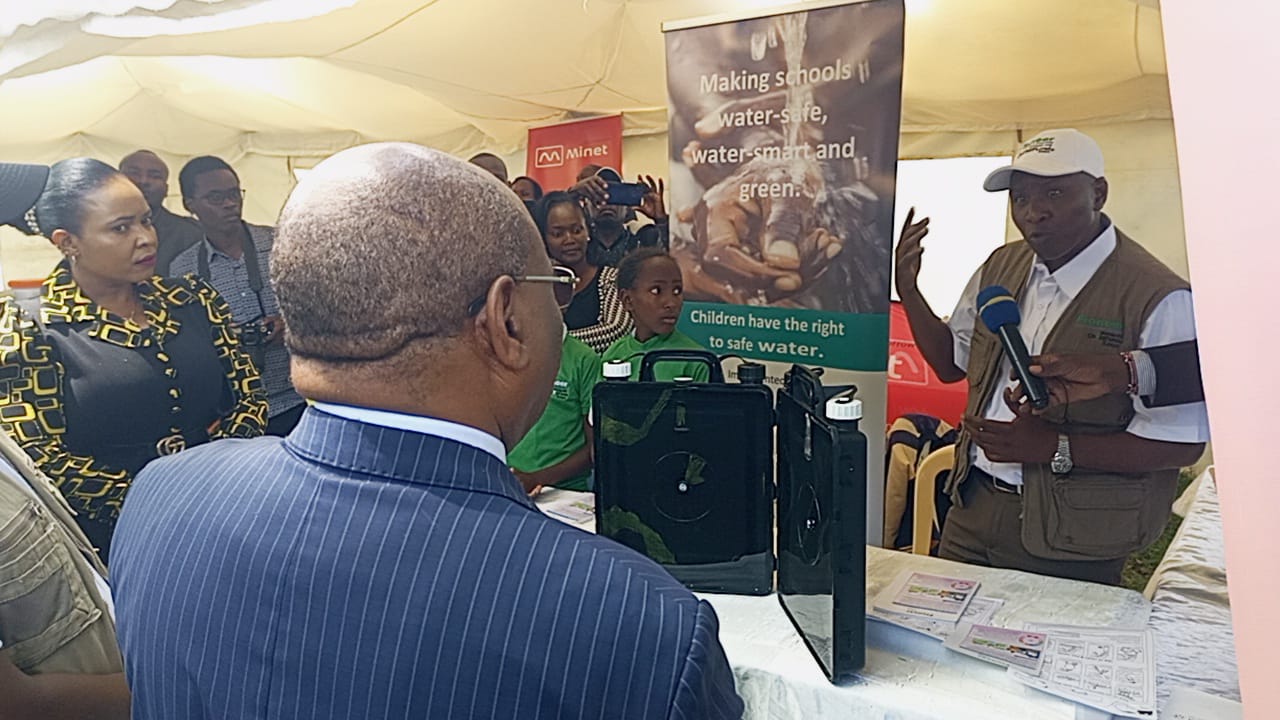
Pioneer CDP official John King'ori making presentation before World Environmental Day attendants led by Nyeri County Deputy Governor David Kinaniri Warui at Wambugu Farmers Training Centre near Nyeri town yesterday. Photo/PAUL WANJIRU

One Of The Participants; Pioneer Child Development Programme Showcased Climate Smart Agriculture Technologies
By MKT Reporter
Worth Noting:
- King’ori said the programme places significant resources on capacity development in supporting sustainable community development.
- The programme promotes adoption of various climate smart agriculture technologies including; water Harvesting at household / farm level, water conservation agriculture practices, urban farming technologies and children and youth engagement.
- Some of these practices include: Climate adaptive agriculture technology and practices and Water harvesting and conservation.
- Water harvesting using polythene lined ponds during the rainy season for use in drier periods helps reduce storm water discharge, provides sustainable water source, is easy to adapt and manage, increases crop productivity, avails water for other domestic use and enables calendar farming.
The World Environmental Day was specially marked in Nyeri where some organisations exhibited some unique ways of addressing the Environmental challenges.
During the event that was graced by area Deputy Governor David Kinaniri Warui, the locals were urged to plant as many trees so as to address the climate change that has had phenomenon change in the environment.
One of the exhibitors; Pioneer Child Development Programme showcased Climate Smart Agriculture Technologies.
Through the explanation given by one of the programme officials, Mr John King’ori, it was explained how enduring climate change can be achieved with communities being able to initiate and drive their development agenda, engage partners and the government as well as other actors to access basic services, as well utilize their available resources in a focused and in a sustainable way.
King’ori said the programme places significant resources on capacity development in supporting sustainable community development.
The programme promotes adoption of various climate smart agriculture technologies including; water Harvesting at household / farm level, water conservation agriculture practices, urban farming technologies and children and youth engagement.
Some of these practices include: Climate adaptive agriculture technology and practices and Water harvesting and conservation.
Water harvesting using polythene lined ponds during the rainy season for use in drier periods helps reduce storm water discharge, provides sustainable water source, is easy to adapt and manage, increases crop productivity, avails water for other domestic use and enables calendar farming.
So far, 320 households have been supported to line their ponds for water harvesting and use.
Others are Drip kits, zypit, plastic mulch and urban gardening technologies.
These technologies help reduce water loss, increase soil fertility, reduce water pumping costs and are easily adaptable and provide an opportunity for children to practice agriculture.
King’ori explained that the programme envisions a world where every child is free to live at their full potential no matter where they are from or what challenges they face.
The program’s mission is to help children living in poverty to have the capacity to improve their lives and the opportunity to bring lasting change to their communities, promote societies that value, protect and advance the wellbeing and rights of children and enrich supporters’ capacity to enhance the organisation’s cause.
Pioneer believes in Effective Governance and Institutional Effectiveness as a key pillar in building and achieving sustainability development.
To address climate challenges, Pioneer employs approaches that are geared towards household resilience building, food security and putting children in the front line in adapting to climate variations and stress.
Children and young people represent 30 per cent of the world’s population.
Not only do they represent the largest group of people currently affected by climate change, but they are also more vulnerable than adults to its harmful effects. Children and young people also constitute the generation that will be required to deal with the future impacts of climate change.
The Deputy governor hailed the programme saying it should be emulated by other organisations.
Similar Posts by The Mt Kenya Times:
- Mt Kenya Times ePAPER September 17, 2026
- Ruto and Uhuru: The rupture at the heart of Kenya’s 2027 election
- Gakoromone traders and rights group demand closure of sewage discharge
- Retirement is not disenfranchisement: Reclaiming the constitutional rights of Kenya’s former presidents
- Kenya’s 2027 election: Can technology strengthen democracy or manipulate voters?
About the Author