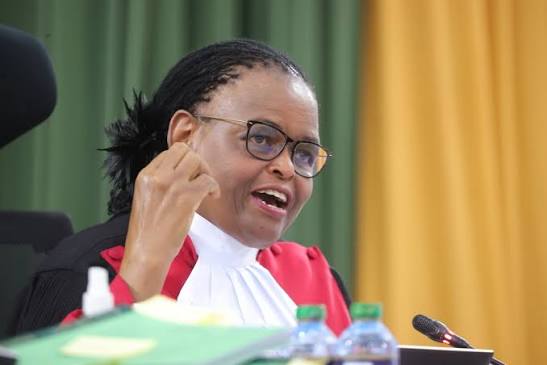
Chief Justice Martha Koome
Kenya’s lawyers and judges are locked in the most serious confrontation the bar and bench have seen in a generation — and ordinary Kenyans are paying the price
By Grace Wanja
The Judicial Service Commission yesterday called on Kenya’s lawyers to end their boycott of selected judges and judicial officers, warning that the action is paralyzing courts, delaying justice and denying citizens their constitutional right to have cases heard without unnecessary delay.
The appeal came after a consultative meeting between the JSC, the Law Society of Kenya and the Senior Counsel Bar — the latest in a series of engagements that have so far failed to resolve what has become the most serious rupture between Kenya’s bar and bench in recent memory. The dispute cuts to the heart of a question that has shadowed the Kenyan judiciary for years: who holds the judges accountable?
The LSK’s answer, delivered on 22 July, was blunt. Protesting what its leadership described as entrenched corruption, persistent administrative failures and a severe lack of accountability, advocates withdrew their services in a highly coordinated, nationwide boycott that paralyzed court registries and stalled thousands of cases across the country. The following day, the targeted boycott began — indefinite, surgical and unprecedented in its scope.
LSK President Charles Kanjama named 12 judges and one magistrate subject to the targeted action, directing advocates not to appear before the listed officers until court orders restraining the JSC, the Ethics and Anti-Corruption Commission and the Directorate of Criminal Investigations from investigating them were set aside. The list was extraordinary. It included Chief Justice Martha Koome, Deputy Chief Justice Philomena Mwilu and all four other sitting Supreme Court judges — effectively placing the apex court under siege.

The LSK’s central grievance is that certain judicial officers have used court orders to shield themselves from accountability proceedings. In the lawyers’ view, judges who obtain injunctions blocking the JSC, the EACC or the DCI from investigating them are not defending judicial independence — they are abusing it. The East Africa Law Society and the Commonwealth Lawyers Association backed the LSK’s position, arguing that judicial independence must be matched by credible accountability and cannot be used as a shield from legitimate scrutiny.
The JSC has pushed back, defending its record with considerable vigour. The Commission revealed that it has received 506 petitions and complaints against judges and judicial officers this year alone, of which 417 have already been processed. The remaining cases are at various stages of investigation, including hearings and formal responses from the officers concerned. “Since 2011, the Commission has recommended the removal of ten judges from office and recommended the appointment of constitutional tribunals to investigate their conduct,” the JSC said in a statement. “Of these, four judges were subsequently removed from office.” The Commission maintained that all complaints are handled independently, fairly and in accordance with the law.
JSC Chairperson Koome said the Judiciary would continue discharging its constitutional mandate without fear or favour while strengthening integrity, transparency and accountability, assuring Kenyans that it remains committed to delivering fair, impartial and people-centred justice while protecting judicial independence as a cornerstone of the rule of law. It was a careful formulation — firm enough to signal that the JSC would not capitulate to what it characterised as institutional pressure, but measured enough to keep the door to dialogue open.
That door remains the only realistic path forward. The JSC and LSK have now agreed to work together to combat corruption and unethical conduct within both the judiciary and the legal profession — a commitment that, if honoured, would represent meaningful progress. As a concrete step, the Commission has developed the Judicial Service (Petition for Removal of a Judge) (Procedure) Regulations, 2026, currently before Parliament, which would provide a clearer and more transparent process for handling removal petitions.
But the structural problem runs deeper than any single regulation can fix. Despite the Judiciary claiming to have held at least five major institutional engagements with the LSK over the past two years, the society maintains these meetings have produced no tangible improvements. Advocates continue to cite technological failures in the e-filing system, inconsistent case management and open hostility from certain judicial officers. The gap between what the JSC says it is doing and what lawyers say they are experiencing has become a chasm — and it is Kenyans with pending cases who fall into it.
The wider political context cannot be ignored. Kenya is edging towards a 2027 election cycle in which the courts will almost certainly be called upon to adjudicate high-stakes disputes. A judiciary perceived as compromised, and a bar that has lost confidence in the bench, is a dangerous combination heading into that period. The credibility of Kenya’s democratic institutions depends, in no small part, on courts that are both genuinely independent and genuinely accountable — not one at the expense of the other.
During the general boycott, Koome announced the immediate suspension of Senior Principal Magistrate Martin Kinyua Mutegi of the Kangema Law Courts following his arrest by the EACC on allegations of soliciting and receiving a bribe — a gesture that suggested the JSC is capable of swift action when the pressure is sufficient. The question is whether that pressure can be sustained through institutional channels rather than courtroom walkouts.
The lawyers have made their point loudly. The judges have defended their record firmly. Somewhere between those two positions lies an accountable, functional judiciary — the kind Kenya deserves, and the kind its people are still waiting for.
Similar Posts by The Mt Kenya Times:
- Mt Kenya Times ePAPER September 17, 2026
- Ruto and Uhuru: The rupture at the heart of Kenya’s 2027 election
- Gakoromone traders and rights group demand closure of sewage discharge
- Retirement is not disenfranchisement: Reclaiming the constitutional rights of Kenya’s former presidents
- Kenya’s 2027 election: Can technology strengthen democracy or manipulate voters?
About the Author