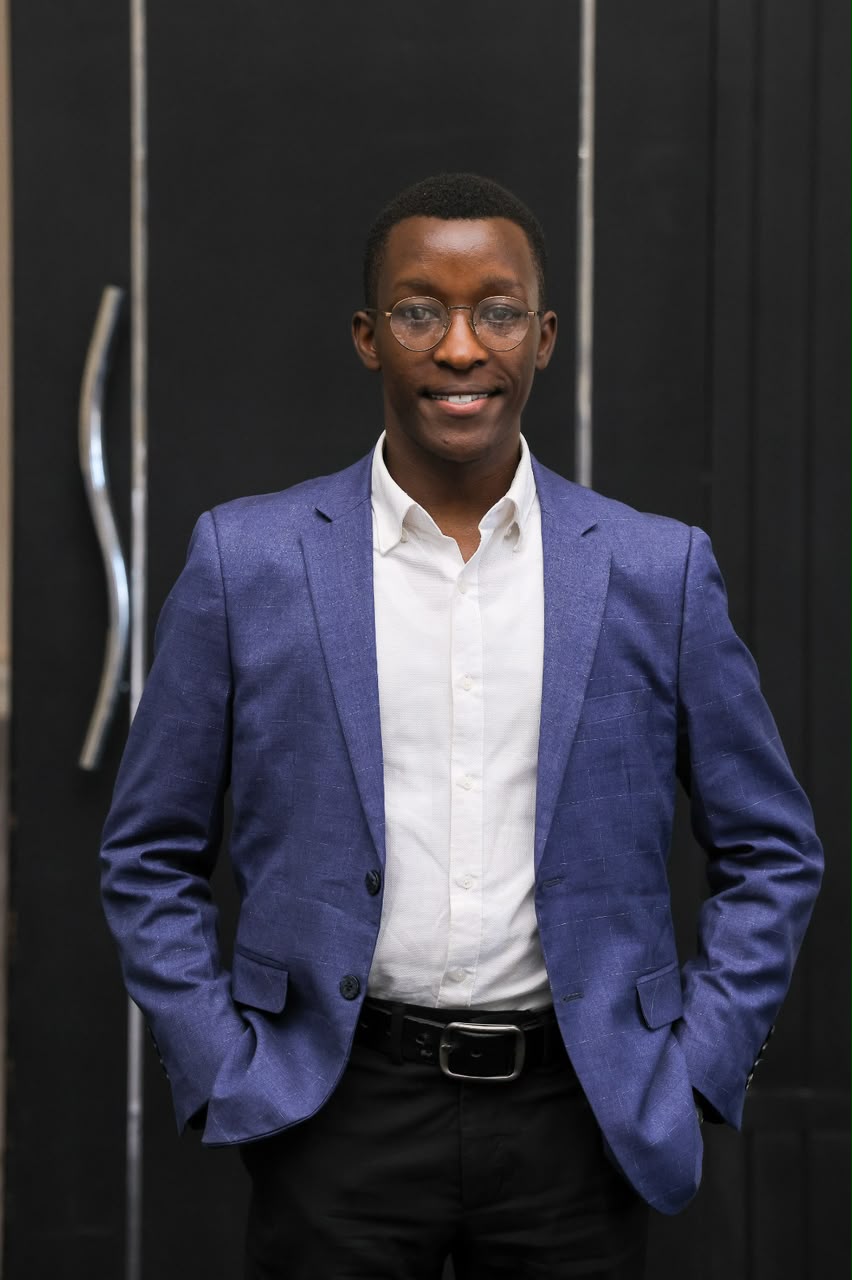
Daniel Tusiimukye Kabaasa
In the age of the algorithm, visibility has become a privilege — and we are only beginning to understand what that means for truth, credibility and the voices that matter
By Daniel Tusiimukye Kabaasa
Last night, a TEDx talk I delivered crossed 10,000 views on YouTube in less than two weeks. This morning, I sat with that number for a while and reflected on how much luck had played a part. A talk that took months of preparation, thought and no small amount of courage to deliver had found an audience far beyond the room where I gave it. It had travelled across Uganda and beyond, reaching people I may never meet.
But then a harder question came to me: what if I had not been lucky?
What if I had delivered the same talk, posted it online, and despite all the preparation, conviction and substance behind it, only 10 or 20 people had ever watched it? Would the ideas have been less valuable? Would the experience I was sharing have become less relevant simply because an algorithm had decided not to distribute it? The thought made something very clear: in an age where everyone can speak, being heard is becoming a privilege of its own.
We have entered an era in which almost anyone with a smartphone can become a publisher, commentator, broadcaster or storyteller. The barriers that once stood between an individual and an audience have largely fallen away. You no longer need a printing press to share your thoughts, a television studio to broadcast an opinion or a newspaper column to reach thousands. You can record a video from your bedroom, write from a moving taxi, livestream an event or publish your views before breakfast.
The internet has democratised speech, and that is an extraordinary thing. A young person with an idea can build an audience without waiting for an institution to grant them permission. A small business can tell its own story. An independent writer can find readers. An expert can share knowledge directly with the public. People who would previously have had no platform at all can now reach thousands — sometimes millions.
But the same system that gave everyone a microphone has created a different problem: an overwhelming amount of noise. There are only so many hours in a day, only so many posts we can read, only so many videos we can watch, only so many opinions we can genuinely absorb. Everyone is talking. Everyone is publishing. Everyone is competing for the same scarce resource: attention.
The question has therefore shifted. It is no longer simply, “Who has something to say?” Almost everyone does. The more important question is: who will get heard?
For generations, journalism was built around institutions. Newspapers had editors. Radio stations had producers. Television newsrooms had gatekeepers whose job was, at least in principle, to determine what was accurate, newsworthy and worth placing before an audience. The digital age disrupted that model. Today, the gatekeeper can be an algorithm. The editor can be a trending page. The front page can be whatever appears on your screen when you wake up.
This has created real opportunities, but it has also complicated how we decide what deserves our attention. A carefully researched article can sit beside an unverified claim. A scientist’s explanation can appear next to a rumour. A journalist who has spent days verifying a story can find themselves competing with someone who spent 30 seconds posting an unverified opinion.
The audience is now left to decide what deserves attention — and attention is not always awarded according to merit. Sometimes it goes to timing. Sometimes to personality. Sometimes to controversy or novelty or emotion. And increasingly, it depends on whether an algorithm decides your content is worth putting in front of someone else.
That is where luck enters the conversation.
My TEDx experience made this particularly clear. I could control the preparation. I could control the message and the delivery. But once the talk was published, what happened next was no longer entirely in my hands. I could not personally place it in front of every person who might benefit from it. I could only put it out there.
There are thousands of people producing thoughtful work every day whose ideas never travel far. Researchers whose findings remain buried. Writers whose essays are read by a handful of people. Entrepreneurs whose innovations receive no attention. Speakers whose messages never escape the room. And then there are people who happen to find the right audience at the right moment and suddenly reach millions. The difference is not always quality. Sometimes it is distribution. Sometimes it is timing. Sometimes it is simply luck.
That distinction matters because we risk confusing visibility with significance. A post with a million views is not automatically more truthful than one with a thousand. A person with 100,000 followers does not automatically know more than someone with 500. Something trending is not necessarily important. Something that receives little attention is not necessarily unimportant.
This may be one of the deeper challenges of the digital age. We have grown so accustomed to measuring reach that we sometimes forget to measure value. Views, followers, likes and shares are easy to count. But some of the most meaningful things are not the ones that generate the largest numbers.
So who should we listen to?
Not simply the loudest voice in the room, or the post that has been shared the most. We should listen to people who bring clarity, credibility and purpose to what they say — people whose words are supported by knowledge, experience and a track record that gives us reason to trust them. In a world where content can be produced in seconds, credibility matters more than ever. The ability to publish something does not make it true, just as the ability to speak does not make someone an authority.
We should also pay attention to people who understand the value of listening. The best communicators are not always those who speak the most. They are often those who understand that communication is a two-way relationship — who listen to the people they are addressing, understand their questions and make room for other voices.
And perhaps we need to rediscover the value of saying something worth someone’s time. In a crowded information environment, clarity matters. Substance matters. Purpose matters. The problem is not that too many people have voices. The problem is that we have not yet learned how to navigate a world in which all those voices are speaking at once.
That responsibility does not rest only with those who speak. It also rests with those who listen. We must become better consumers of information — asking where a claim comes from, distinguishing opinion from evidence, resisting the urge to believe something simply because it has been repeated thousands of times, and equally resisting the impulse to dismiss something because it has not gone viral.
The digital revolution gave us something previous generations could only imagine: the ability to speak directly to the world. But it also gave the world an unprecedented volume of speech. We have moved from a time when access to a platform was the greatest obstacle, to a time when attention is the scarce resource.
The question is no longer whether you can publish. You can. The question is whether what you publish is clear enough to understand, credible enough to trust and meaningful enough to remember.
I am grateful that my talk reached 10,000 people in less than two weeks. But perhaps the greater lesson is not the number. It is the reminder that behind every view is a person — someone who gave a few minutes of their life, who chose, among millions of competing things, to listen.
In a world where everyone can speak, perhaps that is the privilege worth valuing most. Not simply having a voice. We already have that. The greater challenge — and perhaps the greater responsibility — is to have something worth hearing.
Similar Posts by The Mt Kenya Times:
- Nairobi Standard Chartered Marathon sponsorship rises 17% to unlock KSh273m for vulnerable groups
- When Rights exist on paper but barriers remain: Kenya must end the second-class treatment of Persons with Disabilities
- Fatuma Ibrahim Ali shortlisted for Parliamentary Service Commission seat
- Nairobi National Park: Connecting the world to nature through live conservation
- Ejersa steers KEMSA towards a more resilient and responsive health supply chain
About the Author