The Mt Kenya Times
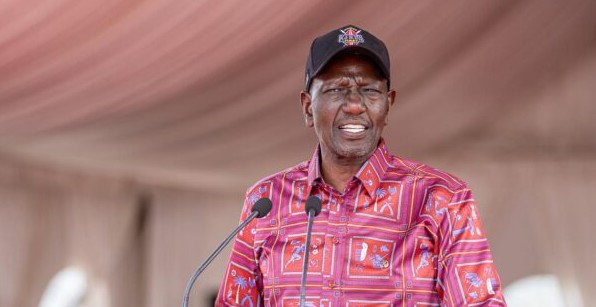
President William Ruto and Deputy President Rigathi Gachagua
A political tragedy of betrayal within the Kikuyu community
By: Midmark Onsongo
Worth Noting:
- This is not just about Gachagua. It’s about the Kikuyu people, a community that has been at the heart of Kenya’s political and economic life for decades. And yet, in this moment, they find themselves under attack, not from outside forces but from within.
- Look at Kimani Ichung’wa, a man who has chosen to fight his own people rather than stand with them. Ichung’wa, once seen as a promising leader, is now the face of betrayal, a man willing to sacrifice his own community for political expedience.
- And where does it end? What if the Kikuyus, tired of being scapegoats, tired of being manipulated and divided, decide that enough is enough? What if they say, “Kiambu si Kenya”? Let’s break it down.
Have you ever heard the sound of silence from a people who once roared? The echoes of a mountain once proud, now buried in a whisper, a paradox of icy peaks melted away by the heat of betrayal? I am not a Kikuyu, but I have written deep political content, and I feel bad for Kenya. I feel bad for a country that has turned on its own sons, on its own heritage, and for what? For political theater staged in the heart of Mt. Kenya, where the snow has melted, the rivers have run dry, and the people are left to mourn the son they gave to the nation—Rigathi Gachagua. Once a healthy child of the mountain, now they’ve sent him home sick, impeached while in the hospital, a casualty of the very system that once celebrated him.
The saga of Rigathi Gachagua is a political tragedy so grand it defies explanation, but not metaphor. Let’s start with the snow of Mt. Kenya, that magnificent crown of the country. The white cap that once glistened in the sun has faded into history, not unlike the man who was once a beacon of hope for many. When Gachagua rose to the position of Deputy President, he was seen as a son of the mountain, a symbol of unity for a people that had long been divided.
But now, as the mountain melts, so too does his influence, washed away by the flood of betrayal orchestrated by those who once held him aloft. His impeachment, a final blow, came while he was in a hospital bed—broken, used, and discarded by a government that promised him the world but gave him nothing but chains.
This is not just about Gachagua. It’s about the Kikuyu people, a community that has been at the heart of Kenya’s political and economic life for decades. And yet, in this moment, they find themselves under attack, not from outside forces but from within.
Look at Kimani Ichung’wa, a man who has chosen to fight his own people rather than stand with them. Ichung’wa, once seen as a promising leader, is now the face of betrayal, a man willing to sacrifice his own community for political expedience.
And where does it end? What if the Kikuyus, tired of being scapegoats, tired of being manipulated and divided, decide that enough is enough? What if they say, “Kiambu si Kenya”? Let’s break it down. Kiambu County, a jewel in the crown of Kenya’s economy, contributes immensely to the country’s GDP.
Agriculture, real estate, manufacturing—all thrive in this region. If the Kikuyus were to secede, or even to pull back their economic contributions, the fallout would be catastrophic. Imagine the loss of revenue from coffee and tea plantations, from the booming real estate market in places like Ruiru and Thika. In 2021, Kiambu alone contributed over Ksh 80 billion to the country’s economy.
Now imagine the void that would be left if those contributions ceased. The Kikuyus, despite the political games being played with their loyalty, remain a cornerstone of Kenya’s economy. If they were to isolate themselves, the rest of the country would feel it in a heartbeat. But instead of uniting the community, the current administration is working tirelessly to divide them.
President William Ruto’s government has not only failed to address the economic and social concerns of the Kikuyu people but has actively fueled internal divisions. By pitting leaders like Ichung’wa against their own people, Ruto has managed to weaken a once-unified force.
It’s a strategy as old as time: divide and conquer. But at what cost? The Kikuyu people are beginning to see through the façade, and the question is, how much longer will they allow themselves to be pawns in a game that they neither started nor benefit from? We must also not forget the warnings of Uhuru Kenyatta, a man who, despite his flaws, understood the pulse of the nation.
He warned, time and time again, that the valley would swallow its own sons if they were not careful. Uhuru’s prophecy now rings painfully true. Look at Gachagua, look at Ichung’wa, look at the state of the Kikuyu people. The valley, in all its political treachery, has indeed swallowed them, using them for its own gain before casting them aside like broken tools.
And let’s talk about the valley—the Rift Valley, to be specific—the heart of William Ruto’s political stronghold. The Rift Valley has become a symbol of the deep political divides in Kenya, a place where loyalty is bought and sold, where alliances shift with the wind, and where leaders are either exalted or destroyed at the whim of a single man.
It’s ironic, isn’t it? The people of Mt. Kenya gave their son to the valley, and in return, the valley devoured him. Now, as Gachagua lies in his hospital bed, a man who once symbolized strength and resilience, he is but a shadow of his former self—a tragic figure in a political play that cares little for the individual and everything for the spectacle.
The people cry, but their cries are met with silence. The administration is too busy playing its games; too busy dividing the nation along tribal lines, to listen. The dirtiness of Ruto’s administration is in full view, yet so many choose to look away. They see the corruption, the broken promises, the political betrayals, but they remain silent. And this silence is deafening. It is the silence of a people who have grown tired, a people who no longer believe in the system that was supposed to serve them.
But what if the silence turns to rage? What if the Kikuyus, a people known for their resilience, decide that they have had enough? What if they rise, not just in protest but in unity, against a government that has taken them for granted for far too long? This is not a rhetorical question—it’s a real possibility. The Kikuyus have the economic and political power to shift the balance in Kenya. If they decide to withdraw their support, the entire country will feel the impact.
In the end, this is a story of betrayal. It is the story of a mountain that gave its son to the nation, only for the nation to send him back broken and discarded. It is the story of a people who were promised unity but were instead given division. And it is the story of a country that, unless it changes course, will continue to eat its own sons in the name of political expedience.
So, what now? Will the Kikuyus rise? Will they reclaim their rightful place in the political and economic landscape of Kenya, or will they continue to allow themselves to be divided and conquered by those who do not have their best interests at heart? Only time will tell. But one thing is certain: the snow of Mt. Kenya may have melted, but the fire in the hearts of its people is far from extinguished.
This article was scripted by;
MIDMARK ONSONGO, SGS
(Socio-Geographic Scholar)
Similar Posts by The Mt Kenya Times:
- Diaspora Times Global Sep 26 – Oct 2, 2026
- RS South Africa supports next-generation edge AI with NVIDIA Jetson Orin Nano 2
- AFRICLOUD opens Lagos region and local-currency payments across African markets
- Fine Spinners targets Kenya’s US apparel supply chain with $5m investment
- Nuclear energy debate must begin with public trust and shared responsibility
About the Author