The Mt Kenya Times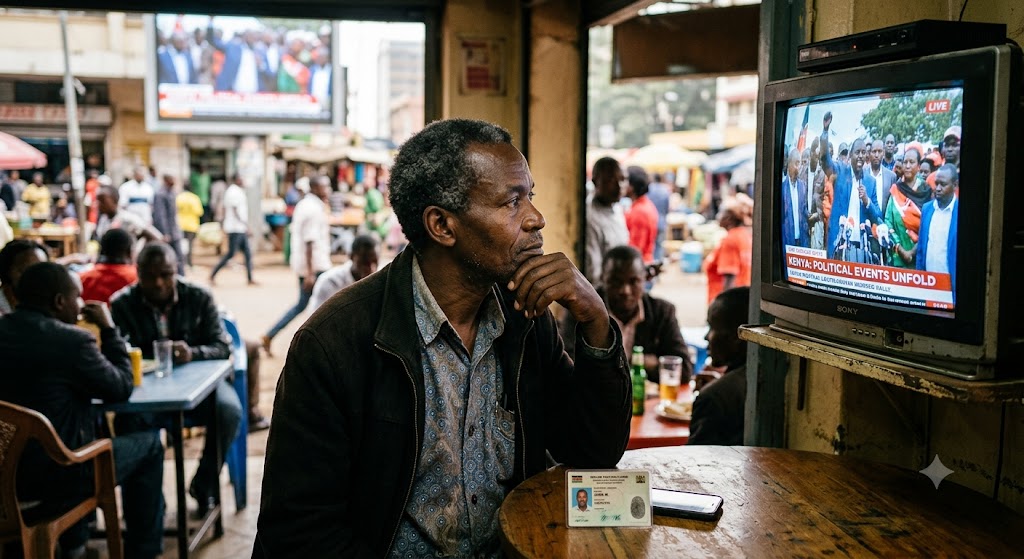
By Mr. Fredrick Kipchumba Chelimo PWD
Chairperson, Jiamini Disability network Community Based organization
Email: jiamini.network@gmail.com
Kenya’s political clouds are gathering with unusual speed. Political alliances are shifting, parties are being abandoned and others are embraced with remarkable convenience, brokers are positioning themselves, appointments are acquiring political meaning and politicians both incumbents and new aspirants are beginning to criss-cross electoral jurisdictions of interest in search of influence. The political season is clearly warming up, but beneath the noise lies an important development that the politicians may be underestimating: the voter is changing
Over the years, politicians have perfected the art of campaigning with resources that, in the first place belong to the citizens. Public projects are launched with extraordinary political fanfare. Public vehicles, public platforms, public programmes and sometimes public institutions appear to become part of political mobilization machinery. Government achievements are repackaged as personal political gifts, while citizens are invited to applaud what they have, in fact, already paid through taxes and other public contributions.
The informed voter is increasingly unimpressed. The citizen who has watched public money disappear into questionable procurement, inflated projects, stalled programmes and political extravagance may no longer be persuaded simply because a politician arrives with a convoy and announces another development project. The voter increasingly wants to know who paid for it, how much it costs, who implemented it, who benefited and whether it should have been delivered as part of government responsibility in the first place.
Even the traditional campaign handout is beginning to acquire different meaning. For generations, politicians have been distributing money, food, clothing and other small gifts during campaigns, expecting gratitude to translate into votes. The increasingly informed electorate is starting to look at such generosity through an entirely different lens. To many, the money being handed out is not necessarily generosity at all. It is perceived as small refund from a larger public resource that has already been extracted from them through taxation, government contracts, public opportunities or political patronage.
The logic is becoming brutally simple; if you have been given a thousand shillings today, it does not mean you have sold your vote for a thousand shillings. The voter can take the handout and still make an independent decision at the ballot. This is a political reality that many campaign strategists may discover rather late. The old assumption that poverty automatically translates into political loyalty is increasingly unreliable. Citizens can be economically constrained without being politically naïve. A mother may accept a small campaign contribution because she needs food that evening and still reject the politician at the ballot box. A young person may attend a political rally because transport and lunch have been provided and still vote according to his or her own assessment.
The political class should therefore stop confusing attendance with allegiance, applause with approval and handouts with votes. The same warning applies to the growing phenomenon of political tourism. Politicians are beginning to travel outside their constituencies to inject themselves into local political contest, often carrying little more than political bravado and an appetite for confrontation. Some arrive not with policy proposal but with insults. Others specialize in humiliating opponents, provoking crowds, and releasing vulgar language calculated to generate applause, hatred and media attention.
This must stop at all costs. Kenya does not need politicians from one county to another exporting political hostility. Political engagement is legitimate; political tourism designed to provoke, insult and inflame communities is not responsible leadership as this drifts towards tribalism, conflict and warlike language
The political casualties of the coming season may therefore be far much greater than may currently anticipate. Candidates who build their campaigns around tribal hostility may discover that citizens have grown tired of being mobilised against one another. Politicians who make political conflict their currency may discover voters prefer stability, opportunity and development.
Kenyan’s citizens have the history, the technology tools and knowledge to recognize patterns, Politicians start with dramatic speeches, ethnic arithmetic, insults, threats, the promise, handouts, and defections. The political brokers arrive with new alliances and new calculations and eventually the voter is expected to forget everything and start again. But something fundamental has changed. The citizen is recording, comparing, questioning and listening.
They are discussing and analyzing political performance in ways that were not possible before the digital age. They compare promises made in different forums, achievements and failures at a flash of a second. It is encouraging however that politicians who genuinely want to serve the environment provides an opportunity for a different kind of leadership, leadership that sees and speaks to citizens as adults and not as voting blocks; leadership that recognizes the most vulnerable in the society including the disability persons.
The informed voter is watching all this. Watching who is appointed, who has built skyscrapers during the short term in office, who employed only relatives, who is excluded, who receives, and who suddenly becomes generous during election period. The citizen is also watching who is beating drums of tribalism and conflict. The political class should not underestimate this electorate. The Kenyan voter may laugh at the rally, accept transport, eat the campaign food and listen to the politician’s insults, but still go into the polling booth alone. This is where political theater ends. This is where the voter speaks.
The coming political season will undoubtedly be noisy. Political tourists will arrive, the brokers will emerge, old veterans will invoke experience, new entrance will invoke technology and numbers, parties will realign, money will circulate, handouts will increase and political language will become harsher. But the voter is not necessarily amused
Kenyans are people asking increasing asking uncomfortable question; after all the money spent, all the insults exchanged, all the promises made all political battles fought, what exactly will change in the life of ordinary citizens? The question may prove more powerful than the loudest rally.
Those who have specialized in tribalism, confrontation, vulgarity and political intimidation should take particular note and caution. The electorate may be approaching a point where such politics no longer inspires loyalty but exhaustion. The political tourist may eventually return home, the broker will move to their next negotiation, the handouts will disappear, and the campaign music will go silent. But the voter will remain with the consequences.
And when that moment comes, Kenya may discover that the most powerful political force was never the loudest politician, the largest convoy or the deepest pocket. It was the informed citizen who listened quietly, watched carefully, remembered everything and most importantly made the wise choice.
Similar Posts by The Mt Kenya Times:
- Kingdom Bank charts new path for MSME growth through chamber partnership
- Mt Kenya Times ePAPER September 25, 2026
- Babu Owino’s party predates Linda Mwananchi, clarification shows
- Anglican church tells Kenyans: The country is getting worse and silence is complicity
- Sifuna set for UDP presidential unveiling as Western Kenya bids to field its own candidate
About the Author