OPINION: When the Inspector-General is summoned: The constitutional line between judicial oversight and institutional overreach
 The Mt Kenya Times
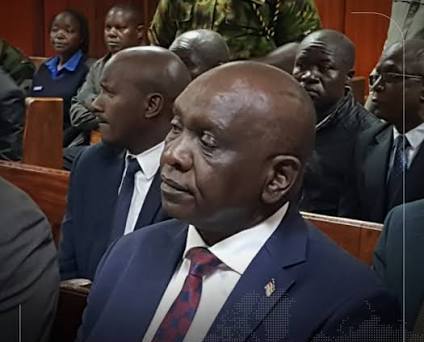
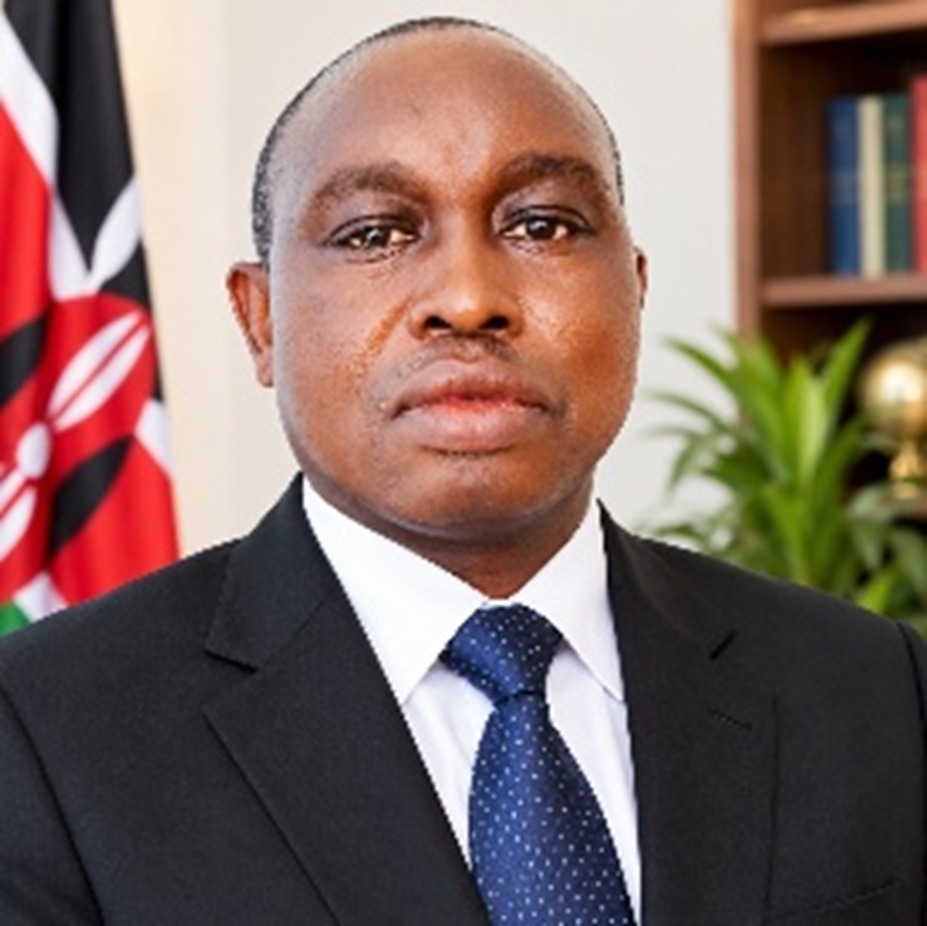
Inspector-General of Police Douglas Kanja before the High Court. Photo | Courtesy
Three high-profile police summons cases reveal an urgent need for Kenya to define the boundaries of judicial authority and institutional accountability
By Fredrick Kipchumba Chelimo
“The strength of a constitutional democracy lies not merely in the authority of its institutions to demand accountability, but in their wisdom to exercise that authority with restraint, fairness and a clear appreciation of institutional responsibility.”
The appearance of Inspector-General of Police Douglas Kanja before the High Court on Tuesday, to answer questions surrounding the disappearance of Tanzanian activist Twaha Mwaipaya, has handed Kenya an important constitutional question that deserves more than the immediate controversy surrounding an alleged abduction. At its heart lies the delicate relationship between judicial authority, police independence and the obligation of public institutions to account for their conduct.
The disappearance of any individual — particularly under circumstances suggesting abduction, unlawful detention or possible State involvement — is a matter of grave national and constitutional concern. No person should have to establish nationality, political standing or social influence before the State takes responsibility for protecting their life, liberty and dignity. Equally, allegations involving State agencies demand prompt, credible and independently scrutinised investigations.
That said, defending constitutional rights should not obscure another equally important principle: judicial authority must be exercised with proportionality, institutional understanding and a demonstrable sense of necessity. The increasing frequency of personal summons directed at the Inspector-General raises legitimate questions about whether exceptional judicial intervention is quietly becoming an ordinary administrative mechanism for extracting information from the National Police Service. The office of the Inspector-General must remain accountable, but it should not become the default institutional representative summoned every time a police-related controversy reaches the courts.
Kenya’s recent judicial history is instructive. In August 2024, three individuals — activist Bob Njagi and brothers Jamil and Aslam Longton — reportedly disappeared in Kitengela. The subsequent habeas corpus proceedings before Justice Lawrence Mugambi resulted in seven consecutive summons directed at then Acting Inspector-General Gilbert Masengeli. His repeated failure to appear eventually attracted a contempt finding and a six-month custodial sentence on 13 September 2024, suspended for seven days to allow compliance. Masengeli appeared on 20 September. That episode mattered because it concerned not merely a demand for information, but the apparent failure of a senior public officer to honour repeated judicial directions. It demonstrated, plainly, that constitutional independence cannot be wielded as a shield against lawful judicial authority.
The matter returned in January 2025, following the disappearance of Justus Mutumwa, Martin Mwau and Karani Muema in the Mlolongo area. On 8 January, Justice Bahati Mwamuye directed the personal attendance of Kanja and Directorate of Criminal Investigations Director Mohamed Amin. Justice Chacha Mwita issued further directions on 9 and 13 January, requiring police leadership to account for the missing men’s whereabouts. When the officials challenged the summons, the court declined on 23 January to set aside the personal attendance requirement and directed them to appear on 30 January. They eventually attended and confirmed the individuals were not in police custody, with investigations ongoing.
The latest episode concerns Mwaipaya, reportedly abducted in Kamulu on 25 October 2026. On 30 October, Justice Alexander Muteti directed that the activist be produced before the court, alive or dead, while requiring the Inspector-General and DCI Director, or their representatives, to respond. Following concerns about the adequacy of the State’s explanation, the court subsequently required Kanja to attend personally. Yesterday, he appeared and denied that Mwaipaya had ever been in police custody, confirming that a report had been lodged at Ruai Police Station and that investigations were continuing. These are important developments, though the full picture must emerge through credible investigation rather than institutional assurances alone.
It would be intellectually dishonest, however, to treat these three episodes as identical. The Masengeli proceedings involved repeated non-compliance with judicial orders, raising a direct question of contempt and respect for the rule of law. The Mlolongo and Mwaipaya matters involved unresolved disappearances and the need to determine whether State agencies had any connection to the missing individuals. Each set of circumstances called for its own judicial assessment. The central concern is not whether the Judiciary possesses the authority to summon the Inspector-General — unquestionably, it does. The more important question is when exercising that authority personally becomes necessary, proportionate and judicially justified.
The constitutional framework is clear. Articles 22 and 23 empower courts to protect and enforce fundamental rights, while Article 165 establishes the High Court’s extensive jurisdiction. Article 25(d) protects the right to habeas corpus, reinforced by Article 51(2). Article 245, meanwhile, establishes the independent command of the Inspector-General, and Article 244 demands professionalism, transparency and accountability from the National Police Service. These provisions are complementary, not contradictory. Police independence does not mean immunity from judicial scrutiny; judicial authority does not mean that every institutional explanation must come from the physical presence of the institution’s chief executive.
Section 8(2) of the National Police Service Act recognises that the Inspector-General may exercise the powers and functions of the office personally or delegate them in writing to subordinate officers. Such delegation does not extinguish the Inspector-General’s ultimate responsibility, but it acknowledges an operational reality: a national institution cannot function effectively through the personal participation of one office holder in every judicial or administrative engagement.
A recent judicial approach offers a sensible standard. In Akiru & Another v Inspector-General of Police & 3 Others [2026] KEHC 14546, the High Court declined to compel the Inspector-General’s personal attendance, reasoning that a sworn account from an officer with direct knowledge of the investigation would better assist the court, with personal attendance remaining an option if the explanation proved inadequate. This recognises that judicial intervention exists to establish truth and secure compliance — not necessarily to secure the physical presence of the most senior officer in an institution.
The appropriate standard should therefore be necessity rather than convenience. Where an investigating officer, regional commander, DCI director or another properly authorised senior officer possesses direct knowledge and can provide a credible, comprehensive and sworn account, the court should ordinarily consider that evidence before insisting on the Inspector-General’s personal attendance. Personal summons become compelling where there is demonstrated institutional defiance, credible evidence of command-level involvement, deliberate concealment, persistent evasion or a need to explain decisions personally made by the Inspector-General himself.
There is a wider institutional danger in over-centralising accountability. Kenya has established police command structures to distribute operational responsibility. When every serious police controversy becomes a personal encounter between the Judiciary and the Inspector-General, the officers actually responsible for operational decisions may gradually escape the scrutiny that properly attaches to their positions. Accountability must follow responsibility, not merely the seniority of office.
Ultimately, the Judiciary must remain fearless in protecting constitutional freedoms, particularly where human life, liberty and the possibility of State abuse are at stake. The National Police Service must equally understand that independence is inseparable from accountability. Neither institution should mistake its constitutional mandate for an unrestricted licence to disregard the mandate of the other.
Kenya does not need weaker judicial oversight or a less accountable police service. It needs a more disciplined relationship between the two — one founded on constitutional fidelity, institutional competence and genuine respect for the rule of law. Judicial summons should be purposeful, evidence-driven and proportionate. Police responses must be timely, truthful and sufficiently comprehensive to command public confidence.
“A court does not demonstrate its authority by how often it summons the highest office in an institution, but by how effectively it secures the truth, enforces the law and protects the rights of every person. Equally, an institution does not demonstrate its independence by resisting scrutiny, but by remaining accountable without compromising its constitutional mandate.”
Similar Posts by The Mt Kenya Times:
- Spanish football mourns Jesús de Miguel after fatal on-pitch collision
- Ten Hag’s relegation warning shakes Manchester United as crisis deepens
- Paul Kihara Kariuki: Kenya loses a pillar of the law
- Kenya mourns Paul Kihara Kariuki, the jurist who built the bench
- The media’s role in saving Kenya’s vanishing heritage
About the Author