When the street becomes a political weapon: Kenya’s pre-election violence problem
 The Mt Kenya Times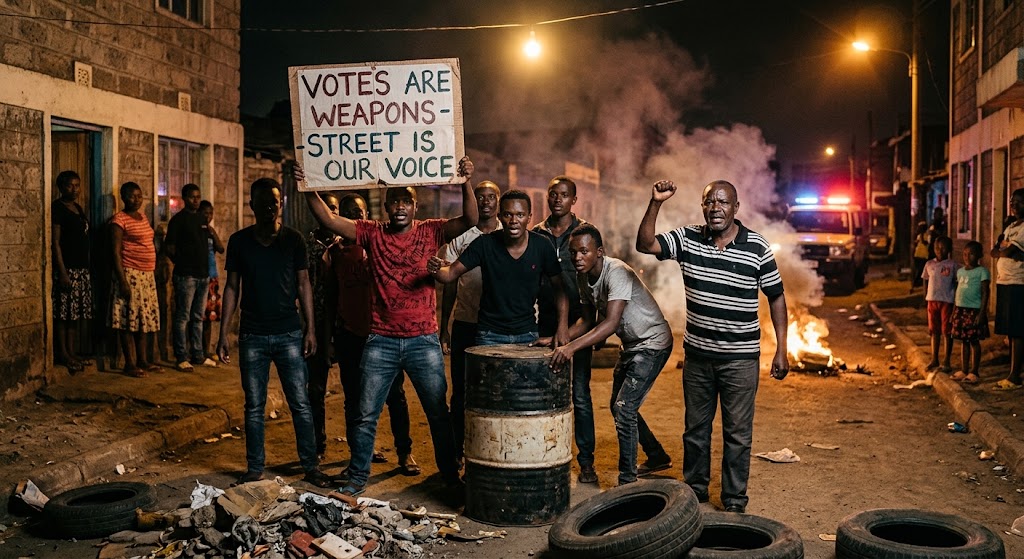
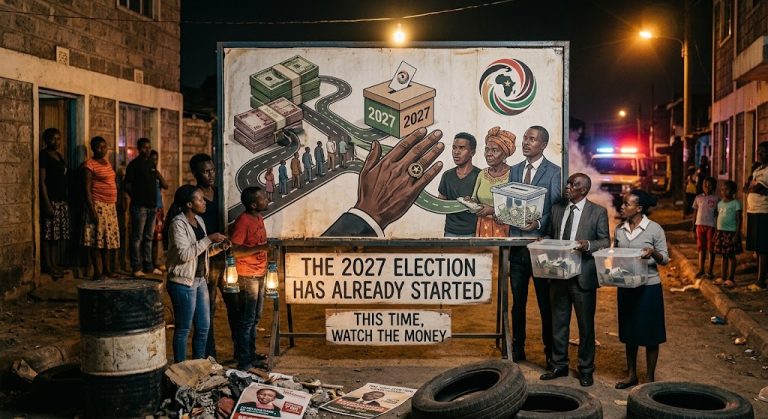
With the 2027 General Election still months away, a pattern of organised disruption and political violence is raising urgent questions about democratic safety
By Dennis Wendo
Kenya is not yet in formal campaign mode, but the political temperature is already climbing.
Political meetings that ought to create space for competing ideas are increasingly being accompanied by confrontations, disruptions and organised groups of youths for hire. What should concern the country is not any single isolated incident, but the pattern taking shape — and what it signals for the political environment ahead.
Recent violence across the country has sharpened that concern. Human Rights Watch has documented attacks by unidentified armed groups at civil society and opposition gatherings, reporting that at least six people were killed and dozens injured in incidents reviewed ahead of the 2027 elections.
Then came Embu.
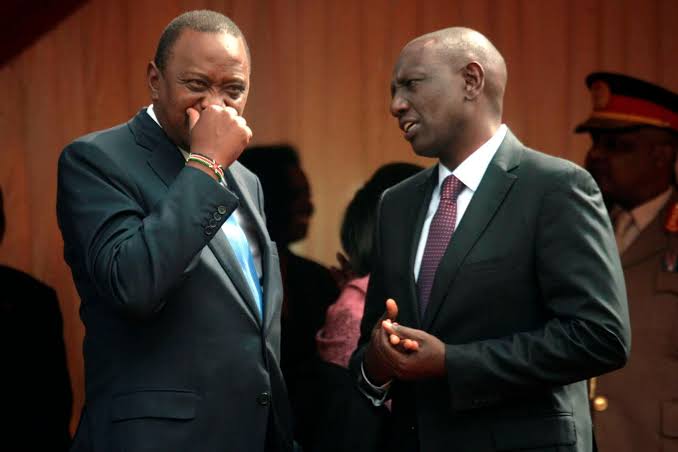
On September 12, violence erupted at a political meeting in Nembure attended by Deputy President Kithure Kindiki. Police reported injuries and the torching of six vehicles. Subsequent investigations led to arrests, and two suspects were later arraigned as detectives continued examining the circumstances surrounding the confrontation.
The Embu incident must be investigated on its own facts, with responsibility established through evidence and due process. But it also raises a much larger national question: what happens when political competition begins to depend on the power of the street rather than the strength of ideas?
Kenya has been here before.
The country carries the painful memory of the post-election violence of 2007 and 2008. That history should make every early warning sign a matter of urgent national concern. The difference today is that political mobilisation is taking place in a far more complex environment, one in which criminal networks, local gangs, informal groups, social media and political interests can intersect with dangerous ease.
The word “goon” has consequently entered Kenya’s political vocabulary. But the real issue runs deeper than the young person seen throwing a stone, carrying a weapon or disrupting a meeting. The more important questions are: who mobilised them, who transported them, who financed them, who coordinated them and who ultimately benefits from the violence?
Those questions cannot be answered through political accusation. They require professional investigations and credible evidence.
The danger is that political violence can develop its own self-sustaining ecosystem. There is a pool of unemployed and underemployed young people who may be vulnerable to financial inducement. There are criminal groups with established networks and territorial influence. There are political actors competing for power. There are local grievances that can be exploited. And there is an increasingly powerful digital environment capable of turning a local confrontation into a national political narrative within minutes.
This creates a dangerous cycle. One political camp mobilises youths for protection or disruption. An opposing camp responds by mobilising its own. A confrontation follows. Anger generates retaliation, retaliation generates counter-mobilisation, and what began as a political disagreement can rapidly become a community security crisis.
Recent analysis by the Armed Conflict Location and Event Data Project has identified the interaction between political groups, gangs and retaliatory mobs as a growing concern in Kenya’s pre-election environment.
This is why the national conversation must move beyond blaming one camp or another. The problem is larger than political sides.
No political party should turn young people into instruments of intimidation. Equally, no group of citizens should assume that political disagreement entitles them to invade meetings, attack opponents or destroy property.
Democracy requires space for disagreement. A political leader should be able to travel and campaign. Citizens should be free to attend meetings of their choice. Opponents should be able to criticise one another. Communities should be able to support different political formations without fearing retaliation.
Once political affiliation determines who can safely enter a particular town, constituency or county, democracy begins to lose its meaning.
The challenge therefore extends beyond policing. It is also about institutional credibility.
The National Police Service must demonstrate that the law applies equally — to those in government, those in opposition and ordinary citizens alike. Investigative agencies must follow evidence wherever it leads. Political parties must take responsibility for the conduct of their supporters. Institutions responsible for electoral preparedness must treat early warning signs seriously.
Kenya does not lack the laws or institutions designed to deal with organised crime and political violence. The harder question is whether those laws will be applied consistently, and early enough.
The National Cohesion and Integration Commission has already launched its roadmap towards a violence-free 2027 General Election, emphasising early warning, conflict mapping, responsible political leadership and cooperation among security agencies, electoral bodies, political actors, civil society and communities. That matters, because prevention cannot begin after people have been killed, vehicles burned or communities divided.
It must begin when intelligence indicates that young people are being recruited, when threats are issued, when political meetings are deliberately disrupted and when inflammatory rhetoric begins to normalise confrontation.
Recent national stakeholder engagements have also brought political parties, government, security agencies, religious organisations, civil society, youth representatives and other sectors together around shared commitments against violence, intimidation and the use of hired crowds in the 2027 elections.
The real test, however, begins after the conferences and the public declarations.
Can institutions act before violence occurs? Can investigators identify those who recruit, finance and organise violent groups rather than focusing only on those found at the scene? Can political parties discipline supporters who cross the line? Can security agencies protect political gatherings without appearing partisan? And can citizens refuse to become instruments in political battles whose consequences they will ultimately bear?
The youth question deserves particular attention.
Young Kenyans should not become the expendable manpower of political contests. The young person paid to attend a rally, confront an opponent or cause a disruption may be the first to be arrested, injured or killed when violence erupts. Those who encouraged or financed the confrontation are likely to remain far removed from the consequences.
Political violence therefore carries a cost that extends well beyond election day. Families lose breadwinners. Businesses lose property. Communities fracture. Victims carry physical and psychological scars for years. Young people acquire criminal records or lose their lives. Public confidence in democratic institutions suffers.
Civil society, religious organisations, community leaders and the media all have a role to play. They must strengthen grassroots early warning systems, document incidents responsibly and resist the temptation to turn every confrontation into partisan propaganda.
The media must be particularly careful. In an environment already affected by misinformation and increasingly sophisticated artificially generated content, an unverified allegation about who sponsored an incident can itself become a source of further conflict.
Kenya needs a different political culture as 2027 approaches.
Political competition should be about ideas, leadership, accountability, development and the future of the country — not a contest over who can mobilise the most intimidating crowd. The ballot must remain more powerful than the stone, the stick or the hired crowd.
The appearance of violence before the formal campaign period does not mean Kenya is destined for another troubled election. It means the warning signs deserve attention while there is still time to act.
The objective should not be to predict violence. It should be to prevent it.
Kenya still has the opportunity to ensure that political differences do not harden into community conflicts, that young people are not weaponised for political ends and that every citizen can participate in the 2027 election without fear.
The country has seen what happens when political competition escapes the ballot box and enters the streets. We should not need to learn that lesson again.
The warning signs are visible. The responsibility now is to ensure they do not become the defining story of Kenya’s 2027 election.
Similar Posts by The Mt Kenya Times:
- Mt Kenya Times ePAPER September 18, 2026
- Kenya’s High Court orders IEBC to open voter register and election servers to parties and observers
- Global Concern: Solid Waste and E-Waste Management
- Kenya to establish 10 bamboo nurseries as Meru expo puts sector in national spotlight
- Understanding why most people write poetry after heartbreak
About the Author