Whitman’s Resignation a Coward’s Escape from Kenya’s Corruption- burdened Puppetry
 The Mt Kenya Times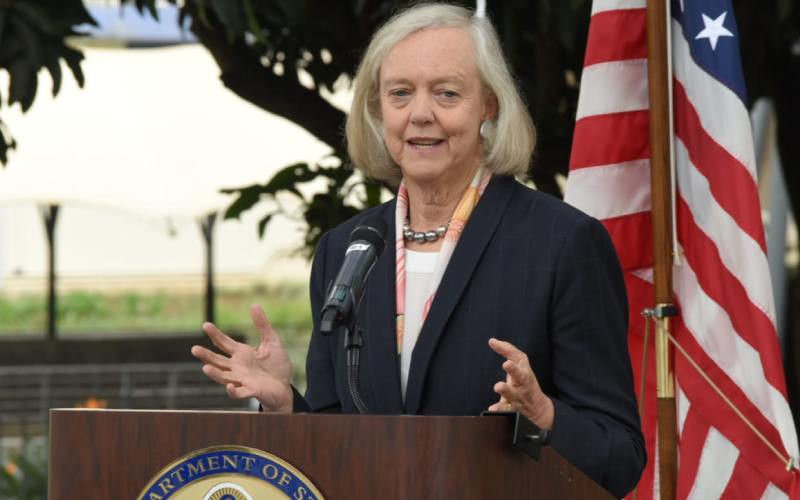
Meg Whitman, the U.S. Ambassador to Kenya
The US Ambassador’s swift exit exposes the tangled web of fear corruption and foreign frustrations at Kenya’s governance
By: Midmark Onsongo
Worth Noting:
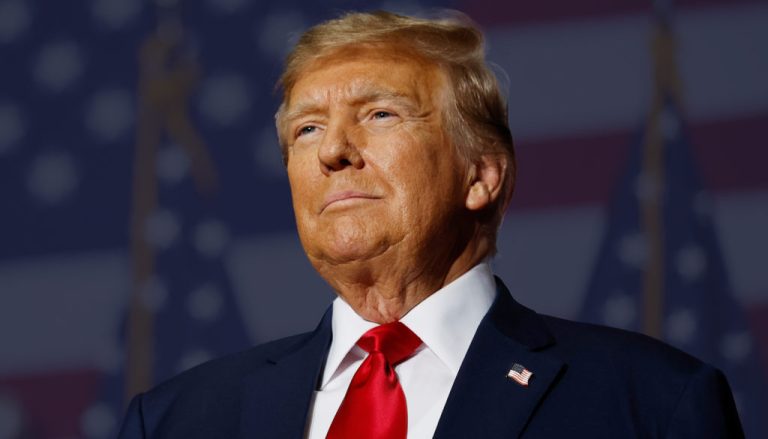
- Whitman’s exit, cloaked as a personal decision, raised suspicions of external influences. With Donald Trump eyeing a potential return to the presidency, some argue her resignation was a preemptive retreat. Had Trump been in power, it’s conceivable that Whitman’s friendly association with Kenya’s administration, painted by critics as accommodating, might have been met with disdain. Trump, who has made no secret of his skepticism toward ‘foreign entanglements’ and his tough stance on corruption, would not have tolerated any ambassador in perceived complicity with regimes seen as corrupt or authoritarian. For Whitman, stepping down meant avoiding a clash between her actions and the sharp scrutiny that might have come from Washington.
- But was Whitman’s presence truly beneficial to Kenya, or did it serve only her interests and that of American business? To some, she embodied a new face of diplomacy, one that prioritized tech growth and economic partnerships.
Picture a young African girl, just fifteen, who finds herself with a secret too heavy to bear. Rather than face the consequences of her family’s fury, she contemplates an escape, a hasty marriage — anything to avoid the scorn that will surely follow. And in some strange parallel, Meg Whitman, the U.S. Ambassador to Kenya, chose a similar path of retreat, stepping away rather than staying on amidst the thickening controversies of her post.
Whitman’s resignation on November 15, 2024, was not a simple act of stepping down. Her appointment by President Joe Biden in 2022 had positioned her as an economic reformer, a tech magnate-turned-diplomat with visions of American investments revitalizing Kenya’s economy. But while she touted prosperity and innovation, shadows gathered around her. Accusations of corruption within Kenya’s government, tribal divisions flaring, and human rights abuses surfacing in daily news painted a different image of her mission. The deeper her involvement became with Kenyan President William Ruto, the more the whispers grew: was Whitman endorsing these transgressions, or was she merely looking the other way?
The Kenyan landscape is marred by a long history of political and social strife. Under President Ruto’s administration, concerns of authoritarian tendencies have mounted. According to recent Amnesty International reports, abductions of activists and journalists have increased by nearly 20%, with at least 15 high-profile disappearances reported since early 2023. Extrajudicial killings have become a grave reality, with local watchdogs counting cases that vanish into cold files, unresolved and largely uninvestigated. Whitman’s silence on these issues resonated louder than words.
The Kenyan Catholic Church took a firm stand, refusing to be a silent witness to these developments. Archbishop Philip Anyolo issued a rebuke, calling out the government’s “abandonment of ethical principles and justice.” According to him, Kenya was being reduced to a “theater of puppetry,” where foreign powers pulled strings and leaders danced along. His remarks echoed throughout the country, stirring up a quiet revolution of voices calling for integrity and accountability in leadership.
Whitman’s exit, cloaked as a personal decision, raised suspicions of external influences. With Donald Trump eyeing a potential return to the presidency, some argue her resignation was a preemptive retreat. Had Trump been in power, it’s conceivable that Whitman’s friendly association with Kenya’s administration, painted by critics as accommodating, might have been met with disdain. Trump, who has made no secret of his skepticism toward ‘foreign entanglements’ and his tough stance on corruption, would not have tolerated any ambassador in perceived complicity with regimes seen as corrupt or authoritarian. For Whitman, stepping down meant avoiding a clash between her actions and the sharp scrutiny that might have come from Washington.
But was Whitman’s presence truly beneficial to Kenya, or did it serve only her interests and that of American business? To some, she embodied a new face of diplomacy, one that prioritized tech growth and economic partnerships. She was a familiar figure at the Nairobi Securities Exchange and frequently spoke of the “limitless potential” within Kenya’s youth. Her campaign, “Why Africa, Why Kenya,” invited American investors to tap into Kenya’s growing tech sector. Yet, behind the allure of American investment lay a festering wound of inequality and unaddressed political brutality.
Take, for instance, the allegations of tribal favoritism under Ruto’s leadership. Kenya, a nation with more than 40 tribes, has seen tribalism as both a rallying point and a tool of division. The Ruto administration has faced accusations of favoring his own Kalenjin community, marginalizing others and sowing seeds of discord. While Whitman frequently praised Kenya’s diverse culture, her actions seemed to sidestep these deep-seated fractures, focusing instead on a narrative of “unity and progress.” The irony was not lost on observers; her praise seemed oblivious to the very tensions ripping the nation apart.
Then there is the issue of abductions — chillingly commonplace yet rarely confronted. The mysterious disappearances of journalists and activists who dared to challenge authority left a mark on the country’s collective conscience. The local press reported on figures like Samuel Maina, a human rights advocate whose bold critique of government corruption made him a target. In mid-2023, he vanished without a trace, a silence that reverberated across the nation. To the ordinary Kenyan, Maina’s fate was emblematic of the government’s intimidation tactics, a reminder of the risks borne by those who speak out.
As she exited, Whitman left in her wake a complicated legacy. Her diplomatic approach, while hailed by some as progressive, seemed, to others, like a blind eye turned toward Kenya’s darkest challenges. By prioritizing American investments, she effectively promoted a partnership focused on economy while neglecting Kenya’s political reality. Her actions seemed to echo an old adage: “When elephants fight, it is the grass that suffers.” The people of Kenya were left grappling with the same issues that Whitman had ignored — tribal tensions, state violence, and social fractures — while foreign investments rolled in, benefiting a select few at the top.
The Catholic Church’s criticisms underscored the growing rift between Kenya’s leadership and its moral institutions. Archbishop Anyolo, a towering figure in Kenya’s religious landscape, was blunt in his condemnation. To him, Whitman’s tenure had served as a mask, obscuring the moral decay at the heart of Kenya’s leadership. Anyolo’s sermons, broadcast across the nation, held up a mirror to the government’s failings, forcing citizens to confront the uncomfortable truth of their circumstances.
Whitman’s resignation was thus more than an end to a diplomatic mission; it was an exposé of the fragile alliance between the United States and Kenya. Her retreat underscores a larger question: what happens when diplomacy prioritizes economy over humanity? The American flag fluttered over Nairobi’s embassy, a symbol of democracy and liberty, but its bearer had left, her departure more a retreat than an honorable exit. As she returned to the U.S., whispers of her resignation lingered in Nairobi, a reminder of the complex web of power, ethics, and diplomacy she left unresolved.
Her resignation left a gaping void, and it begged the question: will her successor confront Kenya’s challenges, or will they, too, seek refuge in silence? Whitman’s legacy, for better or worse, is a testament to the delicate, often contradictory nature of diplomacy, where truth and politics dance a precarious waltz, and only time will reveal who leads and who merely follows.
This story will live on in Kenya’s corridors of power, in its pulpits, and in the hearts of the people who hope — against hope — for a leadership that values justice above all else.
This article was scripted by;
MIDMARK ONSONGO, SGS
(Socio-Geographic Scholar)
Similar Posts by The Mt Kenya Times:
- Mt Kenya Times ePAPER October 24-25, 2026
- Muturi calls on IEBC to keep election technology tender clean and on schedule
- Ruto meets UAE minister in push to deepen trade ties
- Gideon Moi breaks silence on Ruto fallout, cites broken promises
- The doctor who refused to abandon a sick Uganda
About the Author