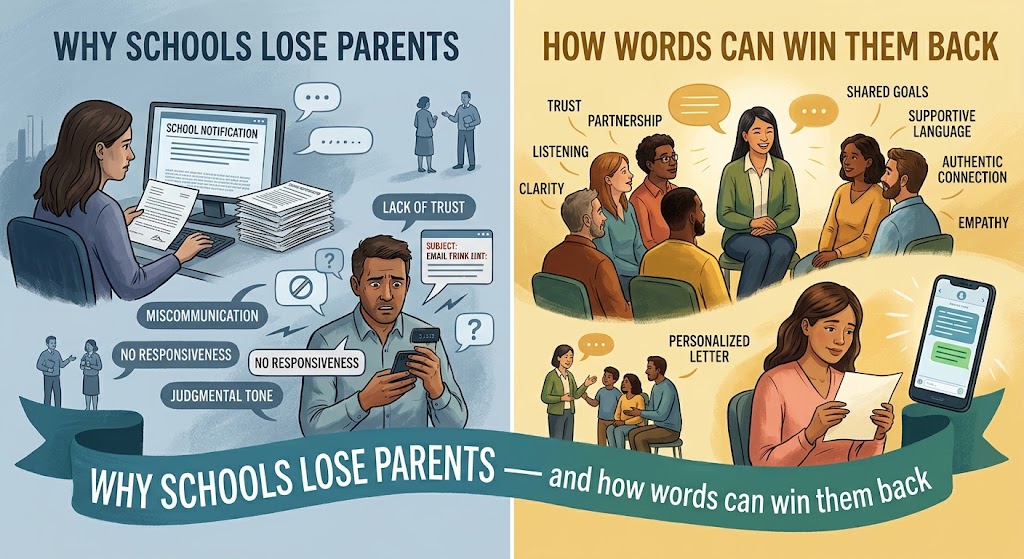
The five communication principles that determine whether a family stays or walks
By Ashford Kimani
One of the greatest mistakes schools make is assuming that parents only care about examination results. While academic performance remains important, modern parents are equally concerned about communication, transparency, relationships and meaningful involvement in their child’s educational journey. Many families leave schools not because the grades are poor but because they feel ignored, uninformed or disconnected from what is happening around their children.
Parental loyalty is built through everyday interactions. It grows when schools consistently make parents feel respected, informed and included. Among the many strategies a school can use to retain families, the first five principles are perhaps the most foundational, because they all revolve around communication and trust. Without these, even academically strong institutions eventually struggle to hold on to the families they serve.
The first principle is keeping parents informed before they feel the need to ask. In many schools, communication is reactive rather than proactive. Parents only hear from the administration when fees are overdue, when a child has committed an offence or when a problem has already escalated beyond easy resolution. This creates anxiety and quiet frustration. Parents begin to feel that information is being kept from them deliberately.
Strong schools understand that silence breeds suspicion. Parents want regular updates about school activities, policy changes, academic schedules, events and student welfare. They appreciate institutions that communicate early and clearly. A simple message informing parents about changes in transport arrangements, examination timetables, weather disruptions or co-curricular events goes a long way towards building genuine confidence in the institution.
In today’s connected world, the tools for communication are readily available. Schools can use WhatsApp groups, email, SMS platforms, newsletters, parent portals and social media to keep families in the loop. That said, communication should not merely be frequent — it must also be meaningful and well organised. Flooding parents with random messages lacking clarity creates confusion rather than confidence. When schools communicate proactively, parents feel involved and stop depending on rumour. The school becomes the trusted source of information, and that trust becomes the foundation of loyalty.
The second principle is honesty when things go wrong, with a clear explanation of how the situation is being addressed. No school is perfect. Disputes between learners happen. Teachers make mistakes. Children get injured. Systems fail. What separates excellent schools from poor ones is not the absence of problems but how those problems are handled when they arise.
Many institutions damage their own reputations by attempting to conceal mistakes or dismiss parental concerns. Parents, as a rule, are quick to sense dishonesty. Once that trust is broken, rebuilding it is an uphill and often unsuccessful task. Parents appreciate honesty even when the news is difficult. If bullying takes place, if a staff member behaves inappropriately or if an accident occurs, families expect transparency. They want to know what happened, how the school responded and what steps are being taken to prevent it happening again.
A school leader who communicates openly during a crisis comes across as professional and trustworthy. Parents understand that schools are run by human beings and that mistakes will inevitably happen. What they expect, however, is accountability and corrective action. In many cases, parents become more loyal to a school after watching it handle a difficult situation honestly. A genuine apology, prompt communication and practical solutions often strengthen confidence rather than undermine it. Silence, defensiveness and blame-shifting consistently have the opposite effect.
The third principle is making it easy for parents to reach their child’s teacher directly. Education works best when home and school operate as genuine partners rather than as separate, disconnected worlds. Parents do not want a system where teachers appear unreachable or where every communication must pass through layers of unnecessary procedure.
Many parental frustrations arise precisely because timely feedback from teachers is hard to come by. A parent who notices behavioural changes at home, declining motivation, emotional difficulty or academic struggles wants to raise those concerns promptly. When the channels for doing so are blocked or unclear, small worries grow quietly into larger problems. Schools should therefore establish communication systems that are both structured and accessible. Parents should know how and when they can contact teachers. Teachers, for their part, should respond professionally and with genuine warmth.
Accessibility does not mean teachers must be available at all hours. Boundaries matter and are reasonable. But schools should create clear mechanisms for interaction — scheduled meetings, communication diaries, virtual platforms, email or designated consultation hours. When parents sense that teachers genuinely care about their children and are willing to engage constructively, trust deepens considerably. The relationship shifts from something transactional and guarded to something genuinely collaborative.
The fourth principle is sharing children’s progress regularly rather than waiting for report card day. Traditionally, many schools only communicate academic performance at the end of each term. By that point, it is often too late to address learning gaps in any meaningful way. Modern parents expect continuous feedback. They want to know whether their children are improving, struggling or holding steady. More importantly, they want specific, honest observations rather than vague, general comments that tell them very little.
Schools that provide regular progress updates demonstrate both care and professionalism. These updates do not need to be formal reports. Short messages noting improvement in reading, participation in class, leadership, creativity, discipline or personal effort can reassure a parent enormously. Continuous feedback also allows for early intervention. If a learner begins to struggle academically or emotionally, parents and teachers can respond together before the situation becomes entrenched. Parents also appreciate schools that focus not only on grades but on growth. A child moving from weak performance to steady improvement deserves recognition. Showing parents evidence of that growth helps them clearly see the value of the education they are investing in.
The fifth principle is making parent-teacher meetings genuinely meaningful rather than a routine to endure. In too many schools, these meetings are poorly organised, rushed, repetitive or almost entirely focused on complaints. Parents sometimes walk away feeling they gave up a full day and gained nothing useful about their child. Effective meetings should strengthen partnership rather than breed tension. Teachers should arrive prepared, with clear observations, updated records, behavioural notes and practical recommendations ready to share. Discussions should centre on solutions and progress rather than on assigning blame. Parents want teachers who see their child as an individual, not simply a set of marks and disciplinary incidents. Meetings should send parents home with a clearer sense of how they can actively support learning. Schools should also respect the time parents give. Long queues, poor scheduling and disorganised processes generate frustration that lingers and colours how a family perceives the institution.
Taken together, these five principles point to one clear and powerful truth: parental loyalty is inseparable from communication. Families stay where they feel informed, respected, listened to and genuinely involved. Schools that get communication right build the kind of trust that keeps families committed through difficult seasons as well as good ones. In the modern education landscape, communication is no longer optional. It is among the strongest competitive advantages any school can hold.
Similar Posts by The Mt Kenya Times:
- A passport or a laptop: How young Kenyans are finding work beyond home
- Her pen is your lifeline
- Kampala’s last cathedral
- Xadicha Sulaymonova was the First Uzbek Female Legal Scholar
- The role of youth in modern diplomacy: From passive observers to active global participants
About the Author