Women and Girls Urged To Embrace Science and Technology In The Fight Against Climate Change
 The Mt Kenya Times
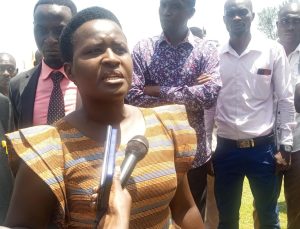
Dorice Donya Aburi , Kisii National Member of Parliament , Essy Okenyuri, Kisii Nominated Senator Addressing the press during the celebration of International Women's Day photo /Elizabeth Angira
By Elizabeth Angira
Worth Noting:
- Donya encouraged farmers to grow climatic resistant crops which can withstand harsh climatic conditions.
- Essy Okenyuri , nominated Kisii Senator, she has urged women in agriculture to embrace innovative farming technologies and practices to increase resilience of the farming systems.
- Okenyuri said that embracing those technologies and practices, women will be able to overcome climate shocks that have adverse effects on the incomes that farmers derive from their work.
- She said that it is important especially to empower rural women since they are the major stakeholder who does agricultural farming.
- She said that climate change is one of the major shocks that has adverse effects on the incomes that farmers are able to derive from their work.
Women and girls in the country have been urged to embrace science and technology in supporting the nation’s drive for a digital economy.
Speaking during the celebration of International Women’s Day at Kenyenya stadium, Kisii County National Member of Parliament, Dorice Donya said that there is a huge disparity between men and women, when it comes to knowledge on science and technology.
“Such gap could be bridged only if women put more efforts and energy in acquiring the two disciplines,”she said.
Donya said that girls should not shy away from science subjects so that they contribute to the national economic development.
“Girls should be trained in science and technology to be able to support the country’s drive for a digital economy,”she said.
According to Donya the country have witnessed that women can be innovators and contribute to transforming the health of all people on the continent.

She said that social responsibility is needed to remove gender digital disparity impacting vulnerable women and girls .
Donya encouraged farmers to grow climatic resistant crops which can withstand harsh climatic conditions.
Essy Okenyuri , nominated Kisii Senator, she has urged women in agriculture to embrace innovative farming technologies and practices to increase resilience of the farming systems.
Okenyuri said that embracing those technologies and practices, women will be able to overcome climate shocks that have adverse effects on the incomes that farmers derive from their work.
She said that it is important especially to empower rural women since they are the major stakeholder who does agricultural farming.
She said that climate change is one of the major shocks that has adverse effects on the incomes that farmers are able to derive from their work.
She cited that the capacities of women to adopt agricultural technologies that help overcome these shocks are vital as we go into the future.
She revealed that the government is willing to integrate some of these practices such as Climate Smart Agriculture in provision of affordable credits and grants by the three semi-autonomous government agencies in her ministry namely Women Enterprise Fund, Uwezo Fund and National Government Affirmative Action Fund.
“Technology has the transformative power to change lives. If women embrace technology their lives will be improved and their roles in agribusiness will become more sustainable,” she adds.
Okenyuri said that with the effects of climate change such as prolonged dry season which came much earlier on fruiting and flowering period, most family farmers are witnessing poor harvests during this time and advised farmers against abandoning cultivation of drought resistant food crops which can also be stored for longer periods and also to diversify agricultural production for better benefits of tomorrow.
In Kenya, women account for 75 percent of the labor force in smallholder agriculture, manage 40 percent of small farms, and play a major role in food preparation and storage.
However, according to the Kenya Climate Smart Agriculture strategy 2017-2026, women in agriculture are vulnerable due to limited education and limited access to other natural resources that would facilitate their adaption.
“The low adaptive capacity by women and financial vulnerability reduces resilience of the farming systems in general. If women in agriculture become more adoptive they will be able to build climate resilience.” she said.
The UN theme for this year’s International Women’s Day is “Digit ALL: Innovation and technology for gender equality”. This theme is aligned with the priority theme for the upcoming 67th Session of the Commission on the Status of Women (CSW-67), “Innovation and technological change, and education in the digital age for achieving gender equality and the empowerment of all women and girls”.
According to UN Women 24% of women globally have reduced their usage of the internet because of abusive online contact.
Globally, the increasing number and use of mobile phones and internet connectivity have facilitated access to health information and services.
The adoption of digital health and other technological innovations has positively impacted electronic medical records, health data management, security, and effective communication between health workers, patients, and community stakeholders.
Innovations have equally enhanced capacity building and knowledge translation through online training, webinars, and innovative tools for patient care—such as telemedicine, robotics, and artificial intelligence.
Efforts at innovation have facilitated improved access to quality health care services and encouraged the participation of individuals, families, and community stakeholders in health care, especially during the COVID-19 lockdowns.
According to a 2021 report by the Association of Mobile Operators, inadequate infrastructure, lack of digital skills for the internet and ICTs, and gender-related barriers around access to and control over resources are the main obstacles to “meaningful connectivity” for women and girls.
Similar Posts by The Mt Kenya Times:
- Mt Kenya Times ePAPER October 24-25, 2026
- Muturi calls on IEBC to keep election technology tender clean and on schedule
- Ruto meets UAE minister in push to deepen trade ties
- Gideon Moi breaks silence on Ruto fallout, cites broken promises
- The doctor who refused to abandon a sick Uganda
About the Author