



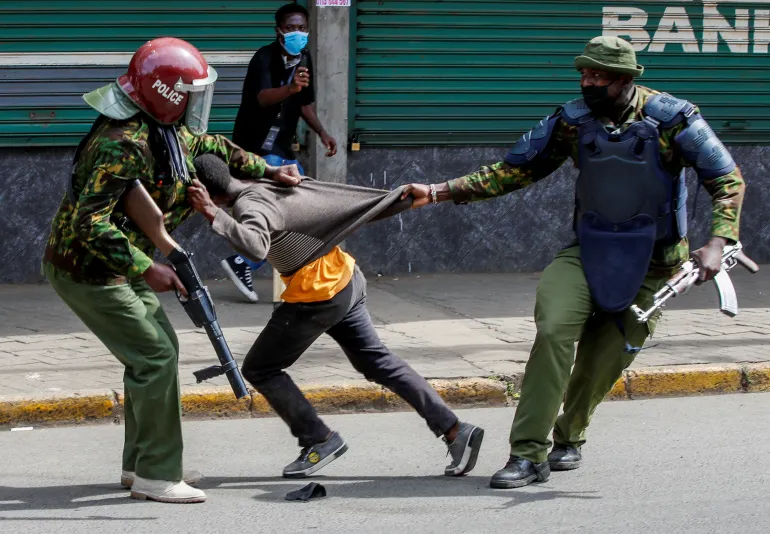
By Jerameel Kevins Owuor Odhiambo The steady erosion of democratic freedoms in Kenya has reached a critical threshold. In 2024, CIVICUS reclassified Kenya’s civic space from “obstructed” to “repressed,” a damning assessment that reflects the government’s systematic deployment of legal instruments to neutralize dissent. This downgrade is not merely symbolic, it documents a calculated transformation of the criminal justice system into an apparatus of political control, where constitutional guarantees of freedom mean little against the weight of repressive legislation and impunity-shielded enforcement. The Public Order Act stands as the cornerstone of this architecture of suppression. By mandating advance police notification for public gatherings and granting authorities sweeping powers to deny or disrupt demonstrations, the law effectively criminalizes the spontaneous expression of collective grievance. During the 2024 anti-Finance Bill protests, this framework revealed its lethal potential. Police deployed live ammunition against citizens exercising their constitutional right to peaceful assembly, transforming streets into zones of violence where the state’s monopoly on force was wielded without restraint or accountability. The requirement that organizers “oversee” gatherings creates an insidious trap: activists become legally liable for events they cannot control, particularly when police themselves instigate chaos. Digital space, once a frontier of relative freedom, has become another battlefield in the state’s war on dissent. The Cybercrimes Act and its amendments function as legal cover for the intimidation of activists, journalists, and ordinary citizens who dare to criticize government action online. Surveillance has moved beyond abstract concern into documented practice. Safaricom’s reported sharing of customer location data with law enforcement has facilitated a campaign of terror enforced disappearances, extrajudicial killings, and targeted harassment that operates in the shadows of due process. When citizens cannot speak freely without fearing that their digital footprints will lead security forces to their doors, civic engagement withers at its roots. The bodies tell a story that official statements refuse to acknowledge. Human rights organizations have documented cases of missing protesters whose remains were later discovered bearing unmistakable signs of torture and mutilation. These are not isolated incidents but patterns that reveal the calculated use of extrajudicial violence to send a message: dissent carries a price that extends beyond arrest or prosecution. The impunity enjoyed by perpetrators within law enforcement confirms that these acts are not aberrations but features of a system where accountability has been deliberately dismantled. When the machinery of justice is turned against justice itself, citizens are left without recourse. Strategic lawsuits against public participation, SLAPPs, represent another dimension of this multi-pronged assault. Civil society organizations face bureaucratic suffocation through funding delays, threats of deregistration, and frivolous legal challenges designed not to win in court but to drain resources and energy. These tactics are devastatingly effective because they exploit the vulnerability of organizations dependent on donor funding and legal standing. Activists and journalists covering sensitive issues operate under constant threat, knowing that their work could trigger legal retaliation that consumes years and drains organizational capacity. The effect is predictable: self-censorship, withdrawal, and the gradual hollowing out of the civil society sector. Young activists, who should represent the future of democratic participation, instead find themselves primary targets of state surveillance and police infiltration. Their digital fluency makes them effective organizers and therefore threats requiring neutralization. Internet shutdowns during moments of political tension have become routine, severing the communication networks that enable collective action. Cyber surveillance tracks their movements, maps their networks, and identifies pressure points. Rural youth and minorities face compounded vulnerabilities, lacking both resources for legal defense and access to platforms that might amplify their voices. The state’s strategy is clear: break the next generation of civic leaders before they can build sustainable movements. Kenya’s Constitution enshrines protections for freedom of expression, association, and peaceful assembly in Articles 33, 36, and 37. These guarantees exist on paper with considerable eloquence. Yet the gap between constitutional text and lived reality has become a chasm. Courts have occasionally issued rulings that impose limits on police overreach, moments of judicial resistance that offer brief hope. But implementation remains the critical failure. Without enforcement mechanisms that carry real consequences for violations, these rulings become symbolic gestures rather than binding constraints. The criminal justice system processes what it chooses to process, and what it increasingly chooses is the prosecution of citizens exercising democratic rights. The system’s focus on petty offenses accounting for over seventy percent of cases in a 2018 audit has been weaponized with particular cynicism. Activists and protesters find themselves charged with unlawful assembly, blocking roads, or spreading misinformation, offenses that clog courts with cases designed not for conviction but for harassment. The process becomes the punishment: arrests that disrupt organizing, bail requirements that drain limited funds, court dates that consume time and energy. This judicial harassment operates as a tax on dissent, making civic participation costly enough that many cannot afford to pay. It is criminalization by bureaucratic attrition, a slow suffocation of democratic practice through administrative burden. Media freedom, the oxygen of democratic accountability, faces parallel assault. Journalists exposing corruption and human rights abuses encounter harassment, censorship pressures, and threats that make their work increasingly dangerous. Calls for legal defense funds and enhanced protections acknowledge what is already clear: reporting the truth in Kenya now requires courage that should never be necessary in a functioning democracy. When those who document abuses become targets themselves, the cycle of impunity accelerates. The Public Order Act, Cybercrimes Act, surveillance apparatus, and judicial harassment function as interlocking components of a system designed not to deliver justice but to eliminate challenge. This is the machinery of silence, and it operates with bureaucratic efficiency to ensure that those who would hold power accountable face criminalization, violence, or erasure. The question is not whether this system exists, the evidence is overwhelming, but whether Kenyans will accept its continued operation as the price of stability, or demand the democratic space their Constitution promises and their dignity requires. The writer is a legal scrivener
The Machinery Of Silence: How Kenya’s Legal System Became A Weapon Against Its Citizens
Security Withdrawal And The Strain On Democratic Norms In Kenya
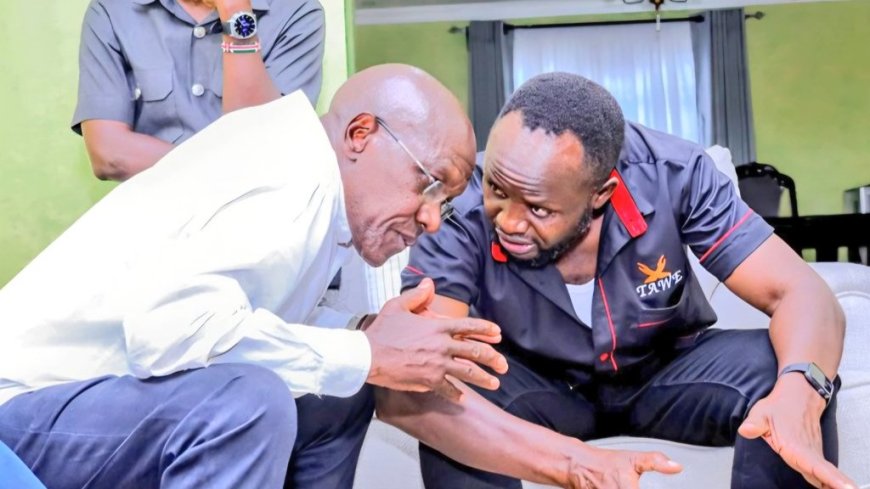
By: Simiyu Stanford In recent years, Kenya has experienced a concerning pattern in the administration of state security: the withdrawal of protection from key public figures at moments of heightened political or institutional tension. Though the National Police Service (NPS) retains legal authority over the deployment of officers, the way this authority is exercised has significant implications for public trust, governance and constitutional order. The withdrawal of security from Governor George Natembeya, closely followed by similar actions against Senator Boni Khalwale, attracted national attention not only because of the individuals involved but because of the timing. Both politicians had, in the period preceding these decisions, adopted firm positions at odds with the administration’s preferred direction. Earlier in the year, the reduction of security around Chief Justice Martha Koome raised even deeper institutional concerns, given the office she occupies and the constitutional safeguards intended to protect judicial independence. These incidents, taken together, form a pattern that must be taken seriously. Security and the Responsibilities of the State The provision of security to public officials is not a privilege, it is an obligation tied to their roles, the risks inherent to their work and the stability of national institutions. When this protection is withdrawn, especially without transparent explanation, several risks emerge: Personal Safety Risks: Public officials who command significant attention, exercise oversight, or challenge powerful interests face real threats. The state cannot ignore this reality. Institutional Risks: For officeholders like the Chief Justice, security is not merely personal, it protects the independence of the Judiciary. Undermining this protection sends a troubling message about how the Executive relates to co-equal arms of government. Public Confidence: Citizens assess the fairness of government actions not only by what is said, but by what is done. When security withdrawal appears selective or reactive, it erodes confidence in state neutrality. Political Context Cannot Be Ignored Although the government has explained some of these withdrawals as routine administrative reassignments or precautionary measures linked to intelligence reports, these justifications must be scrutinized in context. The timing has frequently coincided with: moments of political contestation, disagreements between state actors or public criticism directed at the Executive. In political analysis, patterns of timing are often as significant as the actions themselves. Where withdrawals align with dissent, the perception, fair or not, is that security has become a tool for disciplining critics rather than a neutral instrument of public protection. Perception matters in governance. It shapes trust, legitimacy, and the degree to which institutions are viewed as impartial. Legal Authority vs. Democratic Norms One may distinguish between what is legally permissible and what is democratically prudent. Legally, the NPS may reassign officers. Democratically, such decisions should follow transparent criteria, be communicated clearly, and avoid any appearance of retaliation. A constitutional democracy depends not only on the letter of the law but on adherence to norms, restraint, fairness, and respect for institutional independence. When decisions fall short of these standards, even if technically lawful, they risk undermining the democratic fabric that supports the nation. Even without explicit threats, the withdrawal of security can create an atmosphere in which public officers, politicians, and even independent institutions begin to self-censor or exercise undue caution. Governance thrives when leaders are able to speak and act without fear of personal vulnerability. A system that inadvertently or intentionally introduces such fear weakens its own democratic foundations. The withdrawal of security from public figures is not a minor administrative matter. It is an action that touches on the safety of individuals, the autonomy of institutions, and the legitimacy of the state. Kenya must treat it with the seriousness it deserves. A robust democracy ensures that protection is not influenced by political alignment, opinion, or institutional stance. If the country is to preserve the integrity of its constitutional order, security decisions must be transparent, fair, and insulated from political motivations. About the Writer The writer is a political analyst and a PhD student in Literature at Masinde Muliro University of Science and Technology (MMUST). He is also a literary scholar, blending political insight with humanistic analysis. His works include: The Ring of the Moon (2023) “A masterpiece to explore and achieve academic excellence in poetry.”, Robai Nabisino Makokha (2023) “The remarkable life of a distinguished woman.” And, Off Walls Unbroken and Other Stories (2025)-a collection portraying contemporary society through keen literary observation. His scholarship and analysis focus on the intersections of governance, culture and the narratives that shape public life.
The High Court, Omtatah, And Why This Ruling Is A Warning Shot To Kenya’s Political Banking Cartels
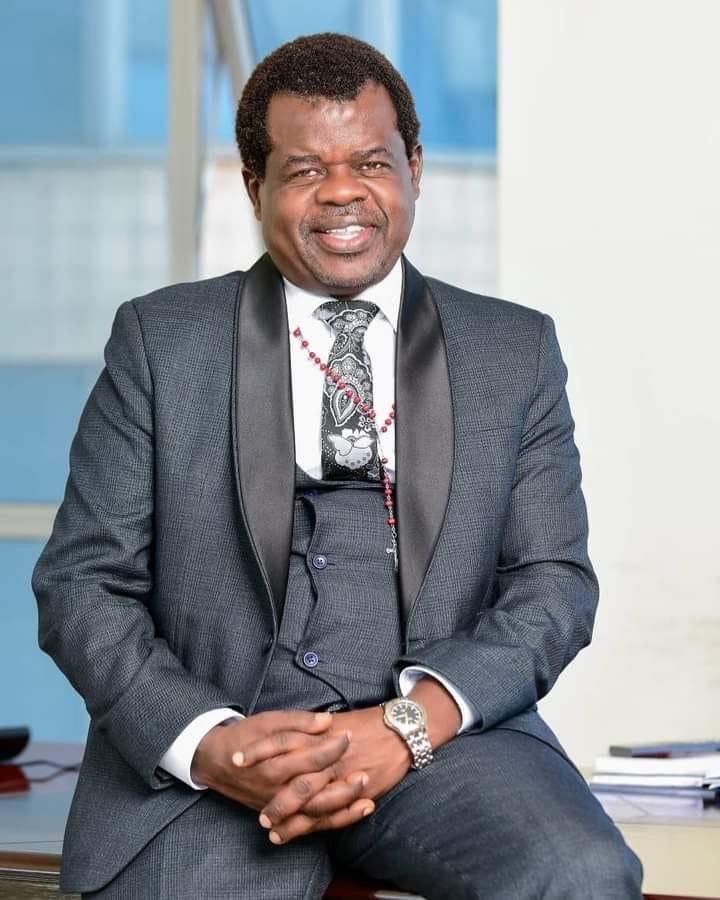
By Martin Masinde Another victory has landed squarely in favour of the people. The High Court has once again affirmed what Kenyans have long suspected: that power, when left unchecked, slowly morphs into a network of privilege, impunity, and selective application of the law. The upholding of the ruling in Petition 337 of 2019, Okiya Omtatah Okoiti v National Treasury CS & 5 others, and the invalidation of the unlawful KSh 384.5 million stamp duty exemption granted to NCBA, is more than a tax matter. It is a moment of civic truth. A reminder that even in a captured political climate, the courts can still stand tall when pushed by courageous citizens. To understand the weight of this win, we must revisit the heart of the matter. When NIC and CBA merged in 2019 to form NCBA, the merger was expected to yield the government KSh 384.5 million in stamp duty. This was not discretionary money. It was lawful revenue owed to the people of Kenya. But because NCBA was closely associated with powerful individuals in the former regime, a miracle happened. A “special” stamp duty exemption appeared via Gazette Notice. Somehow, a private bank was lifted above the law and granted a benefit unavailable to millions of ordinary Kenyans who shoulder every shilling of tax imposed upon them. This is the kind of abuse that corrodes a democracy from within. It signals that public institutions can be bent, not by reason, but by proximity to power. It tells Kenyans that taxation is not based on equity, principle, or law, but on who you know. And it exposes how governments, past and present, use financial institutions as political extensions of their influence. Enter Okiya Omtatah. In a country where many complain but few act, he moved to court. What he challenged was not just a fraudulent tax exemption. He challenged the creeping normalisation of state capture in Kenya’s financial oversight ecosystem. And he did so not as a politician seeking power but as The People’s Advocate, insisting that public finance must remain anchored in the Constitution. The High Court agreed. It ruled that the Treasury’s exemption was unlawful, unconstitutional, and dangerous. It went further to dismiss NCBA’s attempt to delay the ruling’s implementation. The message was clear: no corporation, no matter how connected, should enjoy tax holidays at the expense of citizens. Omtatah put it even more sharply: granting such exemptions amounts to an unconstitutional reward to private business interests and sets a dangerous precedent. This statement should be tattooed on the conscience of every public official in Kenya. Because if NCBA can be exempted from a lawful obligation of nearly half a billion shillings, what stops the government from waiving billions more for politically aligned companies? What stops powerful banks from developing the confidence to operate above the law? And what stops every new regime from weaponising financial institutions to punish rivals and reward loyalists? We must not pretend this is an isolated case. The recent tension between Governor Sakaja and the Senate over the transfer of county funds to Sidian Bank is a loud echo of the same pattern. Just as NCBA was favoured for its proximity to power then, Sidian Bank is now seen as the politically convenient bank of the moment. Public funds are being shifted without clear justification. County finances are being exposed to risk by decisions that smell more of politics than prudence. The actors may change, but the script remains stubbornly familiar: banks aligned to power get an unfair slice of public business. What is emerging is a politically aligned banking ecosystem, institutions that thrive not because of market strength or public trust, but because they are strategically positioned within the country’s political architecture. This is how a nation slowly drifts into oligarchy. This is why the High Court decision matters far beyond the KSh 384.5 million. It is not just about recovering lost revenue. It is a precedent that strikes at the heart of political patronage masquerading as financial policy. It affirms that state capture can be confronted, and defeated, when citizens are vigilant. And it reminds us that democracy is not only safeguarded at the ballot box, but also in courtrooms where ordinary citizens challenge the misuse of power. There is something deeply symbolic about this ruling coming at a time when Kenyans are questioning how decisions about public money are made. When families are suffocating under heavy taxation, when unemployment is rising, when service delivery is collapsing, it is insulting to hear that politically aligned banks are quietly receiving exemptions worth hundreds of millions. In such a context, this ruling is not merely a legal victory. It is a moral one. It tells Kenyans that the law still has teeth. It tells political elites that impunity has limits. And it tells citizens that activism is not noise; it is a form of national defence. We often ask where Kenya’s hope lies. The answer, again and again, is found in people like Okiya Omtatah, citizens who refuse to be cowed, who refuse to be silent, and who insist that public resources must serve the public, not private cartels. This ruling is a reminder that every time the people fight, the people win. But it is also a warning: unless citizens remain vigilant, unless institutions remain brave, and unless courts remain independent, political capture will continue creeping back, one bank, one gazette notice, one exemption at a time. For today, the people have won. Tomorrow, the struggle continues.
NEWS IN BRIEF 27 NOVEMBER 2025
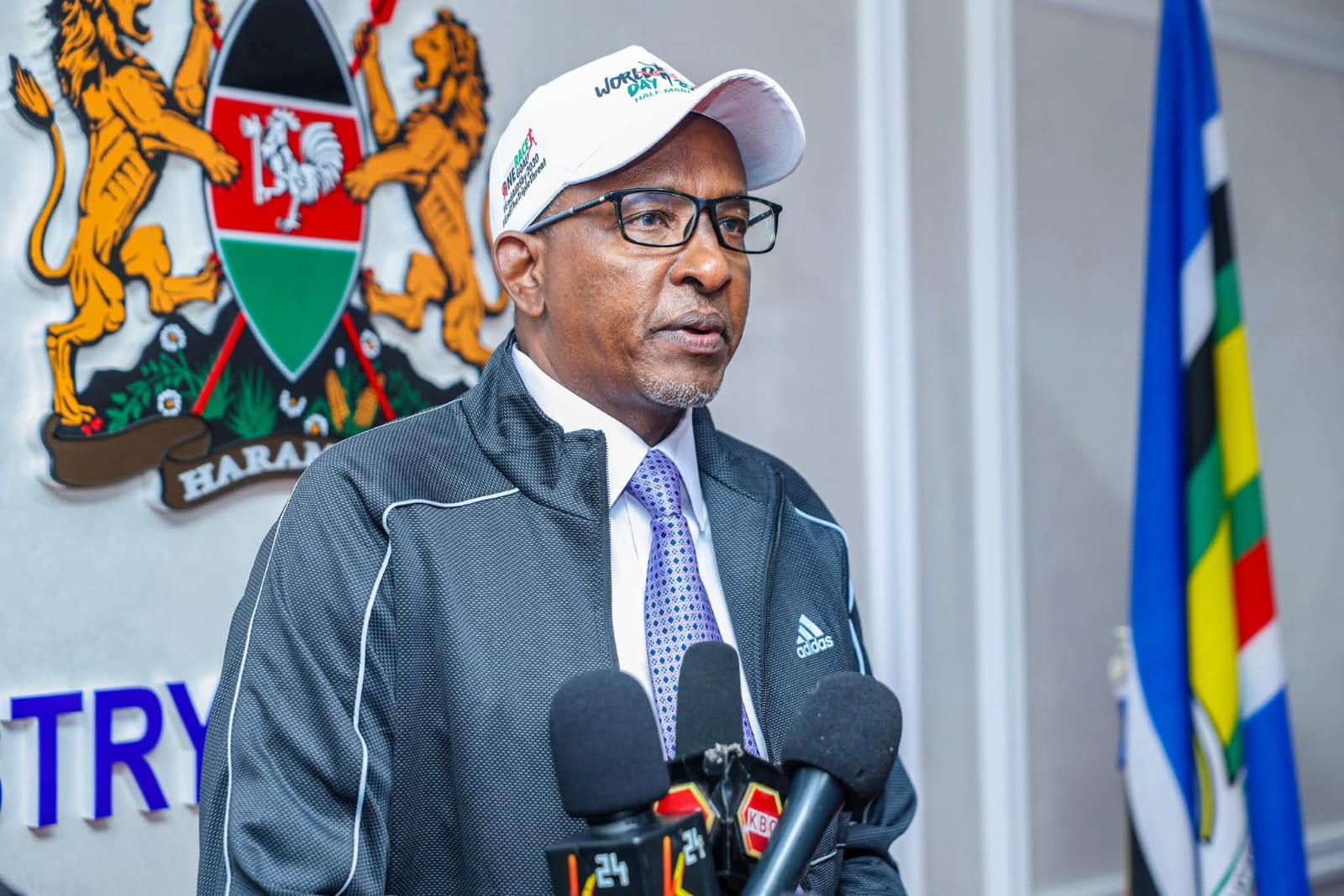
The Ministry of Health will mark World AIDS Day 2025 with a major national event on Saturday at Nyayo National Stadium, featuring a half marathon and a medical camp focused on adolescents and young people. The activities aim to expand access to HIV testing, treatment, prevention services, and accurate health information as part of Kenya’s commitment to ending AIDS by 2030. Health CS Aden Duale urged Kenyans to participate in large numbers, emphasising the importance of collective responsibility, compassion, and inclusive health services. This year’s commemoration will also highlight progress achieved through partnerships with county governments, civil society, and development partners, including the scale-up of PrEP and PEP, improved ART access for youth, and efforts to eliminate mother-to-child transmission. The Ministry reiterated that sustained investment and community engagement remain critical to strengthening HIV prevention and care across the country. The commissioning of the 106 km Emining–Marigat–Kabarnet–Kabartonjo Fiber Backbone Link marks a major milestone in Baringo’s digital transformation. The new fibre route positions the county firmly within Kenya’s expanding national digital network, boosting connectivity and improving service reliability for communities along the corridor. This investment is expected to open new opportunities in e-commerce, education, healthcare, and government services, ensuring more residents benefit from the country’s Digital Superhighway agenda. The event was attended by CS William Kabogo, Governor Benjamin Cheboi, PS John Tanui, Baringo North MP Joseph Makilap, and other local leaders whose collaboration is key to deepening digital inclusion. The initiative underscores a shared national vision of enabling all Kenyans to connect, innovate, and thrive within the digital economy. Kenya has taken a major step in strengthening respiratory care with the launch of a Bronchoscopy Training Programme at Kenyatta National Hospital (KNH). The three-day specialist training, organised in partnership with Nagasaki University and the Ministry of Health, introduces modern bronchoscopy technology to improve early detection and management of lung diseases. Speaking at the launch, Principal Secretary for Medical Services Dr. Ouma Oluga highlighted the programme’s importance, noting that conditions such as Tuberculosis, Pneumonia, Asthma, and Lung Cancer continue to affect thousands of Kenyans each year. He emphasised that building diagnostic capacity is crucial for better patient outcomes. Kakamega Court has sentenced lorry driver Shadrack Chirchir Kogo to one year in prison after convicting him for smuggling cigarettes worth over Sh26 million. Kogo appeared before Chief Magistrate Philip Mutua and was charged with conveying unaccustomed goods contrary to the East Africa Community Customs Management Act 2004. His alleged accomplices, Jacktone Andanyi and Christabel Wafula, who faced charges of possessing excisable goods under the Excise Duty Act 2015, were acquitted due to lack of evidence. The trio had been linked to 350 cartons of Super Match cigarettes, each containing 5,000 sticks, and 40 bags of smuggled wheat bran chicken feed from Burundi, which were being offloaded at a residential premises in Shuvumbe, Kakamega. They were arrested on 15 October 2023 during an intelligence-led operation by the Directorate of Criminal Investigations (DCI) and Kenya Revenue Authority (KRA) at the construction-site premises. The court also ordered the forfeiture of the cigarettes, valued at Sh26.2 million. At the third African Forum on Cybercrime and Electronic Evidence in Nairobi, Raymond Omollo, PS, Internal Security, warned that while technology boosts economic growth and access to services, it also exposes governments, businesses, and citizens to sophisticated cyber threats. Africa lost over $40 billion to cybercrime last year alone. The forum brought together ministers, judges, prosecutors, law enforcement, tech experts, and civil society, and was jointly organized by the Kenyan government, the Council of Europe, and the European Union. Its focus was on strengthening cross-border cooperation, harmonizing legislation, and improving digital forensics to enhance Africa’s cyber resilience. The PS emphasized the need for secure digital identity systems, stronger mutual legal assistance frameworks, and youth-centered cybersecurity initiatives, highlighting that Africa’s median age of 18 places young people at the heart of the continent’s digital future. He cautioned that cyber incidents anywhere in the world could destabilize national institutions within seconds, citing Kenya’s e-Citizen platform as both a digital innovation and a target for cybercrime.

Ruto Rallies African Leaders Behind Urgent AU Reforms At Angola Meeting
By MKT Reporter President William Ruto has urged African countries to unite behind a bold and urgent reform of the African Union (AU), warning that the continent risks losing global influence if the institution does not modernise and strengthen its structures. Ruto, who serves as the AU Champion for Institutional Reform, made the appeal on Tuesday when he chaired the African Union Institutional Reform Ad Hoc Committee Meeting of Heads of State in Luanda, Angola. The high-level session examined progress on eight priority areas outlined under Assembly Decision 920, which seeks to make the AU more effective, efficient and responsive to Africa’s evolving needs. The President stressed that the reform process is not only necessary but achievable within a short time if Member States act with unity and urgency. He noted that without meaningful change, the AU could become increasingly ineffective, costing the continent valuable opportunities and weakening Africa’s voice in global affairs. “This reform is doable. It is possible and necessary to have an effective African Union, and we can do it within the shortest time possible while carrying everyone on board,” he told fellow leaders. To widen participation, he announced that a summit of Heads of State would be convened to allow leaders to contribute their perspectives before the reform package is finalised. Ruto called on Member States to read the detailed reform report and submit written feedback to the AU secretariat ahead of the February summit. He cautioned against allowing concerns about the financial implication of some proposals to slow progress, pointing out that several reforms require no additional funding and are instead matters of structure, coordination and political will. The report discussed in Luanda proposes far-reaching changes aimed at revitalising the AU’s peace and security architecture, securing predictable financing for the Union, operationalising the long-delayed African Court of Justice and streamlining the AU Assembly agenda to improve focus and decision-making. It also calls for strengthening the Pan-African Parliament by advancing ratification of the Malabo Protocol, introducing clear categories for AU decisions to improve compliance, finalising the division of labour among AU organs and regional bodies, and restructuring AU institutions to create a leaner, more efficient system. According to Ruto, the recommendations form a coherent roadmap that would position the AU to better champion Agenda 2063 and respond to a rapidly changing world. The report also proposes merging the Peace and Security Architecture with the African Governance Architecture to enhance crisis prevention and governance oversight, and advocates full adoption of the import levy to stabilise AU financing. AU Commission Chairperson Mahmoud Ali Youssouf affirmed the Commission’s commitment to driving the reforms forward and praised Ruto for his sustained leadership in steering the process.
Rukuriri Tea Factory Celebrates Unprecedented Success At 46th AGM, Sets Record With Highest Bonus Payout
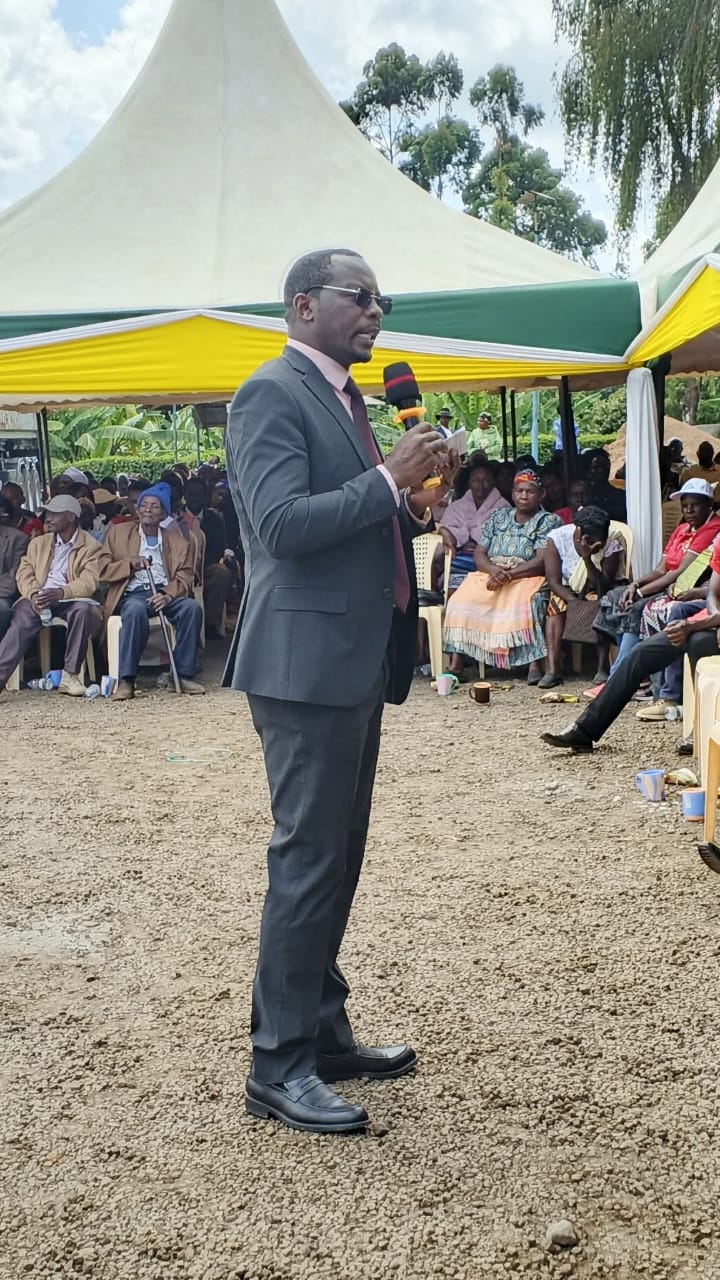
By MKT Reporter The 46th Annual General Meeting (AGM) of Rukuriri Tea Factory, held yesterday was nothing short of spectacular, drawing over 2,000 farmers and stakeholders from across it’s catchment region. The atmosphere at the event was electric, brimming with joy, pride, and a profound sense of unity as the tea farmers gathered to celebrate the factory’s remarkable achievements. Led by Embu Zone Kenya Tea Development Agency (KTDA) Holdings director, Mr Enos Njeru, the farmers attending the meeting expressed immense satisfaction with the factory’s exemplary leadership and governance, noting the strong performance, unity of purpose, and consistent high quality that have positioned the factory as the top-performing factory in the country. “This outstanding performance has been tangibly reflected in the nationwide highest bonus payout of Ksh57.50, a milestone that has brought pride not only to the farmers but also to the entire community supporting the factory,” Njeru noted in his address to farmers. He added, “The level of confidence in the factory’s management was so high that no farmer raised a single question during the meeting, a rare occurrence in such gatherings signifying deep trust and appreciation for the factory’s leadership and its ongoing journey of excellence. Njeru who is also a former national chairman of KTDA Holdings, extended heartfelt gratitude to all stakeholders as he praised the factory fraternity and the wider community for their unwavering support and outstanding contribution to the factory’s exceptional performance. “This achievement is not just about numbers or bonuses,” said Njeru. “It is a testament to the unity, dedication, and hard work of our farmers and the entire team that makes Rukuriri Tea Factory a symbol of excellence in the tea sector.” The 46th AGM of Rukuriri Tea Factory will long be remembered as a celebration of collective achievement, a moment of pride for farmers, and a clear demonstration that with strong leadership, unity, and commitment to quality, local enterprises can achieve national recognition and set industry benchmarks.

My Mother Tongue
My mother tongue — my soul, my cherished tone, With you, each word I speak feels sweetly grown. Your graceful melody lives in my chest, A priceless heirloom my forefathers blessed. When I listen, I hear ancestors breathe, You light the thoughts where shadows used to weave. Through you I found my essence, my true face, My nation’s heartbeat, bound in your embrace. A tale within my breast — my pride in you, In this tongue sang poets noble and true. Cholpon, Usmon, Erkin — their spirits soar, With you our past and future shine once more. Abdusaidova Jasmina Born on July 20, 2011, in G‘allaorol district, Jizzakh region. She is the winner of district and regional stages of the competitions “Young Reader”, “Mushoira”, and “Green Light”. Her creative works have been featured in several newspapers and journals, including “Gulxan”, “Tong Yulduzi”, and “G‘allaorol Ovozi”. Additionally, her works have been published in international media such as “Diaspora Times Global” (foreign), “Kenya Times” (Africa), “Synchronized Chaos” (USA), and “Gazeta Destinacioni” (Albania). She is a member of the “Qaqnus” Creative Club.
MPs Accuse Sports Ministry Of Sabotage As Delays Stall 37 Academy Projects
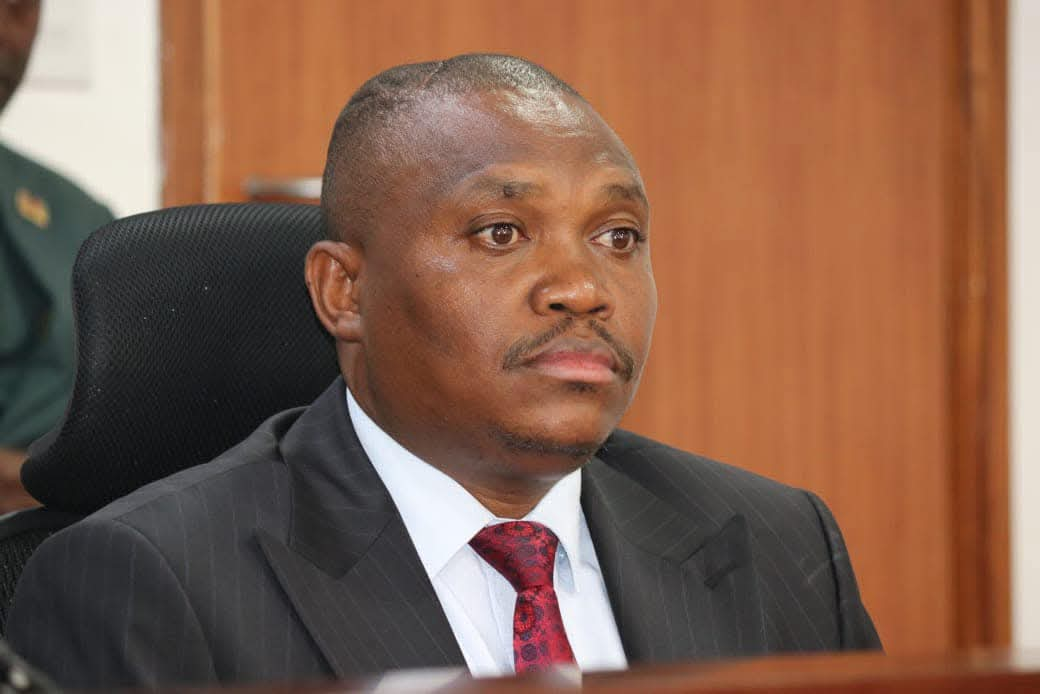
By MKT Correspondent A storm erupted at Bunge Tower as members of the National Assembly Sports Committee accused Sports Principal Secretary Elijah Mwangi of frustrating the construction of sports academies in 37 constituencies. The lawmakers, led by committee chair Dan Wanyama, took issue with what they termed as “persistent and unexplained delays” in paying contractors, warning that the slow progress threatened to turn the flagship project into a series of white-elephant ventures. Wanyama, the Webuye West MP, claimed that officials within the Ministry of Sports were engaging in “malice and deliberate sabotage,” adding that Parliament would not hesitate to push for the removal of the PS and other senior officers if the Ministry failed to release funds. “Delay in actualising construction of the academies might cost many of us our seats in 2027,” Wanyama said. “Before we go home, we will ensure that any officer sabotaging these projects is fired.” He questioned why the sports academy in his constituency had achieved only five per cent completion despite Parliament having allocated funds to the Ministry. In response, PS Mwangi dismissed the allegations, insisting that payments could only be processed after verification of certificates submitted by contractors. He noted that only six certificates had been forwarded to his office so far, all undergoing review in line with public finance rules. Mwangi attributed part of the delay to the government’s new payment system and additional compliance requirements, saying: “As an accounting officer, I cannot approve payments without validating the certificates. I will not flout procurement rules.” But the lawmakers would have none of it. Wanyama insisted that the verification process had already been completed by contractors and told the Ministry to “stop looking at certificates and simply pay.” Mwangi revealed that only 15 academies currently have ongoing construction, with the rest held back by funding gaps, land disputes and inadequate contractor capacity. He added that some contractors had expected upfront payments before mobilising on site, slowing progress further. Busia Woman Representative Catherine Omanyo accused the Ministry of awarding tenders to contractors unfamiliar to local leaders, saying MPs were sidelined from the process. “We only found strangers on the ground. You cannot blame contractors you awarded tenders to without proper vetting,” she argued. Yatta MP Basil Ngui said delayed payments had caused conflict between contractors and workers, many of whom had not been paid for months. Matungulu MP Stephen Mule warned that the country risked accumulating huge pending bills and abandoned sites if the delays continued. After lengthy deliberations, the committee directed the Ministry to settle all verified certificates within two weeks to accelerate completion of the academies. MPs vowed to maintain close oversight, stressing that the projects were vital for nurturing grassroots sports talent and empowering youth nationwide.

Love
A candle lit quietly in my heart, I said its name – love. A star in my eyes, a dream in my hand, And a wonderful dew in my heart. You came, the world suddenly changed, The mornings were laughing, the nights were clear. With every breath, my heart is with you, In every dream, I remember your heart Love is magic, but pure magic, For it there is no time, no distance, no path. It asks for honesty from hearts, It asks for loyalty from hearts. And if you say that my love will not fade, Keep it forever in the depths of your heart Preserved feelings are always pure, Because love is a great miracle Charoskhon Ismoilova Second-year student of the Faculty of Philology and Art at Urgench State University, Khorezm region

KTDA Foundation Launches Healthcare To Tea Farmers
By MKT Reporter Thousands of tea farmers are set to benefit from free medical care. Through Kenya Tea Development Agency (KTDA) Foundation, the farmers will be getting free medical checkups in a bid to have them maintain healthy status as they tend to their farms. To kick-start the process, yesterday the Foundation launched the exercise in a ceremony attended by hundreds of farmers. During the exercise, a section of farmers from Nyeri County received a much-needed boost as the Foundation launched a comprehensive medical camp at Wandumbi dispensary near Gathuthi tea factory in Tetu constituency. The initiative aims to ensure that tea growers who often postpone treatment due to demanding farm schedules have access to timely medical attention. For many tea farmers, long hours in the fields, unpredictable weather, and the pressure to meet strict production cycles mean that regular medical check-ups are often delayed, sometimes until minor health issues escalate into serious concerns. The KTDA Foundation’s outreach seeks to change that, placing farmer health and well-being at the center of its operations. “Our farmers are not statistics. They are families, communities, and the backbone of our economy,” said Catherine Mankura, chairperson of the KTDA Board’s Health and Wellness Committee. She added, “Today, we bring healthcare to those who faithfully bring life to our tea sub-sector.” Those who attended the camp were offered a range of free services including screenings, consultations, treatment, and health education. The exercise will be focusing on conditions that are common but often overlooked in rural populations, such as high blood pressure, diabetes, respiratory issues, and musculoskeletal pain resulting from long days spent in the fields. “This is a great opportunity for us to undergo a medical checkup,” said Ms. Florence Nyambura, a farmer affiliated with Gathuthi Tea Factory. “We are always busy attending to our tea plantations and we often forget to seek medical attention or frequent medical checkups. We thank KTDA for this noble initiative.” Farmers noted that the distance and cost are significant barriers to accessing healthcare and commended the KTDA Foundation for the initiative. By bringing services directly to the farmers, KTDA ensures that these obstacles are removed, making it easier for them to prioritize their health. The medical camp is part of a broader shift in KTDA’s strategy, which now places farmer health and dignity on par with production goals. “Good health is the foundation of productivity. Early detection saves lives; prevention saves families,” Ms. Mankura emphasized. She noted that the move reflects KTDA’s sharpened strategic focus on placing farmers at the centre of every decision, guided by the Board’s Health and Wellness Committee under the rallying mantra: Farmer First, Leaving No Farmer Behind. Ms Mankura reaffirmed the organisation’s responsibility to advance farmers’ welfare beyond the factory floor saying, “Leadership is service. Our farmers are not statistics. They are families, communities, and the backbone of our economy. Today we bring healthcare to those who faithfully bring life to our tea sub-sector.” The Foundation will be carrying out the exercise under the tagline, “Your Health Is Your Greatest Wealth: And When Farmers Thrive, Communities Thrive” KTDA leaders announced that this is the first of several health initiatives planned across tea-growing regions, aimed at strengthening community health systems and improving the quality of life for farmers. More medical camps and wellness programmes are expected in the coming months, offering services that extend beyond treatment to include health education and preventive care. As the camp officially opened, KTDA expressed confidence that the initiative would restore strength, knowledge, and peace of mind to thousands of growers who sustain Kenya’s tea industry, keeping it globally competitive. By prioritizing farmer welfare, the Foundation demonstrates that the success of the nation’s tea sector is inseparable from the health and well-being of the people who make it thrive. Gathuthi Tea Factory leadership led by chairman Hosea Kimamo commended the initiative saying it will greatly help the farmers.


