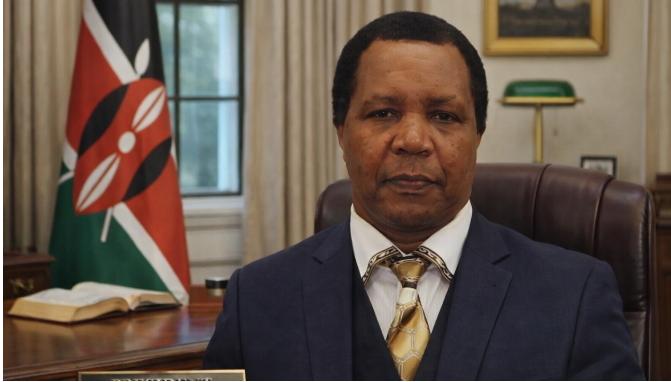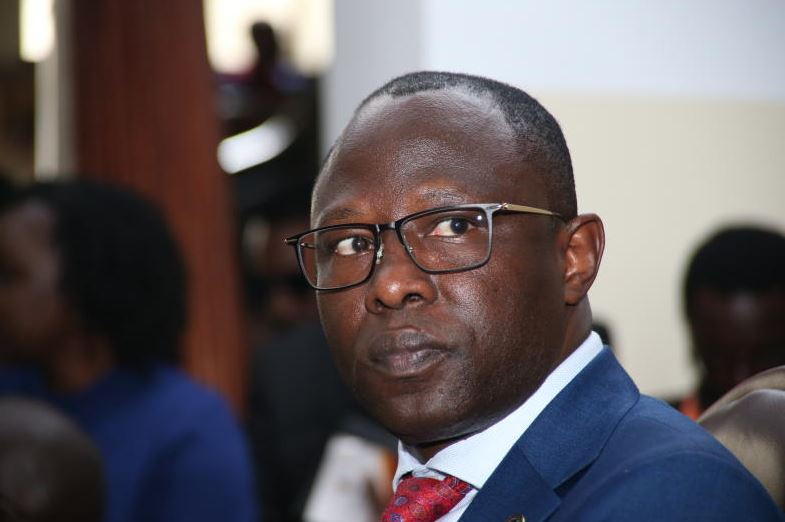
IEBC Chairperson Erastus Edung Ethekon
With a KSh61.7B electoral budget under scrutiny, technology tender allegations mounting and the ghost of 2017 unexorcised, the warning signs are too loud to ignore
By Collins Kibet
Twelve months before Kenya holds its next general election, the independent commission charged with running the vote is defending a KSh61.7B budget before parliament, fielding allegations that its technology procurement has been designed to favour a specific foreign company, and meeting with international observers to manage growing concerns about institutional credibility — a combination of pressures that, in Kenya’s electoral history, has never led anywhere comfortable.
The question that serious observers are beginning to ask — quietly in some quarters, loudly in others — is whether August 2027 could produce a result that does not survive legal challenge. It is not an alarmist question. It is a constitutional one. Under Article 140 of Kenya’s Constitution, a presidential election result can be challenged in the Supreme Court within seven days of the declaration of results. The court has 14 days to determine the petition. And Kenya, uniquely in Africa, has already travelled this road. In September 2017, the Supreme Court nullified the presidential election, finding that the Independent Electoral and Boundaries Commission had committed irregularities and illegalities that impaired the integrity of the vote. In his ruling, then Chief Justice David Maraga made an observation that has outlasted the judgment itself: an election is a process, not an event.
That distinction has never been more relevant. IEBC Chairperson Erastus Edung Ethekon described the 2027 vote as a “complex, multi-stage national exercise,” warning that its credibility will depend less on polling day itself and more on the integrity of the processes leading up to it. That is an accurate and important framing. It is also a tacit acknowledgment that those processes are, at present, under strain.
The latest dispute centres on the IEBC’s tender for an Integrated Elections Management System, which is expected to form part of the technology infrastructure for the 2027 election. The tender was advertised on 11 August 2026 and scheduled to close on 1 September. Former Deputy President Rigathi Gachagua has questioned the transparency of the process, claiming that the specifications could favour South Korean technology company Miru Systems. The IEBC has denied the allegation. But the exchange illustrates a pattern that has played out before every contested Kenyan election in living memory: allegations about technology procurement emerge, the commission defends its process, and public confidence fractures along political lines before a single vote has been cast.
The commission hosted a delegation from the Carter Center on 18 August for discussions on electoral preparations and possible areas of collaboration, amid growing political debate over the technology to be deployed in 2027, including opposition concerns over the possible involvement of Smartmatic, the provider contracted by IEBC for the 2022 general election. The Carter Center’s presence is reassuring in one sense. It is also a signal that the concerns are serious enough to warrant early international engagement.
Wundanyi MP Danson Mwashako, speaking yesterday, warned that the IEBC must restore public trust long before Kenyans head to polling stations. He said a credible election requires transparency and accountability from the early stages of preparation — including procurement of election technology — and that responsibility for addressing the trust deficit rests squarely with the electoral commission.
The structural vulnerabilities behind these disputes are not new. Kenya’s elections have historically been shaped by ethnic mobilisation, personality-driven competition and a tendency to frame contests as battles between communities rather than between competing programmes of governance. When an election is experienced as an existential communal contest, losing becomes far more than a political setback. It becomes a collective grievance — and that transformation is what converts a dispute over vote tallies into a national crisis. The 2007-08 post-election violence, which killed more than 1,300 people and displaced hundreds of thousands, remains the starkest illustration of where that logic leads.
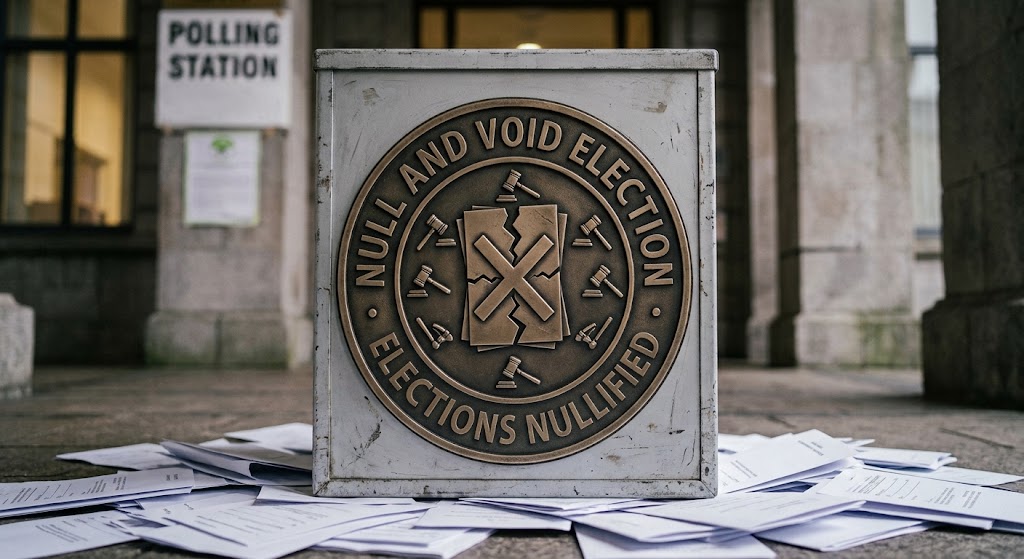 Kenya’s voter register has grown from 22.12 million in 2022 to over 23.4 million by April 2026, driven largely by youth-led mobilisation under the “Niko Kadi” campaign. That expansion is a healthy democratic development. It also raises the stakes. More registered voters means more people with a direct stake in whether the election is conducted credibly — and more people available to be mobilised if they conclude it was not.
IEBC Vice Chairperson Fahima Araphat Abdallah told parliament in May that credible elections require more than ballot papers, citing logistics, ICT systems, transport, ballot boxes and operational services as core components of election delivery. She is right. She is also operating an institution that, by its own account, faces budget pressures, delayed reforms and the kind of political scrutiny that makes every procurement decision a potential flashpoint.
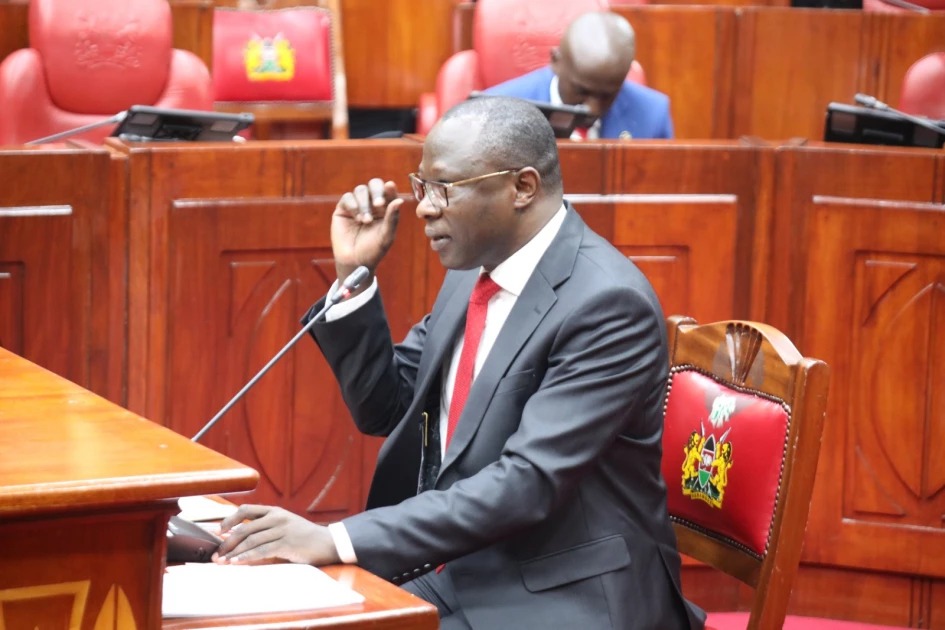
Elections Observation Group head Mule Musau captured the essential paradox with precision: “The process should be predictable. The results should be unpredictable.” What Kenya has historically produced is the reverse — a process whose credibility is contested before it concludes, and results whose acceptance depends less on evidence than on whether your candidate won.
The consequences of another nullification — or worse, a disputed result that produces violence rather than litigation — would extend far beyond the political class that caused it. Economic uncertainty would follow immediately. Investor confidence, already sensitive to governance risk, would contract. Development programmes would stall. And the democratic institutions that Kenya’s 2010 Constitution was designed to strengthen would absorb damage that takes years, not months, to repair.
The solutions are neither complicated nor secret. The IEBC must conduct transparent procurement, communicate its technology choices in language that citizens can evaluate, and submit to scrutiny rather than demanding trust on faith. Political parties must train agents, resource legal teams and channel disputes through courts rather than streets. Leaders must model the restraint that makes peaceful transitions of power possible — and resist, in the volatile period between the announcement of results and the conclusion of any petition, the temptation to declare victory before the law has spoken.
The question for 2027 is not simply who will win. It is whether Kenya will conduct an election whose credibility survives the declaration of results — one that produces not merely a winner, but the durable public confidence that the people’s will has genuinely been respected.
That confidence cannot be manufactured on election night. It must be earned in the months before it — in procurement offices, in parliamentary committees, in community meetings and in the daily choices of leaders who understand that the legitimacy of what they win depends entirely on the integrity of how they win it.
The warning signs are visible. The time to act on them is now.
Similar Posts by The Mt Kenya Times:
- Diaspora Times Global Oct 17 – Oct 23, 2026
- Is social media a blessing or a curse for university students?
- Light at last: How electricity is reshaping Nandi and Uasin Gishu
- The triple squeeze: how EPRA’s fuel price hike is reshaping the survival equation for the common mwananchi
- Zelenskyy accuses Trump of rewarding Putin as Pope pleads for peace from a hospital bed
About the Author