The running mate race has begun: Why Ruto’s 2027 ticket is already dividing Mt Kenya
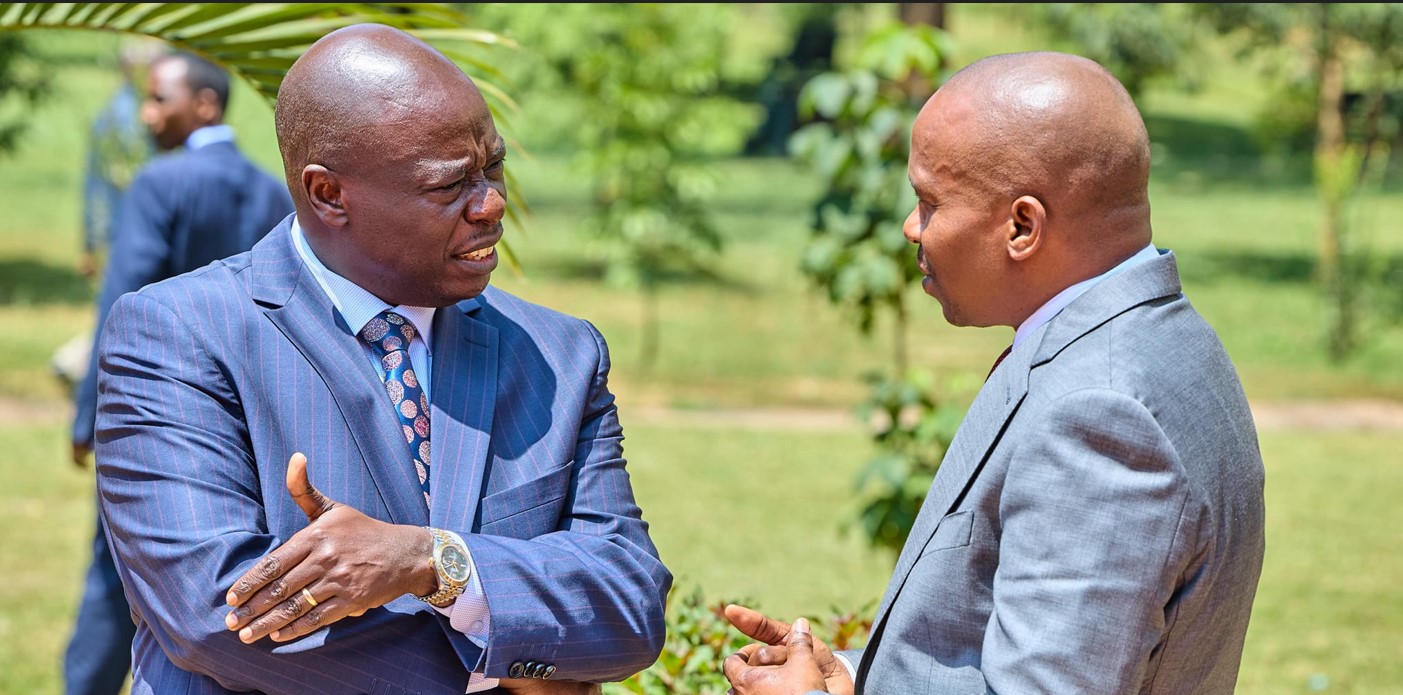
Deputy President Kithure Kindiki and his predecessor Rigathi Gachagua
Long before the ballot, the question of who stands beside President Ruto is reshaping alliances, testing loyalties and exposing the fault lines that will define the next election
By Levis Wangamati
Kenya has not reached the ballot, but the politics of 2027 are already being negotiated as though election day were a matter of weeks away — and the sharpest early contest is not over the presidency itself, but over who will stand beside President William Ruto when voters eventually return to the polls.
Deputy President Kithure Kindiki has repeatedly signalled his determination to defend his place on the ticket. But senior Orange Democratic Movement figures have publicly endorsed Cabinet Secretary Wycliffe Oparanya for the position, transforming what might otherwise have been an internal Kenya Kwanza decision into a full coalition dispute. That friction makes the running-mate question far more consequential than it initially appears.
For Ruto, retaining Kindiki carries a straightforward appeal: continuity. Having succeeded the impeached Rigathi Gachagua in late 2024, Kindiki now occupies the country’s second-highest constitutional office. Keeping him on the ticket would allow the President to present his 2027 campaign as a stable continuation of an administration that absorbed significant internal turbulence without losing its footing. But behind that argument lies a considerably more difficult calculation — whether Kindiki can genuinely help consolidate Mt Kenya, a region whose electoral weight remains too significant for any serious presidential campaign to set aside.
That is precisely where Gachagua re-enters the picture. The former deputy president has moved from being Ruto’s 2022 running mate to one of his most organised political opponents, keeping himself firmly within the 2027 conversation through sustained mobilisation and legal challenges surrounding his impeachment. His continued political presence complicates the President’s efforts to rebuild a coherent base across Mt Kenya, where loyalty has historically been shaped by a combination of national alignments and acutely local interests. The question for Ruto is therefore not simply whether Kindiki remains on the ticket, but whether Kindiki can help mend a political relationship with the mountain that has become visibly strained.
Kindiki’s challenge, in that context, extends well beyond occupying the second office. He must demonstrate that he is not merely the man who inherited Gachagua’s position, but a politician capable of building an independent constituency of his own across Mt Kenya. That requires more than governmental visibility or constitutional authority. It requires networks, regional confidence and the ability to speak to voters who may not automatically see his elevation as a satisfactory substitute for what they had before. If he fails to establish that independent political identity, his place on the 2027 ticket will remain exposed to wider coalition calculations.
Geography adds a further layer of complexity. Gachagua’s influence has been strongest historically in Mt Kenya West — across Nyeri, Murang’a and Kirinyaga — while Kindiki comes from Tharaka Nithi in Mt Kenya East. Although both belong to the broader Mt Kenya political sphere, the distinction is not trivial. Regional politics rarely operates as a completely unified bloc. Historical differences, local networks and competing perceptions of leadership shape how different parts of the mountain respond to national alliances, and Kindiki must navigate that sub-regional divide carefully if he is to build the kind of cross-county standing that would make him genuinely indispensable.
Gachagua’s essential argument — that Mt Kenya should negotiate with national political forces from a position of collective strength rather than being treated as an electoral reservoir courted during campaigns and forgotten afterwards — retains genuine appeal within the region. Ruto’s counterargument, that development performance and broad national alliances matter more than the influence of any single regional politician, represents a rival and competing logic. Kindiki sits awkwardly between these narratives. He must project loyalty to the President while simultaneously persuading Mt Kenya voters that his political identity is not entirely derivative of State House.
ODM’s demand for the deputy presidency is ultimately about leverage. Having entered the broad-based government, the party now seeks to translate its cooperation into tangible political influence. Its push for Oparanya is not simply a contest over one individual — it is an opening move in negotiations over how the governing coalition could be structured for 2027. The more aggressively the party pursues the position, the harder it becomes for Ruto to treat the running-mate decision as an internal matter within his own camp. Either he satisfies ODM and risks alienating Kindiki’s supporters, or he retains Kindiki and risks frustrating a coalition partner whose votes he may need.
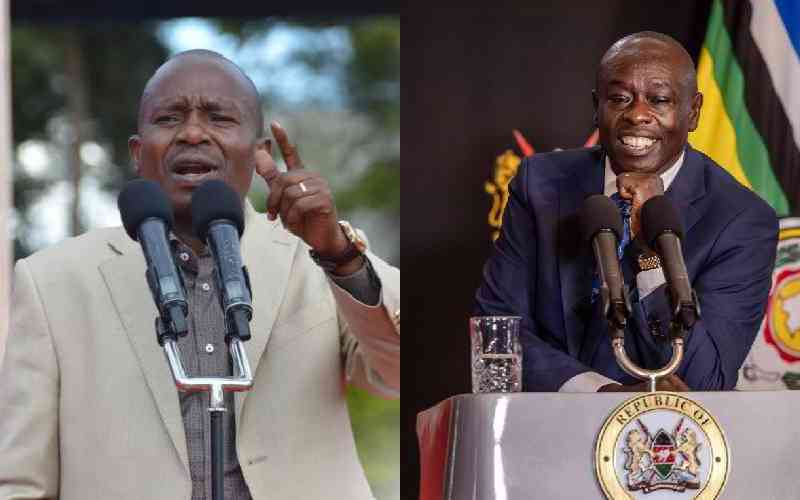
A presidential ticket, in Kenya’s political culture, is never merely a list of two names. It is a political map — communicating priorities, rewarding alliances, reassuring constituencies and signalling which bargains have been struck. The 2022 election demonstrated this logic when Ruto ultimately chose Gachagua over Kindiki after intensive internal deliberations. Four years later, the landscape looks almost unrecognisable. Gachagua is building an opposition base from outside government. Kindiki holds the deputy presidency. ODM is simultaneously operating within the government and negotiating its political future. And the broader opposition is still trying to convert multiple competing ambitions into a coherent electoral alternative.
Ruto’s instinct may be to delay a definitive declaration for as long as politically viable. An early announcement strengthens Kindiki but eliminates bargaining room with potential partners. Leaving the question open carries its own risks — political uncertainty generates its own politics. Every regional gathering becomes a loyalty test. Every endorsement becomes a signal. Every statement about the running mate triggers fresh speculation about who is gaining ground and who is losing it. Strategic flexibility, held too long, curdles into political anxiety.
Mt Kenya, for its part, will not wait indefinitely for clarity. The region’s political future cannot be assumed to belong permanently to any single leader. Voters shift when leaders disappoint, when alliances change and when new bargains appear more attractive. The real contest is not merely over who speaks for the mountain, but over who can convince it that their strategy offers the strongest route to genuine influence in the next administration.
For Ruto, the task is to retain enough mountain support without allowing the region’s internal politics to dictate the entire architecture of his campaign. For Kindiki, it is to prove he commands influence beyond the authority of office. For Gachagua, it is to convert dissatisfaction into a durable movement rather than a temporary rebellion. And for ODM, it is to extract real concessions without losing its identity in the process.
The running mate is not a footnote to the 2027 contest. It is becoming one of its first major battlegrounds — and the campaign has not yet officially begun.
Similar Posts by The Mt Kenya Times:
- Diaspora Times Global Oct 17 – Oct 23, 2026
- Is social media a blessing or a curse for university students?
- Light at last: How electricity is reshaping Nandi and Uasin Gishu
- The triple squeeze: how EPRA’s fuel price hike is reshaping the survival equation for the common mwananchi
- Zelenskyy accuses Trump of rewarding Putin as Pope pleads for peace from a hospital bed
About the Author