Kenya’s nuclear choice: Building capability, not only buying power
 The Mt Kenya Times

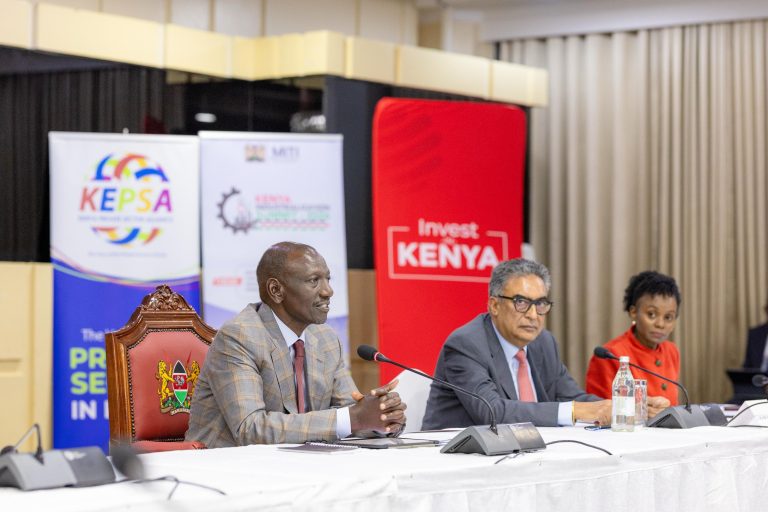
NuPEA Chief Executive Justus Wabuyabo. Photo courtesy

As Kenya moves closer to a nuclear energy decision, the real test is not whether it can purchase a reactor — but whether it can build the institutions, people and industrial culture to own one.
By James Kilonzo Bwire
Kenya stands at a consequential moment in its national development. The country is considering nuclear energy not simply as another source of electricity, but as a foundation for industrial growth, technological independence and long-term economic transformation. The argument advanced by Nuclear Power and Energy Agency Chief Executive Justus Wabuyabo — drawing on South Korea’s experience — deserves serious public attention. South Korea began its nuclear journey in the 1970s with limited natural resources and less capital than Kenya has today, yet it used nuclear power as a deliberate instrument of national capability-building. Kenya should learn from that example, but it must do so with clear thinking, strong institutions, genuine public trust and a commitment to ownership rather than dependence.
The central lesson from South Korea is not that every country should build nuclear plants. It is that a country can use complex technology as a means to develop its people, institutions and industries. South Korea did not treat nuclear energy as a finished product to be purchased and forgotten. It treated it as a national learning project. It imported initial technology but insisted on local capacity-building, engineering adaptation and progressive domestic innovation. Over time, it moved from consumer of foreign technology to creator and exporter of it. That transformation was not accidental — it was the result of patient planning, disciplined implementation and a national decision to invest in knowledge.
Kenya’s proposed nuclear programme should therefore be judged by more than its ability to generate electricity. Electricity matters, but it is not the whole purpose. A nuclear programme can help Kenya develop engineers, scientists, regulators, project managers, technicians and industrial suppliers. It can strengthen universities, research institutions, technical colleges and professional bodies. It can create a culture of precision, safety, accountability and long-term planning — assets of lasting national value well beyond the energy sector. If Kenya approaches nuclear power purely as a procurement exercise, it may obtain a plant but miss the larger opportunity to build a durable technological base.
The distinction between buying power and building capability is essential. Buying power means contracting a foreign company to design, construct, operate and maintain a facility while Kenyans remain largely spectators. Building capability means ensuring Kenyans participate meaningfully at every stage — planning, regulation, construction, operation, safety management, research and eventual expansion. It means requiring genuine technology transfer, not merely on paper. Kenyan engineers must understand the systems they operate. Kenyan regulators must assess risks independently. Kenyan institutions must train the next generation without permanent reliance on foreign expertise. This is the deeper meaning of sovereignty in a technological age.
Kenya already has compelling reasons to take this path. The country has a growing population, expanding urban centres, rising industrial ambitions and an urgent need for dependable electricity to support manufacturing and services. Renewable energy has served Kenya well, but a modern economy also requires stable baseload supply capable of sustaining heavy industry, data infrastructure, health services and large-scale production. Nuclear energy is attractive precisely because it can deliver continuous output and reduce vulnerability to climate-related disruptions, including the droughts that periodically cripple hydropower. The proposed plant in Siaya County is therefore not merely an energy project — it is part of a wider national conversation about how Kenya will power its future economy.
Nuclear energy, however, is not a simple solution. It is a demanding undertaking that requires exceptional governance. Strong laws, independent regulation, qualified personnel, emergency preparedness, transparent procurement and sustained public participation are not optional extras — they are prerequisites. A modern reactor is only as trustworthy as the regulatory culture and operating institutions surrounding it. Kenya must invest as much in governance as it does in concrete and steel.
Public trust must be treated as central to the programme. Nuclear energy generates anxiety because people associate it with risk and secrecy. Those concerns are understandable and must not be dismissed. Communities near proposed sites, particularly in Siaya, must receive clear, honest information about safety, land, water, employment, compensation, emergency planning and waste management. Public participation should begin early, continue throughout and genuinely shape implementation. A nuclear programme that lacks public confidence will face resistance, delay and political instability — and will deserve all three.
Kenya must also be honest about cost and financing. Nuclear power requires substantial upfront investment, long construction periods and careful financial management. Contracts must be competitive, transparent and structured to protect taxpayers. The country must avoid excessive debt, inflated costs and dependency on a single foreign supplier. Open procurement, independent scrutiny and parliamentary oversight are the best available protections. A project of this scale must be accountable to citizens, not only to government agencies.
Education must become the backbone of the entire programme. Kenya cannot build a credible nuclear sector while depending permanently on foreign universities and foreign technicians. Universities must expand offerings in nuclear engineering, physics, materials science and radiation protection. Technical institutions must train welders, instrument technicians, safety officers and maintenance specialists to international standards. Scholarships, internships and structured apprenticeships must connect students directly to the nuclear programme. A country that educates its people for a major technological undertaking is not spending money — it is investing in its future.
The South Korean example also teaches the importance of continuity. Nuclear programmes take decades to mature and cannot depend on the enthusiasm of one government or one minister. Kenya needs a long-term national framework that survives changes in political leadership. Parliament, the energy ministry, regulators, universities, industry and county governments must share a common understanding of the programme’s goals and responsibilities. Political consensus matters especially here, because nuclear decisions affect generations yet to vote.
The broader lesson is straightforward. Kenya should pursue nuclear power with ambition but without impatience. Ambition without preparation creates risk. Preparation without ambition produces stagnation. South Korea’s achievement was not simply that it built reactors — it built a system: educated people, capable firms, strong institutions, reliable regulation and a long-term national purpose.
That is the model Kenya should study — and the standard to which it must hold itself.
Similar Posts by The Mt Kenya Times:
- Owono breaks silence after De Miguel tragedy: ‘The most difficult days of my life’
- Nyamira High Court acquits four accused in murder of couple
- ACK Clergy in Kisii call for peaceful 2027 elections, reject political violence
- The enlightened republic of closed minds: Where ballots bloom and reason withers
- The final whistle for number 7: Ronaldo’s Portugal story ends
About the Author