Exporting Teachers, Importing Standards: Is Namibia ready to strengthen classrooms in The Bahamas, and what does the request reveal about the regulation of teaching at home?
 The Mt Kenya Times

By: Silas Mwaudasheni Nande
1. A request that deserves a careful answer
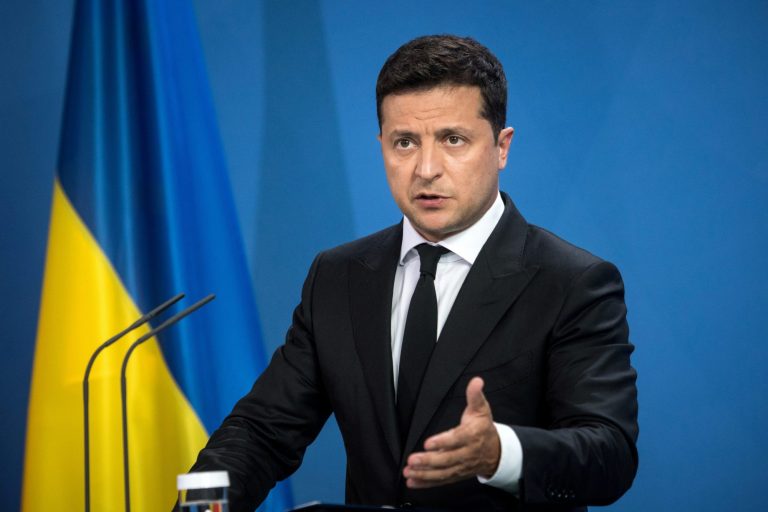
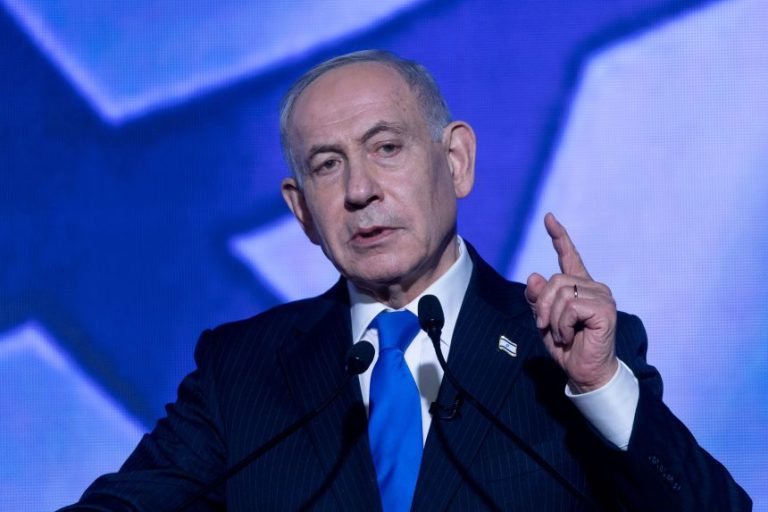
On the margins of the Commonwealth Heads of Government Meeting in Antigua and Barbuda this week, The Bahamas asked Namibia for help. Prime Minister Philip Davis sought qualified Namibian teachers for Bahamian classrooms. According to New Era, the request targets mathematics, science and technical vocational subjects (Hembapu, 2026).
Prime Minister Elijah Ngurare responded with measured willingness. He undertook to evaluate the request through the relevant state institutions. He also promised to balance Bahamian needs against Namibian staffing requirements, professional standards and the availability of specialised educators (Hembapu, 2026). The two leaders further agreed to review a proposed memorandum of understanding on political and diplomatic consultations.
The request flatters Namibia. It also tests Namibia. A country that exports teachers makes a public claim about the quality of its teachers. It also makes an implicit claim about the systems that train, certify and discipline them. This article asks whether Namibia can sustain both claims.
The argument proceeds in five steps. First, it describes the Bahamian shortage. Second, it compares educational quality in the two countries, using the most recent official results. Third, it assesses the Namibian supply of teachers. Fourth, it examines the law on professionalisation and regulation of teaching in both countries. Fifth, it considers the ethics of recruitment before closing with practical proposals.
My position is clear. Namibia can contribute meaningfully, but only on specific terms. Any arrangement should target genuine surplus, protect Namibian classrooms and rest on professional regulation that Namibia does not yet possess. Handled well, the request could accelerate overdue reform at home. Handled poorly, it could export the weaknesses of the Namibian system.
2. The Bahamian shortage in context
The Bahamas operates 162 public schools spread across 24 islands. In July 2026, Deputy Prime Minister and Minister of Education Chester Cooper placed the public school population in the 40,000 range. He estimated the shortage at about 300 teachers (Bahamas Information Services, 2026).
Cooper made the conditions for foreign recruitment explicit. If vacancies remained after every reasonable local effort, particularly in specialist subjects and the Family Islands, the government would recruit abroad. He added that every international recruit would face verification of qualifications, credential assessment, vetting and equivalency requirements (Bahamas Information Services, 2026).
The government has pursued several routes at once. It launched a drive to attract Bahamian graduates, retirees and former teachers. It welcomed an offer from Ghana to assist with recruiting up to 300 teachers (Campbell, 2026). It also invited other countries to help, seeking a spread of disciplines and nationalities (Russell, 2026a).
The Ghanaian announcement provoked strong resistance. Bahamas Union of Teachers president Belinda Wilson complained that the union learnt of the plan from a Ghanaian official. She also noted that some 2025 graduates of the University of The Bahamas had not yet been hired (Russell, 2026a).
The government replied that Bahamians would receive first claim on vacancies. Cooper stated that foreign recruits would be engaged through standard contracts, with benefits comparable to those of Bahamian teachers. He listed vetting by the Royal Bahamas Police Force, Interpol, the Public Service Commission and the Department of Labour (Campbell, 2026).
Progress has been partial. By late September 2026, Cooper reported more than 100 Bahamian recruits, with roughly another 100 candidates at various stages of vetting (ZNS Bahamas, 2026). That vetting includes the National Accreditation and Equivalency Council of The Bahamas (NAECOB). In October 2026, a new industrial agreement raised entry pay for trained teachers to $30,100 and the maximum to $54,000 (Russell, 2026b).
Three lessons follow for Namibia. The Bahamian demand is real but limited in scale. It is concentrated in specific subjects and remote islands. It is also politically sensitive, because organised Bahamian teachers view foreign recruitment with suspicion. Any Namibian offer must therefore be modest, targeted and respectful of Bahamian stakeholders.
3. Comparing educational quality: two systems under strain
Any comparison of educational quality must begin with a caution. The Bahamian and Namibian examinations are different instruments. They use different grading systems, candidate pools and progression rules. Their results cannot be ranked on a single scale. They can, however, reveal patterns of strength and weakness.
3.1 The Bahamian picture
The 2026 Bahamian national examinations showed modest overall gains alongside serious weakness in core subjects. Of 6,169 candidates registered for the Bahamas General Certificate of Secondary Education (BGCSE), only 360 earned at least a C in mathematics, English Language and a science. That figure is 5.83 per cent of all candidates (Babb, 2026).
Mathematics was the gravest concern. The A to D pass rate in BGCSE mathematics fell to 33.3 per cent, while the number of A to D passes declined by 14.1 per cent. Across all subjects, the A to D pass rate nevertheless rose to 71.49 per cent (Babb, 2026). Good results in technical, vocational, arts and humanities subjects therefore mask a fragile core.
The diagnosis offered by Bahamian officials is instructive. Director of Education Dominique McCartney-Russell reported a ministry study of mathematics results across ten years. It identified learner anxiety, weak engagement and teachers who struggled with mathematics themselves (Babb, 2026). The Bahamian shortage is therefore partly a shortage of competent mathematics teaching, not merely of adults in classrooms.
3.2 The Namibian picture
Namibia shows a similar profile of improvement within weakness. In the 2025 Namibia Senior Secondary Certificate Ordinary (NSSCO) examinations, 38,692 full-time candidates registered. Nationally, 36 per cent qualified to progress to the Advanced Subsidiary level (!Uri#khos, 2026). Some 40.3 per cent met the revised benchmark of at least 25 points in five subjects.
The foundation phase is more troubling. In January 2026, Education Minister Honourable Dr Sanet Steenkamp made a sobering admission. At least seven in ten Namibian children aged ten cannot read a comprehensive English text or do basic mathematics (Kheibes, 2026). She referred to a national Grade 3 assessment as the basis for this concern. The ministry has responded with Jolly Phonics, teaching at the right level and early-grade reading and mathematics measures.
System conditions compound the problem. The Namibia National Teachers Union (NANTU) reported about 2,400 schools and 35,000 teachers in mid-2026. It described class sizes above approved norms, with ratios reaching 45 or 55 learners per teacher in some cases (Education International, 2026). It also reported that 70 to 80 per cent of the education allocation goes to personnel costs.
Namibia nonetheless invests heavily. According to the NANTU report, the country allocates about 8.9 per cent of gross domestic product to education. That share exceeds the international benchmark of six per cent (Education International, 2026). The central problem is therefore less the volume of spending than its conversion into learning.
3.3 What the comparison means
The honest conclusion is uncomfortable. Neither system is a strong performer in mathematics and science. Namibia cannot present itself as an exporter of proven excellence in exactly the subjects The Bahamas needs most. Its secondary progression rates and foundation outcomes forbid such a claim.
The comparison also reveals complementarity. Both systems teach in English at secondary level. Both serve dispersed rural or island communities. Both are wrestling with weak mathematics outcomes and teachers’ subject knowledge. Namibian teachers who have succeeded under these constraints could bring relevant experience. The real question is whether Namibia can identify those teachers reliably.
Impact must also be defined properly. Filling a vacancy is not the same as improving learning. The Bahamian ministry has itself linked weak mathematics results to teachers who struggle with the subject (Babb, 2026). A Namibian recruit with weak subject knowledge would fill a post without solving the problem. The relevant test is therefore demonstrated competence in the classroom, not nationality or certificates alone.
This test applies with equal force at home. The same Namibian ministry that would select teachers for The Bahamas is fighting learning poverty in its own early grades. Credibility abroad depends on credibility at home. A selection process strong enough to reassure Nassau would also serve Namibian learners well.
 4. The supply question: a surplus of the wrong kind?
On paper, Namibia has teachers to spare. In July 2025, representatives of unemployed teachers told Her Excellency President Dr Netumbo Nandi-Ndaitwah that over 15,000 education graduates were without work (NAMPA, 2025). The President replied that the government could not absorb all of them. She directed the ministry to complete verification of their credentials first.
The government has since expanded appointments. Ahead of the 2026 academic year, the ministry appointed 1,767 teachers, exceeding its target of 1,140 posts (New Era, 2026). It is also exploring structured internship pathways for unemployed qualified teachers. Even so, the gap between graduates and funded posts remains wide.
The difficulty lies in the composition of the surplus. NANTU reports an oversupply of primary school teachers but a shortage at high school level (Education International, 2026). The Bahamian request, by contrast, targets mathematics, science and technical vocational subjects. These are precisely the secondary specialisms in which Namibia remains short.
This mismatch carries a real risk. If Namibia sends experienced secondary mathematics and science teachers abroad, it will deepen its own shortage. Rural schools in regions such as Ohangwena, Kunene and Omaheke would bear the cost. Prime Minister Dr Ngurare appeared alert to this danger when he spoke of national staffing requirements (Hembapu, 2026).
A second risk concerns quality within the surplus. NANTU secretary general Loide Shaanika has argued that many unemployed graduates meet only the Namibian standard. In her assessment, they do not even meet the standards of Angola, Zambia or South Africa (Shipena, 2025). That is a striking admission from a union leader. It warns against assuming that every unemployed graduate is ready for a foreign classroom.
Shaanika also recalled an instructive history. When Namibia lacked mathematics and science teachers, its schools relied on colleagues from Nigeria, Ghana and Zimbabwe (Shipena, 2025). Namibia therefore knows teacher migration from the receiving end. It should apply the lessons it learnt as a host now that it may become a source.
Where, then, does real capacity lie? It lies in a narrow band of well-qualified secondary specialists who are unemployed or underemployed. It also lies among technical and vocational instructors. Identifying them requires a credible national record of qualifications and competence. That requirement leads directly to the legal question.
A realistic profile of a suitable candidate is therefore narrow. Such a teacher would hold a recognised degree with a major in mathematics, physical science, biology or a technical field. He or she would have taught successfully at senior secondary level, with verifiable examination results. The teacher would not currently fill a scarce post in a Namibian rural school. Few unemployed graduates will meet every element of this profile, and that is acceptable. A small, excellent cohort would serve both countries better than a large, uneven one.
5. The legal framework: can Namibia certify what it exports?
5.1 The current Namibian position
The Basic Education Act 3 of 2020 came into force on 5 October 2023, apart from one section on early childhood development. It establishes a Teaching Service consisting of persons employed in the public service (sections 108 and 109). It requires the Minister to prescribe a code of conduct for that service (section 111).
The Act does not, however, establish a professional register of teachers. Its definition of a teacher is revealing. The definition includes a staff member who lacks a teaching qualification but has other abilities relevant to teaching (section 1). In law, therefore, a Namibian teacher is a category of employee, not a licensed professional.
Discipline follows the same logic. A teacher at a State school who breaches the statutory duties commits misconduct under the code and the Public Service Act (section 114(5)). Accountability is administrative. It attaches to employment, not to a licence to practise. A teacher who leaves the public service, including for service abroad, largely falls outside that machinery.
The Act does anticipate reform. Section 4(3)(f) allows the Minister to determine policy on the professional education and accreditation of teachers. Section 4(3)(q) covers international relations in basic education. These provisions offer a basis for policy and for cooperation. They do not create a statutory professional regulator.
5.2 The Teaching Profession Bill
The intended remedy is the Teaching Profession Bill. Minister Steenkamp addressed the National Assembly on the draft Bill and its regulations on 18 September 2025 (National Assembly of Namibia, 2025). National consultations followed in all fourteen regions until 17 October 2025.
The Bill would establish a Teaching Profession Council of Namibia. The Council would register teachers, regulate the profession and grant practice certificates (Shipena, 2025). It would review teacher education programmes before accreditation and make continuous professional development compulsory. Without valid registration, no person would be permitted to teach in Namibia.
The Bill has drawn both support and criticism. NANTU has campaigned for a regulator since 2011 and supports the Bill. Shaanika linked it directly to mobility, arguing that Namibian teachers should be trained to teach elsewhere in the world (The Namibian, 2025).
The Teachers Union of Namibia welcomed professionalisation but raised objections. Its secretary general, Mahongora Kavihuha, argued that the proposed board limits the voice of practitioners. He also noted that the draft imposes no obligations on employers of licensed teachers (The Namibian, 2025). These criticisms deserve resolution before enactment, not after.
Public sources consulted for this article show no evidence that Parliament has enacted the Bill as at 7 November 2026. Its present parliamentary stage should be confirmed with the National Assembly before any agreement relies on it.
5.3 The Bahamian position
The Bahamas has also modernised its law recently. The Education Act, 2026 received assent on 23 March 2026 and repealed the Education Act of 1962. Section 48 obliges the Minister to recruit and engage suitably qualified persons for public schools. Section 49 requires the Minister to develop standards for teaching, appraisal, professional development and ethical conduct.
The Bahamian Act, like its Namibian counterpart, creates no independent teacher licensing council. Under section 14, NAECOB registers and accredits schools and institutions. NAECOB also evaluates academic credentials. Regulation of the individual teacher therefore remains a ministerial and public service function in both countries.
5.4 Implications for a bilateral arrangement
This legal landscape has three consequences. First, The Bahamas will judge Namibian teachers mainly by their documents and by vetting. NAECOB will assess degrees and diplomas, and the police and Public Service Commission will assess character. Neither country can attest to current fitness to practise through an independent register.
Second, Namibia cannot presently issue the kind of professional attestation that mobile professionals in regulated fields carry. A Namibian teacher dismissed for misconduct abroad could return home without any professional record following him or her. Equally, a competent teacher could return without formal recognition of the experience gained.
Third, the form of the agreement matters. Under Article 32(3)(e) of the Namibian Constitution, the President negotiates and signs international agreements. Under Article 63(2)(e), the National Assembly agrees to their ratification. Article 144 makes binding international agreements part of the law of Namibia.
A binding labour agreement would therefore carry domestic legal force once ratified. A memorandum of understanding framed as a political commitment would not. The choice affects the enforceability of pay, conditions and return guarantees. Formal legal advice from the Attorney General should settle which instrument suits the purpose.
Employment status raises a further question. Cooper has indicated that foreign recruits would serve on standard Bahamian contracts (Campbell, 2026). Namibian recruits would therefore be employees of the Bahamian government, not members of the Namibian Teaching Service. The Basic Education Act and its code of conduct would not govern their work abroad. Namibian influence over their welfare and conduct would rest almost entirely on the bilateral instrument.
5.5 Can the agreement advance professionalisation?
The answer, I argue, is yes, provided Namibia sequences its steps correctly. External demand creates a practical incentive to complete the Teaching Profession Bill. A receiving country will reasonably ask who certifies a Namibian teacher. Namibia should answer with a statutory council, not merely a ministry letter.
The agreement could also give concrete content to regional ambitions. Shaanika reported that NANTU is working with sister organisations in the African Federation of Teaching Regulatory Authorities on a continental framework for teacher mobility (The Namibian, 2025). A Bahamian arrangement would test such mobility in practice. It could inform Namibian standards for registration, professional development and portability.
The danger lies in reversing the sequence. If teachers depart before the Council exists, the ministry will improvise verification. Such improvisation would set weak precedents. It would also leave Namibian teachers abroad uncertain about recognition, conditions and reintegration.
The Council could serve mobility in several concrete ways. It could maintain a public register confirming that a teacher is qualified and in good standing. It could answer verification requests from foreign employers and from bodies such as NAECOB. It could recognise professional development completed abroad when teachers renew registration. It could also record findings of serious misconduct, so that unsuitable persons cannot move between systems unnoticed. Each function protects learners, while also giving honest teachers a portable professional identity.
6. The ethics of recruitment and the rights of teachers
International teacher recruitment has a troubled record. Mawhinney (2025) describes aggressive recruitment by wealthy Commonwealth states, particularly from Africa and the Caribbean. He documents overseas-trained teachers paid on unqualified scales despite full training. He also reports heavy losses of teachers from Ghana and Jamaica.
Commonwealth education ministers adopted the Protocol for the Recruitment of Commonwealth Teachers in 2004. The Protocol seeks to balance the right of teachers to migrate against the integrity of national education systems (Mawhinney, 2025). Teacher unions have recently called on member states to recommit to it. Both Namibia and The Bahamas are Commonwealth members and should apply its principles.
Those principles cut both ways. As a source country, Namibia must protect its own shortage subjects. As a host, The Bahamas must offer Namibian recruits conditions equal to those of local teachers. Minister Cooper has already promised comparable benefits under standard contracts (Campbell, 2026). That promise should be written into any bilateral instrument.
Protection of the teachers themselves deserves equal attention. Teachers posted to small and distant islands may face isolation, high living costs and limited support. The Bahamian agreement of October 2026 includes hardship and geographical posting allowances (Russell, 2026b). Any bilateral instrument should confirm that Namibian recruits qualify for these allowances on the same terms. It should also provide consular contact and a clear procedure for grievances.
The global context raises the stakes. Mawhinney (2025), drawing on the Global Report on Teachers by UNESCO, notes that the world needs 44 million additional teachers by 2030. Africa south of the Sahara accounts for about one in three of them. Namibia cannot treat its teachers as an export commodity while its own learners remain underserved.
7. What Namibian teachers could genuinely offer
Having stated the risks, fairness requires an account of strengths. Many Namibian teachers work in combined schools, multigrade classes and remote villages. Many manage large classes with scarce resources. These experiences are directly relevant to small Family Island schools.
Namibian teachers also work in multilingual classrooms. Many teach through English while supporting learners whose home language differs from the language of instruction. That experience builds skill in explaining mathematical and scientific language with care. It is a transferable strength wherever learners find abstract concepts difficult.
Namibian technical and vocational instructors could add further value. The request explicitly names technical and vocational subjects (Hembapu, 2026). Bahamian results already show relative strength in vocational areas (Babb, 2026). Instructors with trade qualifications and industry experience could consolidate that strength.
Finally, Namibian teachers would return home with valuable experience. Exposure to another curriculum, examination system and school culture would enrich Namibian schools. A circulation of talent, rather than a permanent loss, should therefore be the governing design principle.
8. Recommendations
The following proposals would allow Namibia to respond positively while protecting its learners and advancing its own reforms.
- Enact the Teaching Profession Bill first. Parliament should prioritise enactment once the concerns of practitioners are addressed. The new Council should register every teacher selected for The Bahamas before departure.
- Recruit only from verified surplus. Selection should draw on unemployed or newly qualified teachers whose credentials the ministry has already verified. Serving secondary mathematics and science teachers in rural schools should not be released unless they are first replaced.
- Test subject competence, not only certificates. Candidates should sit assessments of subject content and teaching method aligned with the BGCSE syllabus. Given the Bahamian diagnosis of mathematics teaching, demonstrated competence matters more than paper.
- Use a binding instrument with clear terms. The agreement should specify contract duration, equal pay and allowances, housing, medical cover and return travel. It should also guarantee recognition of foreign service for promotion and seniority on return.
- Involve teacher unions in both countries. NANTU and the Teachers Union of Namibia should help design selection criteria. Bahamian unions should be consulted from the outset, avoiding the friction that followed the Ghanaian announcement.
- Provide structured induction. Recruits should complete induction on the Bahamian curriculum, assessment, child protection law and island culture before deployment. Mentoring by experienced Bahamian colleagues should follow arrival.
- Build reciprocity into the partnership. The arrangement could include joint professional development and exchange of expertise in technical and vocational education. Reciprocity turns a labour transfer into a genuine partnership.
- Monitor and report publicly. Both ministries should track placements, retention and learner outcomes, and report to their parliaments. Evidence, not diplomacy alone, should decide whether the arrangement expands.
9. Conclusion
Namibia has the people to help The Bahamas, but not yet the systems to guarantee their quality. Its surplus lies mainly in primary education, while the Bahamian need lies in secondary mathematics, science and vocational subjects. Its outcomes, though improving, do not justify a claim to export excellence.
The request should nonetheless be welcomed. It holds up a mirror to the Namibian teaching profession. It asks who certifies Namibian teachers, who disciplines them and who vouches for their competence. At present, the honest answer is the employer, not the profession.
If Namibia uses this moment to enact the Teaching Profession Bill, verify qualifications and protect its own classrooms, the agreement could become material to professionalisation. It would then serve Bahamian learners, unemployed Namibian graduates and the standing of teaching itself. That is the partnership worth building.
Silas Mwaudasheni Nande is principal of Kornelius Combined School in the Ohangwena Region and a doctoral candidate in education at the International University of Management. He writes on African governance, education and public policy. The views expressed are his own.
Similar Posts by The Mt Kenya Times:
- Criteria for the Optimal Placement of Electric Vehicle Charging Infrastructure across Urban Transport Networks
- From the Margins to the Centre: Governor Kadiva Hamutumwa, her first sixteen months in office, and an agenda for a lasting Ohangwena legacy
- Mt Kenya Times ePAPER November 7-8, 2026
- Karua demands Lissu’s release as Tanzania court conviction draws regional condemnation
- Jubilee accuses UDA of stealing its slogan as 2027 election battle lines sharpen
About the Author