Report on our Mission to Kiambu

By: Maina Kinyatti
Worth Noting:
- The guerillas made a fire for us and gave us some food. After a long and friendly conversation, they showed us where to sleep. After sleeping for two hours, we woke up. We said goodbye to our comrades and we left.
- Since our guide did not know the way from the camp, the unit commander ordered two of his men to guide us. After escorting us for a distance, the men returned to their camp. At about 3pm, we rested and ate our food.
- We then continued with our journey until we were completely exhausted; then we decided to rest. We lit a fire and warmed our food. We ate and then went to sleep. It was very dark.
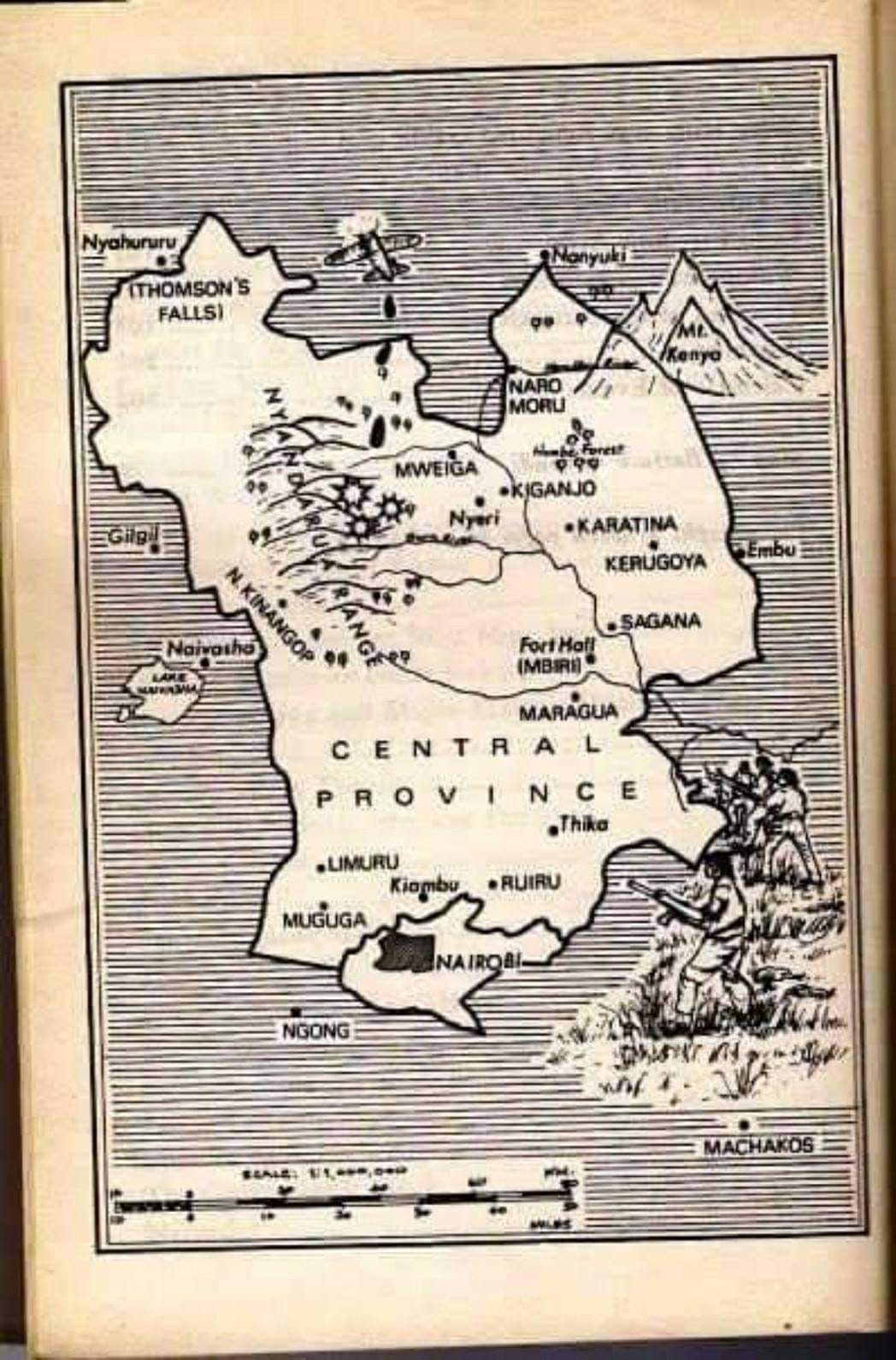
We started our journey from the Honi river in Nyandarwa. We were twenty guerilla fighters who had been sent by Field Marshal Kimathi to politicize the masses in Kiambu in the name of Gikuyu and Mumbi.
After walking for twenty miles, it started raining heavily and we were soaking wet. Captain Wang’ombe wa Mwangi suggested that we should make a fire to warm ourselves, but this suggestion was turned down. We decided to proceed with our journey despite the rain and cold. At about 1pm, we rested and ate our lunch. Then we started off, and after walking half an hour, we saw two rhinos grazing across the path we were following. Commander Waihwa wa Theuri tried to force them to move from our path, but they resisted violently. To avoid a dangerous confrontation, Commander Waihwa commanded us to go back and try to find another path, but the beasts followed us; they were ready for a fight. They troubled us for half an hour before we managed to escape. We could have gunned them down with our machine guns, but KLFA’s rules prohibited the killing of animals unless it was for food.
It was still raining heavily.
At about 1am, we decided to find a place to sleep. Luckily, the path we followed led us to a guerilla camp, and after the Guard Commander was satisfied that we were not enemy soldiers, he welcomed us to the camp. The fighters in this camp were operating in North Kinangop under General Muraya.
The guerillas made a fire for us and gave us some food. After a long and friendly conversation, they showed us where to sleep. After sleeping for two hours, we woke up. We said goodbye to our comrades and we left. Since our guide did not know the way from the camp, the unit commander ordered two of his men to guide us. After escorting us for a distance, the men returned to their camp. At about 3pm, we rested and ate our food. We then continued with our journey until we were completely exhausted; then we decided to rest. We lit a fire and warmed our food. We ate and then went to sleep. It was very dark.
We took off early next morning. As we were crossing the South Kinangop plains at about 3pm, we met two of our comrades whose guerilla unit was based in the region. They gave us some information on enemy operations in the area, and then we parted. After walking for four days, we reached a small town called Kinyahwa, located in a European’s plantation. From there onwards, twenty-eight miles of plains lay ahead of us, and we had to hurry to avoid detection by the enemy at dawn. We started crossing this plain about 3am, but unfortunately the place we were supposed to hide had been burned down by the enemy and our contacts had been arrested. Consequently, we spent the whole day lying on the grass; we could not stand or sit up for fear of being discovered by the enemy. Despite these difficulties, we were determined to fulfill our mission, to contribute our sweat and blood for the liberation of our country.
We started off again in the evening, but because we were hungry and exhausted, we could only cover ten miles of the plain before we were forced to rest. The following morning, we sent out scouts to see whether the way was safe. We started off again when they returned, but despite our courage and determination, we could hardly walk this time; we were too hungry and tired. It was under these difficult circumstances that one of our comrades, Kamwamba, went out and brought back some honey which saved us from starvation. We started our journey again and reached Munyu Railway Station at about 5am. We took cover by the roadside.
We knew that some loyalists delivered milk to the station during this time of the day and we were determined to use whatever means necessary to seize some of their milk. At about half past six, we saw one loyalist bringing milk to the station on a donkey. Commander Waihwa gave the order, we captured the man and seized his milk and everything else he had in the name of our struggle. The chap looked so frightened and shocked that we decided not to kill him; but we made it very clear to him that if he reported this incident to the colonial authorities we would find him and cut him down. We released the bastard after giving him a good beating. We drank the milk, released the donkey, and then left the station following the tarmac road for twenty miles.
After walking for fifteen miles, we saw some cattle lying by the roadside and decided to kill one for food, but Comrade Kimani wa Kahora advised us not to do so for our own safety; we took his advice.
Kenya’s Freedom Struggle
Kinyatti, 1987
Similar Posts by The Mt Kenya Times:
- Mt Kenya Times ePAPER October 24-25, 2026
- Muturi calls on IEBC to keep election technology tender clean and on schedule
- Ruto meets UAE minister in push to deepen trade ties
- Gideon Moi breaks silence on Ruto fallout, cites broken promises
- The doctor who refused to abandon a sick Uganda
About the Author