Whole Society Approach Key In Addressing Insecurity and Terrorism
 The Mt Kenya Times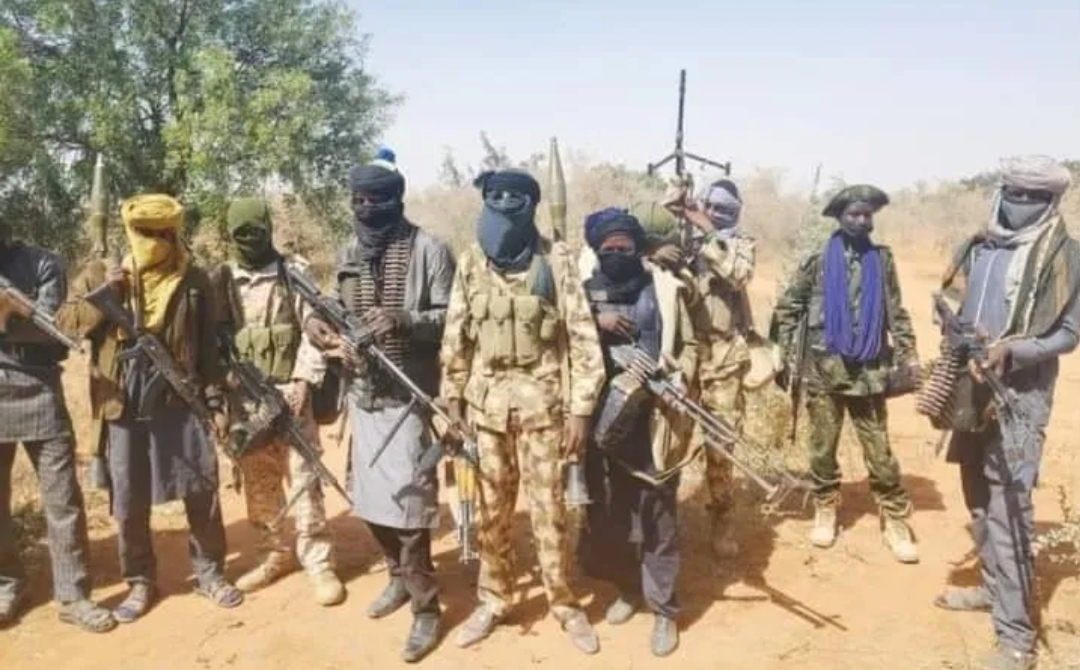
Insecurity and terrorism
By: Dennis Wendo
Worth Noting:
- In the last meeting, African Union (AU) leaders in Addis Ababa on a sideline Mini-Summit on Peace and Security in the Eastern Region of DRC at their annual meeting in Addis Ababa have termed armed conflict, violence, terrorism and food crisis as critical challenges affecting the region.
- Kenya is currently on high-security alert. Notably since January 2023, the United States has twice issued security alerts warning its citizens and Kenyans to be more vigilant on possibilities of terror attacks. The French, German and Dutch embassies have equally done so. They have all warned their nationals of a “real risk” of places frequented by foreigners, as targets for terror attacks.
Insecurity and threats of terrorism is a global distress and Kenya remains a victim right from attacks and bombings of, 1980 Norfolk Hotel, 1998 United States embassy, 2002 Kikambala Hotel, 2013 Westgate Mall, 2014 Mpeketoni , 2015 Garissa attack, 2019 Nairobi DusitD2 complex and to the current increasing reports over Improvised Explosive Device(IED) attacks in the northern parts of Kenya.
Within and out of the region, the attacks have been associated with terror- groups, with insurgencies like Al-Shabaab, Al-Qaeda, Al- Fatar, ISIL and Boko Haram claiming responsibility for the majority of the attacks.
In the last meeting, African Union (AU) leaders in Addis Ababa on a sideline Mini-Summit on Peace and Security in the Eastern Region of DRC at their annual meeting in Addis Ababa have termed armed conflict, violence, terrorism and food crisis as critical challenges affecting the region.
Kenya is currently on high-security alert. Notably since January 2023, the United States has twice issued security alerts warning its citizens and Kenyans to be more vigilant on possibilities of terror attacks. The French, German and Dutch embassies have equally done so. They have all warned their nationals of a “real risk” of places frequented by foreigners, as targets for terror attacks.
In a recent report released by, Centre for Human Rights and Policy Studies (CHRIPS), there was an increase in terror attacks in Kenya from 51 in 2021 to 77 cases in 2022.
The Government needs to champion the Whole Society Approach in addressing insecurity and terrorism where communities, local civil society organizations and local security apparatus work together to root out militants living within the community and making it easy to share information.
State agencies and key players need to move away from a hard-based approach in accepting voluntary radicalized and violent extremist returnees. At more than 15 per cent, youth join groups more for economic than religious reasons. Those joining for radical reasons tend to have atrocities with the other religious groups, the government or history. They may have grievances with the society and are bitter about something. They see the world as unjust to them.
The impunity that characterizes the administrative life of the society makes them hostile to public and private institutions. Streamlining access to opportunities is a governance and policy issue worth considering and enforcing.
The ongoing investments in infrastructure projects by the national and county governments are fairly absorbing many unemployed youth. The National Youth Service (NYS) projects are quite visible in most parts of the country and are among those that benefit many young people.
All governments have an obligation to embody international human rights law into their domestic legislation, but many have failed to do this adequately. The human-rights approach encourages social-dialogue with the rights to empower citizens, state and non- state actors as well as strengthening the capacity of duty bearers without causing collateral damages. It focuses on participation, accountability, non-discrimination and equality, empowerment and legal structures in design for a win-win situation.
Let the Government magnify its efforts and move with speed to tame the rising insecurity, the insurgency of the militia groups and the upscale of illegal firearms in circulation. By and large let us move away from politicizing state security agencies. Governments have national security structures with reporting mechanisms from grassroots to apex. Endeavoring to establish parallel systems through “hand-outs” and “tokenism” to the youth is toxic and a grim yardstick.
The contemporary multi-sectoral attempts in fighting banditry, prevention and countering radicalization and violent extremism with respect to human rights by state security agencies, office of Director Public Prosecutions(ODPP), National Counter Terrorism Center(NCTC) and few civil societies is estimable and deserves brimful support from social partners alike. Their approach emphasizes the inclusivity of public participation for a seamless and soft-approach to ensure access to justice, adherence to human rights procedures and social-security to actors.
Post election tension is first bulging with divisive ethnicity and hatred taking shape. This is an unhealthy threat to local and external potential investors.
The call for national unity and cohesion is a collective culpability and should not be a bully of a few in the society. Electoral related challenges should be addressed soberly devoid of ultimatums and predetermined agenda and projectories . The sponsors of militia groups and actual perpetrators of socio-economic and political hooliganism should be held accountable to avert the extremes. Kenyans should not be gullible and partakers of malpractices at the dangle of a carrot but be more enlightened to embrace and respect constitutional offices. The sad effects of the disputed 2007 general election and its subsequent post-election crisis which resulted in huge social-economic and political setbacks should not be comfortably obliterated.
Leaders should tread carefully and avoid utterances that can spontaneously sow seeds of division on religious, tribal, race and class lines. Faith-based organizations and central stakeholders such as the Media, NCIC, Political parties, Unions, Associations, civil societies, and youth- groups should take a lead role in positively fostering unity and cohesion for the stability of the nation.
The fight against insecurity, violent extremism and radicalization needs collective efforts. This is a governance problem that requires a governance solution.
Dennis Wendo
Founder- Integrated Development Network
Email: dambehi@gmail.com
Similar Posts by The Mt Kenya Times:
- Educational empowerment: A non-negotiable investment in Kenya’s future
- What aging parents want their adult children to understand
- Zimbabwe to roll out emotional learning programme to all 72 districts
- HONOURING THE PAST, POSITIONING FOR THE FUTURE
- Youth urged: Turn digital skills into income
About the Author