Ruto Housing Plan: Critics Were Peddling Propaganda And Half-Truth To Kill This Noble Idea
 The Mt Kenya Times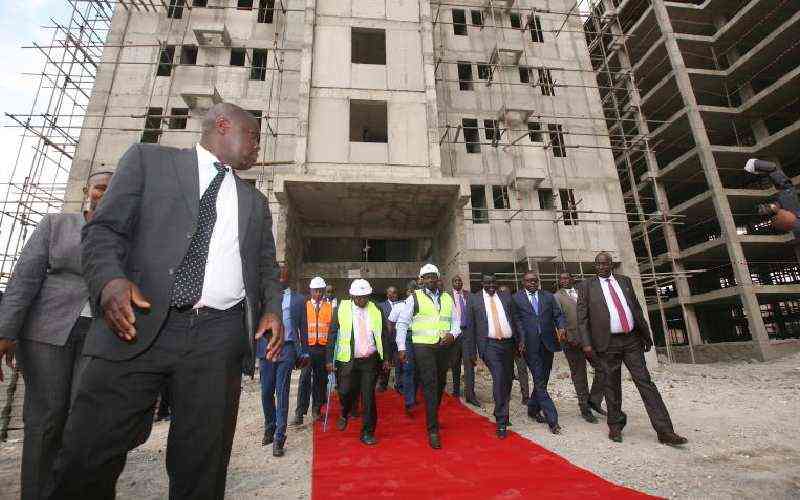
President Ruto's grand affordable housing plan
By: Joseph Mutua Ndonga
Worth Noting:
- The Bible says that God blesses the hand of a cheerful giver who contributes towards elevating the living standards of the poor and down-trodden.
- The Affordable Housing Plan is one of the proposals contained in the controversial Finance Bill 2023.
- The ‘Hustlers’ (those without a payslip) were excluded from paying the housing levy.
- The process starts with the drafting of the Bill which is then presented to the house for the first reading. No debate at this stage.
- First, the Bill has to be subjected to public participation. The relevant committees of house organize these forums and collect and collate the views of the people.
I have been listening to President William Ruto’s tone while responding to the critics of his Affordable Housing Plan.
Contrary to the impression they created, Dr Ruto has been using the persuasive language to convince millions of the ‘hustlers’ that he means well for them.
During the campaigns, I promised you that I will work very hard to address the two main challenges: joblessness and lack of decent houses.
This mega infrastructure project resonates very well. It is set to create one million jobs every year.
Besides, 250,000 affordable housing units will be constructed within the same period.
When he visited Busia County a few days ago, he told the ‘hustlers’.
The housing project is being opposed by those employed who received a payslip every month.
They do not want 3 per cent to be deducted from their salaries.
The same case applies to the top leaders of the Azimio La Umoja One Kenya Opposition coalition.
Each one pockets a pension of more than 1 million from the National Treasury every month.
These are the same personalities who say they love you and were ready to die for you. Really, do they?
When they oppose a deduction of 3 percent from their pays lips, what message are they sending?
They don’t care. They want you to continue being poor and to live in a state of desperation and hopelessness.
As a born-again Christian, I agree with the President.
The Bible says that God blesses the hand of a cheerful giver who contributes towards elevating the living standards of the poor and down-trodden.
The Affordable Housing Plan is one of the proposals contained in the controversial Finance Bill 2023.
The ‘Hustlers’ (those without a payslip) were excluded from paying the housing levy.
The real estate developers are contracted to build these houses. Once completed, the government will buy them.
When selling the units, the state will give priority to the hustlers.
President Ruto has been reiterating. This will be a key milestone. For the first time in our history, the sons and daughters of the hustlers will own decent houses.
This will elevate them to the class of the wealthier and rich families.
For the critics, the push to derail Ruto plan is unstoppable.
Listen to this. President Ruto’s position is that the deductions are compulsory. He is therefore imposing this plan down the throat of Kenyans.
I disagree. The president has no legal mandate to pass this proposal into law. This power is exercised by parliament.
The members will debate and thereafter each vote either in favor or against each of the clauses.
The process starts with the drafting of the Bill which is then presented to the house for the first reading. No debate at this stage.
First, the Bill has to be subjected to public participation. The relevant committees of house organize these forums and collect and collate the views of the people.
The Finance Bill 2023 has gone through the process.
Yes, I agree that Parliament is dominated by members of the ruling Kenya Kwanza alliance.
But I want to ask the critics. Are you suggesting the members did not understand their job? They were nothing but just a conveyor belt for the executive.
This is tantamount to insulting the intelligence of Kenyans. You are telling them they did not use their brains when they elected them.
For starters, the government is made up of three main arms: parliament, executive and Judiciary.
Though each is independent, the law requires them to always embrace the principle of interdependence and complementarity.
Majorly, the role of a Member of Parliament is three pronged: Legislation, oversight and representation.
Regarding the Finance Bill 2023, one may ask. The President is drumming support for it. Does this amount to overstepping his legal mandate? No, he is not.
The law allows him to support the proposals, particularly those originating from the cabinet. This is because he is the head of the executive and chairs the cabinet meetings.
However, parliament has the final say. Members are at liberty to approve the proposals or reject some of the proposals, if not all.
Just like the President, the opposition leaders were entitled to discuss the Bill and come up with their position.
They will whip up their member to support this position when the Bill is tabled in parliament.
The Azimio La Umoja One Kenya Coalition leader Raila Odinga is opposed to it. His main point of concern is the proposal to deduct 3 percent from the basic salaries of the workers.
I would have expected him to be the last person to oppose this proposal? During the campaigns, the house plan proposal stood out as one of his main election pledges.
If elected President, I will rollout a massive affordable housing plan. Majority of our people, who migrated to urban centers, were living in poor and highly deplorable conditions in slums. ‘My government’ will build decent houses for them. This is a commitment I have given to you.
Raila would add: A huge chunk of money to build these houses will come from our pockets. He would single out those employed, civil servants, state officers and other workers. The Government will deduct 1.5 per cent from the payslip of each.
Yes, president Ruto has doubled the deductions to 3 per cent. This is well understood given the prevailing economic situation. If Raila won, many believe he could have done the same thing.
Joseph Mutua Ndonga is a writer and political analyst based in Nairobi
Similar Posts by The Mt Kenya Times:
- Diaspora Times Global Oct 17 – Oct 23, 2026
- Is social media a blessing or a curse for university students?
- Light at last: How electricity is reshaping Nandi and Uasin Gishu
- The triple squeeze: how EPRA’s fuel price hike is reshaping the survival equation for the common mwananchi
- Zelenskyy accuses Trump of rewarding Putin as Pope pleads for peace from a hospital bed
About the Author