Slogans are not enough: Kenya needs real answers, not catchy phrases
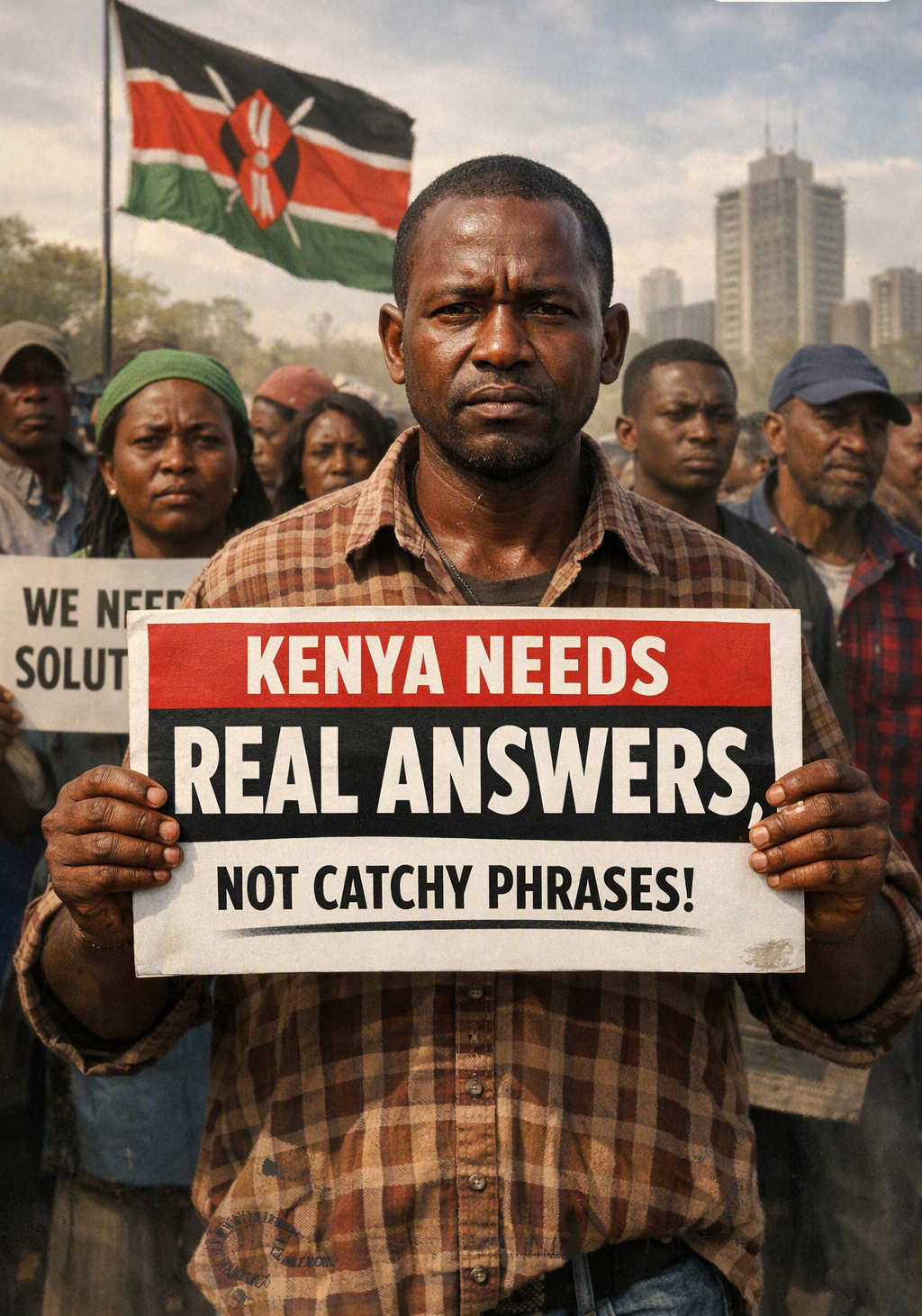
As 2027 approaches, voters risk repeating the same mistake that brought the country to its knees
By Daniel Maina
There is a feeling, shared quietly across kitchens and loudly on social media, that Kenya needs a change of leadership in the next general election. From Mombasa to Kisumu, from Nairobi’s estates to the highlands of central Kenya, the discontent with the current administration runs deep — cutting across the executive, the legislature and every tier of government in between.
The old French saying — the more things change, the more they stay the same — has rarely felt more apt. Kenyans walking into the 2027 election cycle are doing so carrying the full weight of 2022’s regrets. That year’s choices left the country in a fragile state, with the economy, health and education sectors struggling to function and, at times, appearing to teeter on the edge of collapse.
In 2022, the contest was not really about ideas. It was a tribal grudge match dressed in political clothing — a bitter tug of war between those who called themselves hustlers and those they labelled dynasties. The Kenya Kwanza coalition, powered by a narrative that spoke directly to the hardships of ordinary Kenyans, won convincingly. The message was resonant. The delivery, as it turned out, was another matter entirely.
Less than a year after that victory, the very people who had voted with such passion were in the streets, furious at the government they had swept into power. Two years on, protesters stormed Parliament, accusing legislators of abandoning the electorate and becoming instruments of executive convenience. The charge was simple and damning: those elected to serve the people had chosen to serve themselves and their political patrons.
But in a frank assessment, the rot set in much earlier — in the campaign period itself. The economy was already struggling in 2022, yet it barely featured in the political debate. Instead, Kenyans were fed a fictional economic model that sounded compelling but which few paused to interrogate. Nobody pressed the candidates on how they intended to fix what was broken. The political conversation revolved around slogans — hustler versus dynasty, “leave and go”, “mama mboga government”, wheelbarrows, the bottom-up model — while the real, hard questions went unasked. When it came to electing members of Parliament, voters rewarded candidates not for their capacity to legislate but for their willingness to insult the opposition. The results of that election produced the Parliament Kenyans have today.
Now, ahead of 2027, the pattern is repeating. The slogans have changed but the logic has not. “We want them”, “we will get them”, “Kasongo must go” — these phrases generate heat and fill rallies, but they do not explain how the economy will be turned around, how hospitals will be properly staffed and stocked, how schools will be adequately funded, or how the rising tide of armed crime and gang violence threatening communities across the country will be brought under control.
President William Ruto has drawn criticism for suggesting that opposition figures lack a credible agenda. The charge was seen by some as contemptuous. Yet, setting tone and delivery aside, the underlying point carries some merit. Demanding that a government departs without articulating what comes next is not an alternative — it is simply an emotion.
The inconsistency in how some of those opposition figures are judged adds to the confusion. Two legislators who both ignored the cries of young Kenyans during the 2024 protests have been treated entirely differently by public opinion — one celebrated as a patriot, the other condemned as a traitor — solely on the basis of whether they support or oppose the current government. The principle that should matter most, accountability to constituents, barely features in the verdict.
Kenya’s independence was won around a promise to defeat three enemies: poverty, ignorance and disease. Sixty years later, those same enemies have not been defeated — they have multiplied, joined now by corruption and an economy under pressure from the very political class that was elected to dismantle the old failures. The original promise remains undelivered.
The 2027 election offers a genuine opportunity to break that cycle — but only if voters decide to hold candidates to a higher standard. A compelling slogan is not a manifesto. Charisma is not competence. The ability to draw a crowd is not the same as the ability to manage a budget, pass meaningful legislation or deliver services to people who need them. Kenyans deserve representatives who can do all of those things — and they have every right to insist on it.
If the question that decides the next election is still “who do you hate most?” rather than “what is your plan?”, the answer will arrive within months of the results: more protests, more “must go” campaigns, more grief over a health system that cannot cope and an economy that cannot breathe. The pattern will simply begin again.
The ballot is the most powerful tool Kenyans hold. The question is whether they will use it to demand something different — or settle, once more, for a slogan.
Similar Posts by The Mt Kenya Times:
- SHA: Kenya’s medical monster that citizens were told to embrace
- The 500-shilling robbery: How you were robbed without losing your wallet
- Purpose, leadership & community impact — turning a crown into a platform for meaningful change
- Beyond the planting: Kenya’s push to keep trees alive
- The loyalty code: Why parents stay in some schools and leave others
About the Author