The loyalty code: Why parents stay in some schools and leave others
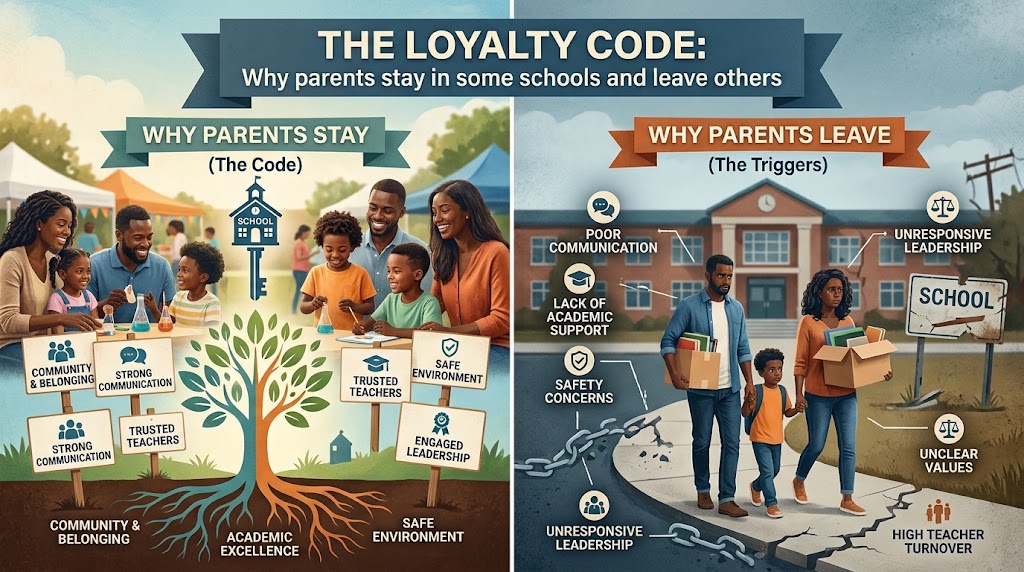
Schools that keep families are not always the best funded — they are the ones that make every child feel known
By Ashford Kimani
In today’s fiercely competitive education landscape, schools can no longer rely on examination results alone to hold families. Parents have grown more informed, more discerning and more deliberate about where they place their children. A well-maintained building, a glossy brochure or a well-known school name is no longer enough to guarantee loyalty. Families stay where they feel their child is known, valued, protected and progressing.
Many schools pour resources into attracting new admissions while neglecting the families already in their care. Yet loyal parents are the backbone of every stable institution. They become ambassadors, defenders and long-term partners who cost far less to retain than new families cost to recruit. A school with a strong base of satisfied parents spends less chasing enrolment because those families naturally attract others through honest referrals and earned reputation.
Loyalty is not built overnight. It is cultivated through daily interactions, consistent communication, genuine trust and the kind of relationships that go beyond the classroom gate.
Communication sits at the heart of it. Parents grow anxious when schools go quiet. They do not want to hear from a teacher only when fees are overdue or a child has misbehaved. Strong schools keep families informed before they even think to ask. Whether it concerns academic progress, behavioural patterns, upcoming activities or policy changes, proactive communication signals that the school is organised, honest and in control.
Honesty during difficult moments matters equally. Problems arise in every school — children get injured, conflicts emerge, systems fail. Parents are far more forgiving of mistakes than they are of dishonesty. When a school openly acknowledges what went wrong and explains the steps being taken to correct it, trust deepens rather than erodes. Cover-ups and defensive posturing destroy credibility quickly and, in many cases, irreversibly.
Accessibility is another pillar. Parents want to feel they can reach their child’s teacher without navigating unnecessary bureaucracy. Schools that build workable communication channels between home and classroom create genuine partnerships. Education works best when family and school move in the same direction. When parents feel shut out, they begin to withdraw emotionally — long before they formally withdraw their children.
Modern parents expect more than end-term reports. They want to understand how their child is improving week to week, where weaknesses lie and what support is being put in place. Schools that identify struggling learners early and work alongside parents to help them demonstrate both care and professional competence.
Emotional connection runs deeper than many school leaders acknowledge. Parents are drawn to environments where their children are celebrated. Recognition during assemblies, mentions in newsletters, prize-giving ceremonies, sports days and social media posts create a sense of pride that money cannot manufacture. Every parent wants to see their child shine somewhere, in front of someone who matters.
Small gestures carry surprising weight. Greeting a parent by name, remembering a family detail, sending a birthday message, listening respectfully to a concern — these seemingly minor acts build a sense of belonging that outlasts any infrastructure upgrade. Some families remain loyal not because the school is perfect, but simply because they feel respected.
Respect becomes especially critical when complaints arise. Nothing damages a relationship faster than dismissing a parent’s concern or embarrassing them publicly. Even the most difficult parents want to be heard with dignity. Administrators who understand this know that conflict management is not a distraction from educational leadership — it is part of it.
The physical environment shapes confidence, too. Parents read cleanliness, order and safety as indicators of how children are being treated day to day. A well-maintained compound, a welcoming reception area, organised classrooms and professional staff communicate institutional seriousness. First impressions often determine whether a family feels secure leaving a child at the gate.
School culture shapes loyalty just as powerfully. Events that parents genuinely look forward to — family days, cultural festivals, academic exhibitions, graduation ceremonies, talent showcases — create shared memories that deepen emotional attachment. Schools that build traditions build identity, and identity is hard to walk away from.
In many cases, parents stay because of people rather than infrastructure. A teacher who genuinely understands a child — their strengths, their fears, their particular way of seeing the world — can become the single reason an entire family remains loyal for years. Parents want to know their children are seen as individuals, not as admission numbers.
Safety and discipline are non-negotiable. Families need confidence that their children are physically and emotionally secure. Delayed responses to bullying or serious behavioural incidents erode trust rapidly, and that trust rarely fully recovers.
Where feeding programmes operate, quality matters more than many administrators realise. Parents judge institutional standards through every detail, including the food placed in front of their children. Equally, timely communication when a child falls ill or is injured is not a courtesy — it is a basic expectation. Delayed information breeds suspicion and anger in equal measure.
Financial transparency is often overlooked until it becomes a crisis. Parents want to see value in what they pay. Hidden charges, surprise levies and unexplained demands create lasting resentment. Schools that offer flexible payment options during periods of economic hardship frequently earn a loyalty that straightforward administration alone rarely achieves.
Some institutions strengthen retention further through deliberate gestures — sibling discounts, recognition of founding families, scholarships for long-serving households. These signals tell families they are partners, not merely clients.
Satisfied parents are also the most effective marketers a school can have. Testimonials from families who genuinely believe in the institution carry far more weight than any advertisement. At the same time, schools should pay attention when families choose to leave. Exit conversations surface weaknesses that internal reviews often miss, and that feedback, acted upon honestly, can prevent further departures.
Alumni relations matter beyond the immediate school community. Former students and their parents become long-term voices whose stories shape public perception for decades.
Ultimately, parental loyalty cannot be bought through marketing campaigns. It is earned through consistency, empathy, professionalism and the daily practice of genuine care. Families stay where their children are growing — academically, emotionally, socially and morally. They stay where school leaders are visible and approachable, and where every child is treated as though their welfare is the point of the whole enterprise.
The most enduring schools are not always the most expensive. They are the ones where families feel genuinely seen, heard and valued — and where every child, without exception, matters.
Similar Posts by The Mt Kenya Times:
- Purpose, leadership & community impact — turning a crown into a platform for meaningful change
- Beyond the planting: Kenya’s push to keep trees alive
- Casual degrees, casual minds: Kenya’s higher education as a precarious gig economy
- Mt Kenya Times ePAPER October 6, 2026
- Maraga takes anti-graft pledge to diaspora as US lobby group backs his 2027 bid
About the Author