Tree seedlings
BY Oduor Rosequillet Nabwire
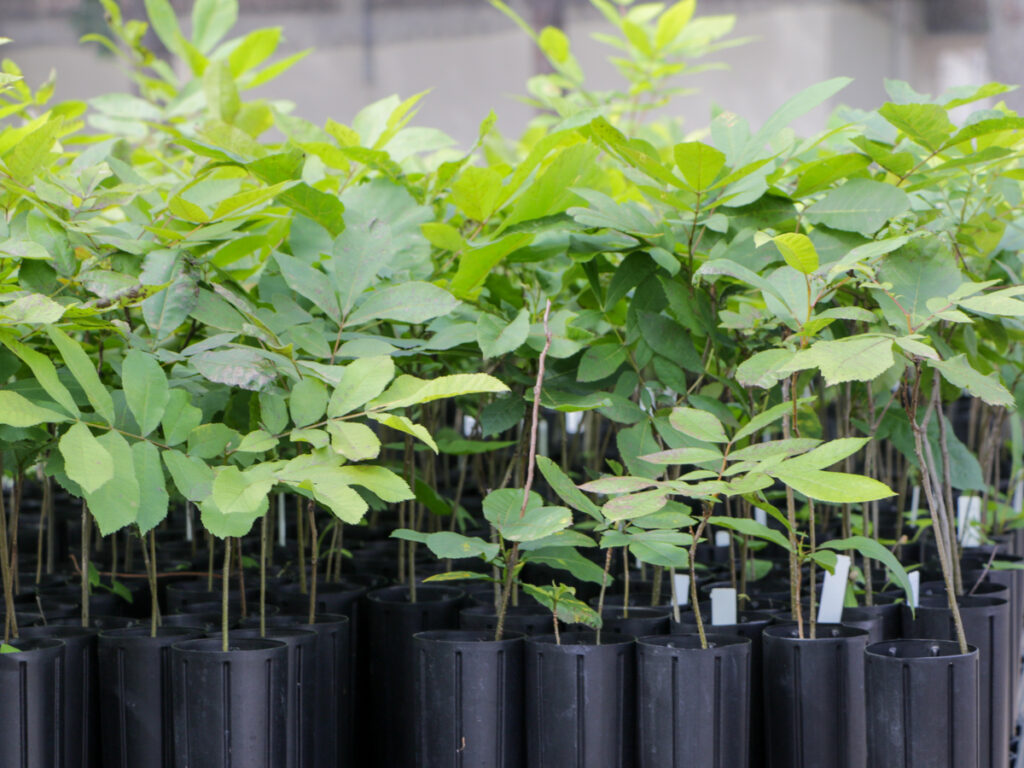
When a prolonged dry spell swept through Jwangre village in Ugenya, Siaya County, Gorety Onyango watched 100 of the 280 indigenous tree seedlings she had planted die.
The 43-year-old farmer had tended the seedlings through their most vulnerable stage, hoping they would become part of her farm and improve its environment. Instead, more than a third were lost to the weather.
Only 180 survived.
For the seedlings that survived, Onyango received KSh31,000 in incentives through the My Farm Trees programme, which rewards farmers for keeping seedlings alive. She also replaced eucalyptus with indigenous species after noticing their effects on her soil and crops. She says the change helped the soil retain more moisture, while her maize and sukuma wiki stopped withering.
For Onyango, planting is only the beginning. The real value comes with seeing a young tree endure the seasons and become part of the landscape.
Gorety’s experience points to a question Kenya is now confronting as it prepares for National Mazingira Day: what becomes of the millions of seedlings once the planting ceremonies are over?
That question sits at the centre of this year’s Mazingira Week, which began on October 5 and will culminate in National Mazingira Day and National Tree Growing Day on October 10, 2026, in Trans Nzoia County, under the theme “Our Environment, Our Responsibility: Collective Action for Tree Growing and Environmental Stewardship.”
For Government Spokesperson Charles Owino, bringing environmental action into schools, communities and public spaces is central to what the celebrations are meant to achieve.
“This year’s Mazingira Day is not simply a day on the calendar; it is a national call to action for environmental conservation,” he said during Monday’s joint media briefing.
Owino then made the appeal more personal: “Every Kenyan must take responsibility for growing and protecting trees.”
That message will be put into practice on Saturday, when the Government targets 17.24 million trees through seven planting streams. The Presidential Green Challenge will cover 79 sites in 31 counties, while 77,252 village elders are expected to lead village-level planting. Schools, universities, the Kenya Prisons Service, the National Youth Service and other institutions will also take part.
Beyond the planting sites, the responsibility for those trees will fall to the people expected to nurture them.
Jeniffer Kithure has spent years helping farmers grow and care for trees. After joining the Trees for the Future programme in 2005, she trained in nursery preparation and management before sharing that knowledge with other farmers. She has also encouraged the planting of indigenous trees along rivers to help curb erosion.
Her work draws attention to what can easily be overlooked once the planting photographs are taken: selecting species suited to a particular landscape, caring for young trees and protecting them through difficult seasons.
Those questions of where and how trees are planted also matter to forestry researchers.
Dr Robert Nyambati, a principal research scientist at the Kenya Forestry Research Institute (KEFRI), has been involved in efforts to improve tree establishment, including matching species to ecological conditions. KEFRI’s work also considers seedling quality, site preparation, watering and other practices that influence how young trees cope once they leave the nursery.
A species that performs well in one landscape may struggle in another, while drought, grazing, fire and inadequate care can undo months of effort.
These challenges have also prompted efforts to find practical ways of keeping trees alive beyond the planting stage.
In Nairobi, Francis Mkunga is part of a programme focused on tree survival.
A member of Simplicity Youth Group, Mkunga participates in Miti Mitaani, where groups are paid to plant trees and receive continued payments for those that survive.
“We planted them and are watering them,” he says.
The initiative has reported more than 28,000 trees planted, with an average survival rate of 97 per cent. By linking payment to continued survival, the programme gives participants an incentive to return to the trees long after planting day.
Forestry Principal Secretary Gitonga Mugambi has said the success of the 15 billion Tree Growing Programme should be measured not only by the number of trees planted, but also by their survival and growth. The State Department is using JazaMiti to strengthen tracking of tree-growing activities across the country.
During Monday’s joint media briefing, Environment, Climate Change and Forestry Cabinet Secretary Dr Deborah Barasa put it plainly:
“Our input is planting trees. But let us remember that our outcome is really survival.”
Barasa said restoration would extend beyond individual planting sites to forests, wetlands, rivers, lakes and degraded land, with greater emphasis on agroforestry, community participation, fencing and aerial seeding in difficult-to-reach areas.
The Government says about 2.2 billion trees have so far been planted towards the national target of 15 billion by 2032.
But a national figure cannot show what happens to a seedling once it meets the realities of a particular farm, village or landscape.
That is where the success of tree growing is ultimately decided: in what happens after a seedling leaves the nursery, from watering and protection to replacing those lost to drought, fire or grazing.
As Kenya works towards its 15 billion tree target, the task cannot be left to government programmes and one-off planting exercises. Schools, farmers, businesses, community groups and individuals can each contribute by growing trees suited to their surroundings and giving them the conditions they need to mature.
Beyond increasing forest cover, healthy trees help protect soils and water sources, support biodiversity and strengthen communities against the effects of climate change.
The ambition, then, is not simply to put more trees into the ground, but to make growing and protecting them a shared responsibility that lasts for years to come.
Similar Posts by The Mt Kenya Times:
- The 500-shilling robbery: How you were robbed without losing your wallet
- Slogans are not enough: Kenya needs real answers, not catchy phrases
- Purpose, leadership & community impact — turning a crown into a platform for meaningful change
- The loyalty code: Why parents stay in some schools and leave others
- Casual degrees, casual minds: Kenya’s higher education as a precarious gig economy
About the Author