Kenya Meat Commission Making Strides Towards Commercial Viability, MPs Told
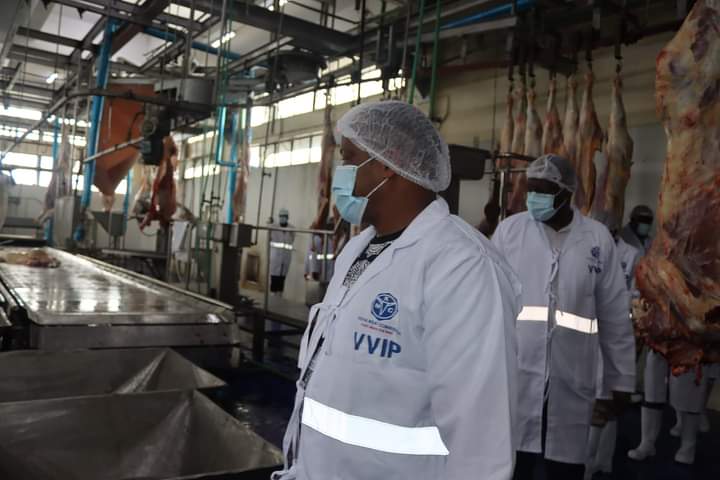
Some of the MPs at the KMC facility in Kibarani, Mombasa

By PSCU
Worth Noting:
- Notably, KMC revealed plans to introduce sausages to Kenyan supermarkets, expanding its product range.
- “KMC is a fully integrated meat processor whose strength lies in the unrivalled efficiency of its meat processing plants along with its ability to process high volumes of quality meat in line with consumer tastes and preferences,” added Brigadier J.N. Githaiga.
- To support these initiatives, KMC has been allocated Sh200 million in funds.
- The funds will be utilized for the rehabilitation of the canning line, the installation of a new borehole, the establishment of a water recycling plant, and the development of renewable energy sources such as solar and biogas production.
The Kenya Meat Commission (KMC) is making strides that will eventually see it operate with financial reliance from the government.
The firm that is mandated to handle livestock for slaughter was revived a few years ago and is progressing on well, a Parliamentary committee was informed over the weekend.
During an inspection visit to the KMC facility in Kibarani, Mombasa, the National Assembly Committee on Agriculture and Livestock chaired Dr. John Mutunga met with Managing Commissioner, Brigadier J.N. Githaiga
The committee, tasked with budget oversight, sought detailed information about the state corporation’s operations, assets and finances.
Members of the committee toured the rehabilitated meat processing plant which handles 250 large stock and 500 small stock per day, the chilling facilities which have a capacity of 1750 carcasses operating at temperatures of between 0 – 2°C.
During the inspection, the legislators were taken through the strategic plan of KMC by the current Managing Commissioner, J.N. Githaiga, who showcased the company’s ongoing efforts to improve its operations.
Notably, KMC revealed plans to introduce sausages to Kenyan supermarkets, expanding its product range.
“KMC is a fully integrated meat processor whose strength lies in the unrivalled efficiency of its meat processing plants along with its ability to process high volumes of quality meat in line with consumer tastes and preferences,” added Brigadier J.N. Githaiga.
To support these initiatives, KMC has been allocated Sh200 million in funds.
The funds will be utilized for the rehabilitation of the canning line, the installation of a new borehole, the establishment of a water recycling plant, and the development of renewable energy sources such as solar and biogas production.
Additionally, KMC aims to obtain ISO certification to enhance its credibility and market competitiveness.
Lawmakers were further informed that KMC has been supplying corned beef to various Security agencies, Government Institutions, County Governments, Financial Institutions, Embassies & Foreign Nations
and the General. Furthermore, corned beef has been included as part of the strategic relief provided to drought-stricken regions.
“How can we make KMC commercially viable? What progress have you made in reducing reliance on the Exchequer?” asked Monica Marubu, MP Lamu County.
In his response, Brigadier Githiaiga informed the committee members that KMC is gradually reducing its reliance on government funding, with 70% of its resources now being internally generated. The company plans to further expand its revenue sources through exports, franchise shops, and partnerships with the hotel and tourism industry.
Despite its positive trajectory, KMC faces several challenges that need to be addressed for sustained commercial viability.
The company grapples with aged machinery and equipment, which affects its productivity and efficiency. Additionally, drought conditions have impacted the supply of animals for processing, while delayed payments from government agencies have led to cash flow challenges.
Land disputes and limitations in international certification have hindered the exploration of untapped export markets.
During its revival, KMC inherited 74 court cases, but significant progress has been made in resolving them.
Currently, only 8 cases remain pending, thanks to the allocation of exchequer funds, which have helped clear financial debts and litigation.
As the oldest and most experienced meat processor in Kenya and the larger East African region, KMC possesses immense potential to contribute to the country’s economy.
With strategic investments, improved operations, and a focus on quality products, the company aims to become commercially viable and expand its presence in both domestic and international markets.
Members of the National Assembly Committee Agriculture and Livestock pledged to continue to monitor KMC’s progress and provide necessary support to overcome the challenges it faces.
Members present during the inspection visit included Dr. John Mutunga, Brighton Yegon, Pamela Njoki Njeru, Ferdinand Wanyonyi, Jared Okello, Monica Marubu, and Kibagendi Osero. The team was also accompanied by the area Member of Parliament Bady Twalib.
Similar Posts by The Mt Kenya Times:
- Mt Kenya Times ePAPER October 24-25, 2026
- Muturi calls on IEBC to keep election technology tender clean and on schedule
- Ruto meets UAE minister in push to deepen trade ties
- Gideon Moi breaks silence on Ruto fallout, cites broken promises
- The doctor who refused to abandon a sick Uganda
About the Author