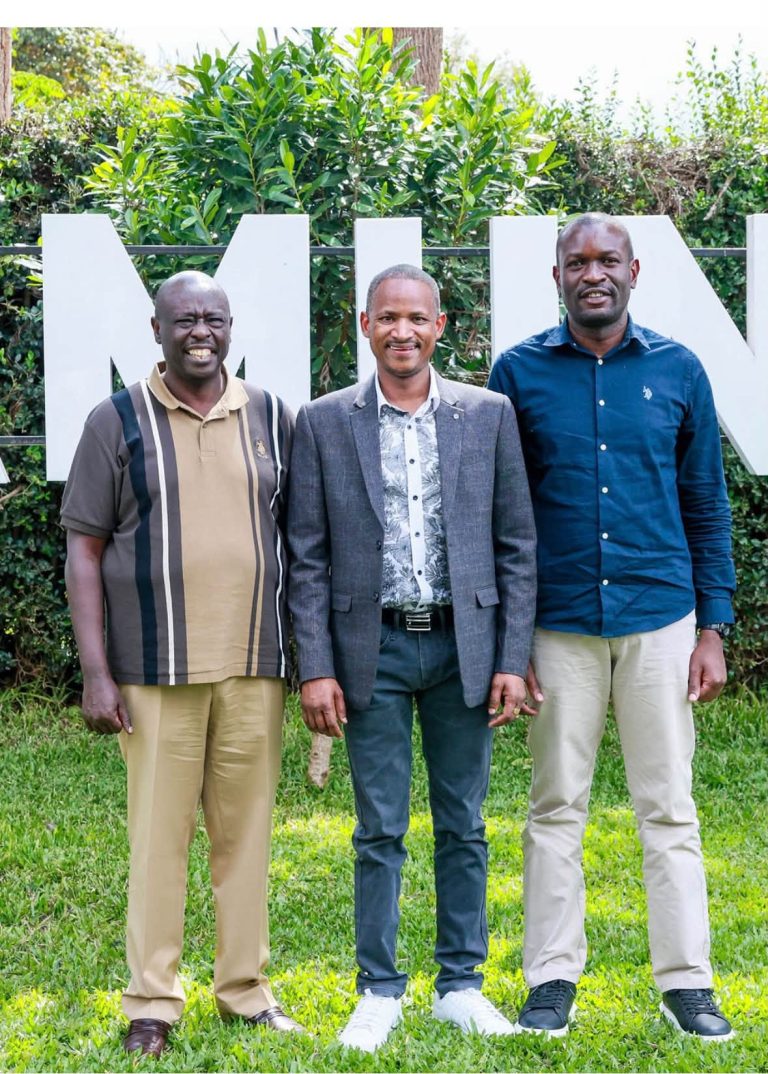
Mwea MP Mary Maingi
By: John Kariuki
Mwea is widely recognized for its thriving rice farming industry, which plays a vital role in our local economy.
During her first year in office, Mwea MP Mary Maingi key objectives have been to secure a stable market for the rice farmers, ensure they receive their payments, subsidized fertilizer, and extension of rice canals so that water can reach more farmers. This will result in increased rice production in Mwea.
She notes,
“I remain committed to providing steadfast support to my farmers, ensuring they have the necessary resources and assistance for their crops to thrive.”
Mwea irrigation scheme has a capacity of rice production of 105 metric tonnes
Farmer’s empowerment in the Mwea irrigation scheme has been through capacity buildings. Farmers are trained on new farming methods like WSC (WATER SAVING CULTURE) through a process known as intermittent irrigation.
They are also trained on rice planting and weeding which enhances rice production.
Farmers are also taken to other irrigation schemes in the country for benchmarking purposes.
On diversification farmers are trained on alternating crops like green grams even though this has not picked. As of now rice farmers go for Raton crop and second crop farming. Ratoon crop is that crop that germinate after the first rice have been harvested.
Further on the empowerment /farmers have been able to receive loan facilities from
banks within the constituency and the leading one being their own LAINISHA SACCO
The largest co-operative society in the MWEA IRRIGATION SCHEME i.e. MRGM has been providing farmers with credit facilities of farm inputs ,namely fertilizers, Herbicides
,Insecticides ,Rotavation Services and Harvesting services
Value addition to paddy rice has of late taken shape in the irrigation scheme .There has been a lot of mechanization in the milling of rice and packaging it.
By products of rice have been added maximum value to give high returns to the rice
farmer .The rice stalk has been packaged into Hay .The by-products of rice after milling i.e. Bran, Broken rice and Coarse are packed nicely and also yields great returns.
Rice husk is also added value and produces two important products namely: a form of Charcoal called Briquette and cardboard .The later has not yet taken off in the scheme but its production is in the pipeline.
Imports come to bridge the huge gap left by the low rice production in Kenya .Kenya
produces less than 20% of the local demand and it may take ages before this gap is bridged.
Similar Posts by The Mt Kenya Times:
- Mt Kenya Times ePAPER October 21, 2026
- Kenya confirms ninth Ebola case as outbreak remains contained within single cluster
- Musk pledges SpaceX share for every American child in 2027
- Abiy calls for deeper Kenya-Ethiopia trade partnership at Eldoret ceremony
- Kenya’s oil moment: Promise, responsibility and the long road from Turkana to market
About the Author