Enhance Awareness And Publicity On Recognition Of Prior Learning
 The Mt Kenya Times
Deputy President Rigathi Gachagua
By: Dennis Wendo
Worth Noting:
- Kenya has thousands of skilled workers with no academic credentials and they remain marginalized. RPL will bridge the skills mismatch and expand opportunities for job creation both at the local and international levels. It will facilitate transition from informality to formality by providing opportunities to Kenyan citizens across all socio-economic backgrounds to further education and improve their employability prospects.
- The initiative has the potential to reverse the tide of brain drain. Skilled individuals, who previously felt limited by their lack of formal qualifications, will be empowered to contribute their talents henceforth boosting the local economy and alleviate the shortage of skilled labour in various sectors, which is vital and necessary in this era of rapid industrial and technological revolution.
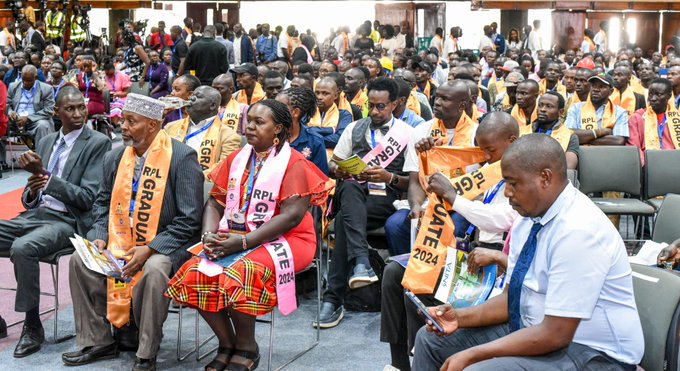
The Government’s approval of the Recognition of Prior Learning (RPL) Policy for implementation through cabinet in January and the subsequent launch in March 2024, marked a new advent in Kenya. The policy is visionary and promises to reshape the lives of the bulk of Kenyans by recognizing their skills and providing opportunities for them to further their professional career path.
Foremost, RPL is the process of identifying, assessing and certifying knowledge, skills and attitudes regardless of how, when or where learning transpired. It acknowledges skilled workers like gas and arc welders, cosmetologists, steel and scaff fixers, fire fighters, masons, plumbers, carpenters, mechanics, electricians among many other trade areas that have no formal education.
The policy provides room for skilled workers with no formal college certificate or university degree to get a chance to get recognition through assessment, certification and accreditation. It seeks to bridge the gap between formal education and hands-on experience henceforth opening doors for those with practical knowledge and skills acquired through experience or life achievements.
Embracing the policy is timely. It is bound to foster a more skilled and competent workforce and elevate the country’s economic and global competitiveness. RPL framework brings together Basic Education (BE), Technical Vocational Education and Training (TVET), University Education (UE), industrial training and lifelong learning to enable better coordination and harmonization of qualifications across the various sectors.
Kenya has thousands of skilled workers with no academic credentials and they remain marginalized. RPL will bridge the skills mismatch and expand opportunities for job creation both at the local and international levels. It will facilitate transition from informality to formality by providing opportunities to Kenyan citizens across all socio-economic backgrounds to further education and improve their employability prospects.
The initiative has the potential to reverse the tide of brain drain. Skilled individuals, who previously felt limited by their lack of formal qualifications, will be empowered to contribute their talents henceforth boosting the local economy and alleviate the shortage of skilled labour in various sectors, which is vital and necessary in this era of rapid industrial and technological revolution.
Let us be informed, its success is laboriously pegged on well-defined institutional roles and responsibilities for planning, implementing, monitoring and evaluating the execution processes.
At the moment the education sector is facing numerous challenges, with sectorial players and stakeholders apportioning criticism at each other. As such fairness, transparency and consistency is cardinal towards the success of the RPL framework.
Though the RPL voyage began in 2020, countless Kenyans are not privy to the development. There is a need for the Government through the ministry of education to boost the visibility of this noble initiative bound to be a game changer in the informal sector.
We are on the growth path towards achieving vision 2030 and human capital development remains a vital resource to fuel the economy. This can largely be achieved by accelerating integration of experiential learning. There is need for guidance and clear identification of RPL applicants, conducting a capacity assessment of existing institutions to gauge their ability and readiness to support RPL effectively as well as capacity building of RPL professionals to ensure they are adequately trained and equipped for their roles.
The aspect of RPL financing is crucial for its sustainability. Equitable cost-sharing plans should be determined and implemented. Inclusivity should be prioritized, with subsidies established for disadvantaged cadres.
Maintaining high quality standards within the RPL system is vital. There is a need to have in place a robust monitoring and evaluation system that will regularly review and improve processes and methods.
The National and County Governments in collaboration with social partners and agencies like ILO, FKE, Workers Associations and Unions, Base Titanium, Jua Kali Associations, Civil Society Organizations and media have a pivotal role in leading the awareness and publicity advocacy on RPL framework and its guidelines. Citizens need to be well informed about the process, its benefits, contact linkages, estimated costs, timeframe, eligibility requirements and assistance available.
Dennis Wendo
Integrated Development Network
Email: dambehi@gmail.com
Similar Posts by The Mt Kenya Times:
- Mt Kenya Times ePAPER October 17-18, 2026
- Ruto bets billions on Kerio Valley — with one eye on 2027
- Ruto’s health ministry kills Murang’a’s digital hospitals
- Kenya bets on Mount Kenya to drive a billion-shilling tourism revival
- Do you have a wealth vision? Or are you just working until you die?
About the Author