The Mt Kenya Times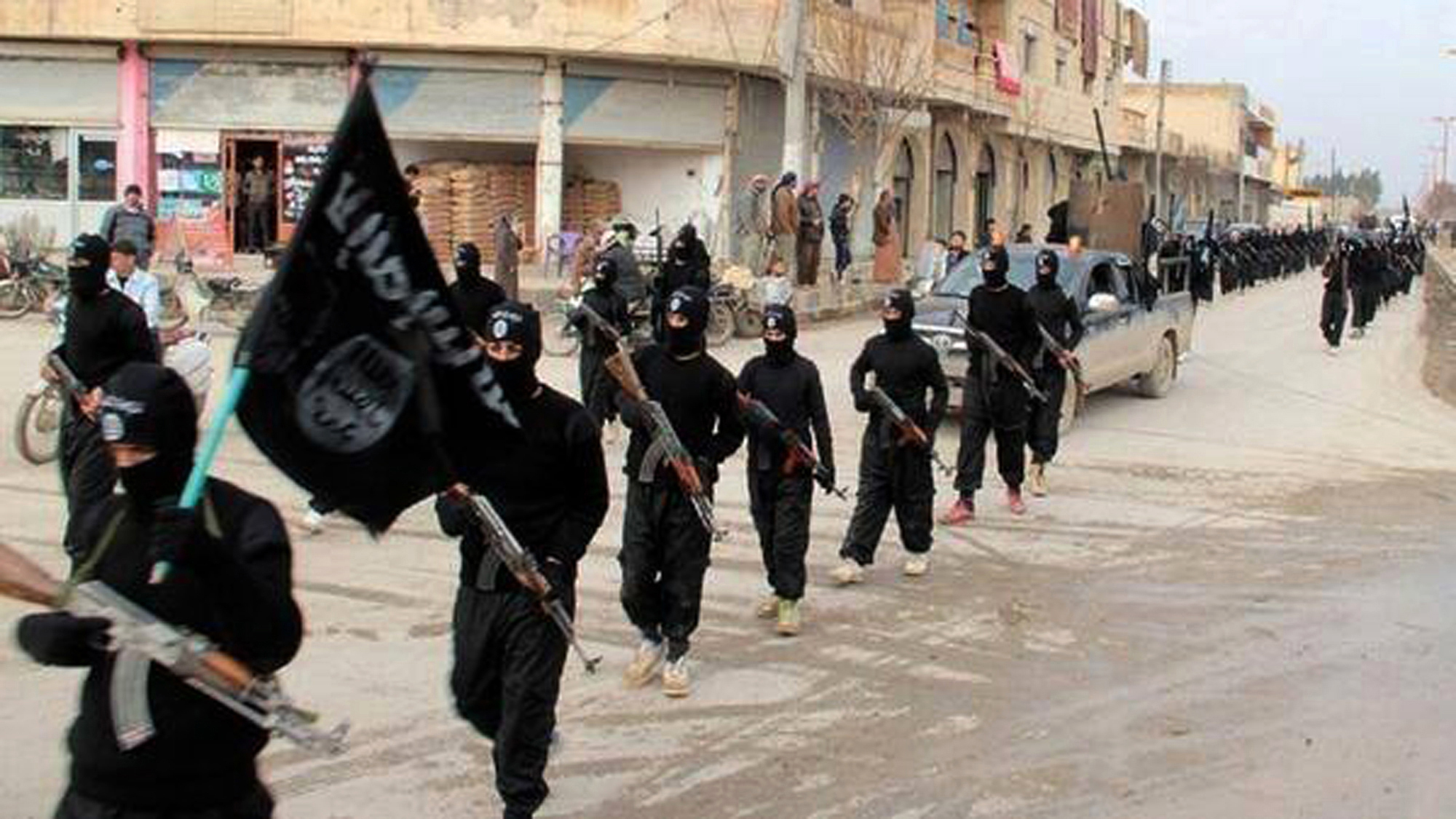
This undated file image posted on a militant website on Jan. 14, 2014, shows fighters from the Islamic State of Iraq and the Levant (ISIL) marching in Raqqa, Syria.
By: Dennis Wendo
The solidus separating radicalization and violent extremism is papery. Both processes involve adopting extremist beliefs and willingness to facilitate violence and fear. They involve criminal acts committed by individuals and groups to further ideological, political, racial and societal goals.
Radicalization of youths and recruitment is not new to Kenya. Criminal gangs, ethnic sects and local militias have been practicing the vice.
Radical organizations recognize and prey upon a combination of political realities, socio economic factors and individual habits that render youths susceptible to recruitment.Poverty, inequality, ethnic and religious tension, political marginalization, insecurity, peer and family pressure are key drivers pushing individuals towards joining such groups. Much more attention is needed towards the youth by increasing education, job opportunities and political participation to tame exposure.
Technology, internet and social media has radically altered the world of interaction, considerably influencing all sectors of human ventures. The digital revolution has greatly enhanced public vulnerability to information manipulation. ICT has yielded positive societal change with an immense value addition swell, though with extraordinary challenges that are now becoming a threat world-over.
Cyber- related crimes such as phishing, cyber extortion, cryptojacking, money laundering, cyber espionage and now online radicalization and terrorism recruitment are on the rise. Social media has allowed both international and domestic terrorists to gain unprecedented virtual access to online users.
Violent extremists have invaded online spaces. They are using local languages that are challenging to detect through technology to peddle violent ideologies and propaganda. The Government’s multi-agency security approach in taming terrorism is noteworthy. They have embraced soft power measures that include the Jasiri platform to deal with the threats.
The user-friendly public information portal, leverages on technology to counter terrorism propaganda, addresses drivers of terrorism, stimulates sharing of good practices in countering and enables preventing and countering terrorism actors to network.
The platform will go a long way in bolstering efforts by security agencies in fighting terrorism threat which is rapidly mutating. It provides an opportunity to literally take the war on terror to online spaces which extremist elements and terrorists are utilizing to radicalize and recruit youth into terrorist groups like Alshabaab, Al Qaeda, Boko Haram, Hamas and Hezbollah.
Let Kenyans take advantage of the Jasiri observatory platform and learn ways of collaborating with the government and other stakeholders to fight terrorism and violent extremism.
As we embrace technology, it remains prudent to positively utilize the platforms and be on the alert of falling prey to fictitious online offers, fake-news, job adverts, lotteries, scholarships as well as disinformation, misinformation, cultism-luring, porn site recruitment and computational propaganda.
Notably, state terrorism is no better than terrorism. Anti-terrorism security measures need to be balanced by equal protection of human and citizens’ rights. Too strong security measures by the state plays into the hands of extremists by radicalizing the youth and targeted populations.
Dennis Wendo
Founder: Integrated Development Network.
Email: dambehi@gmail.com
Similar Posts by The Mt Kenya Times:
- Leaders rally round Karua after father’s death
- Lamu residents: Compensate us first
- Who owns the Lamu refinery? Nyoro demands answers as groundbreaking looms
- Laikipia University: Where education meets nature’s beauty
- Kenya’s digital ambition is outpacing its technology workforce, new Moringa reports show
About the Author